
Turkey unveils new missile systems that rival Western technology and mark a shift in global military power
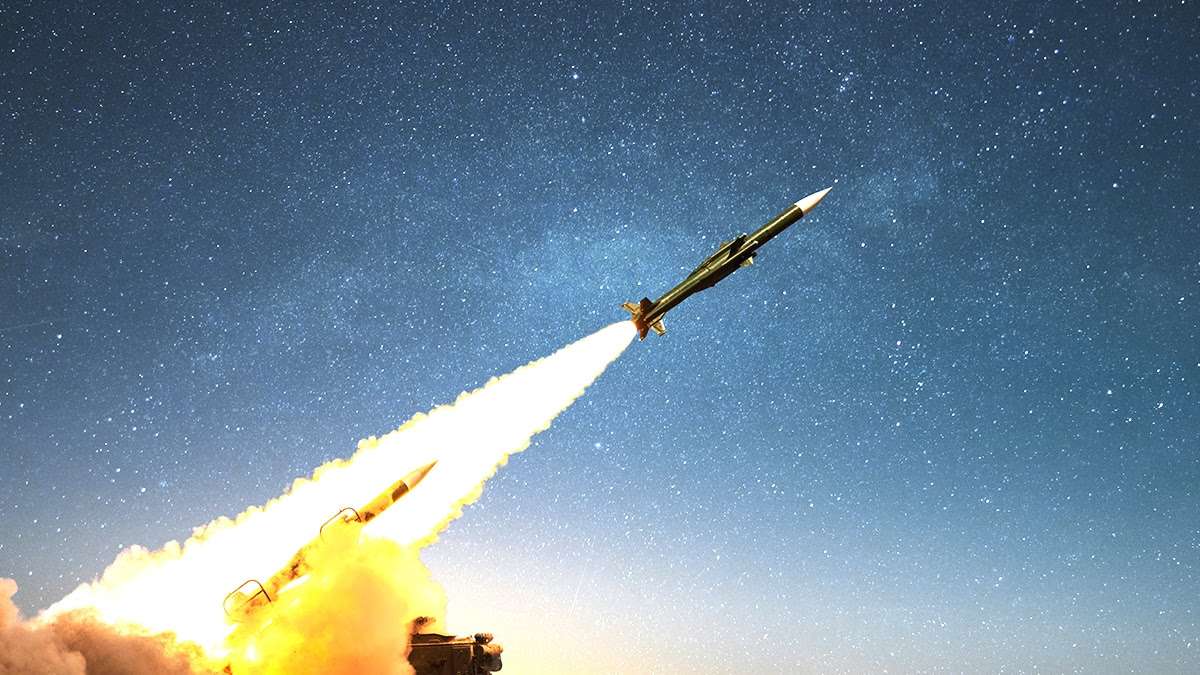
Turkey’s defense industry has moved fast, stitched local supply chains together, and turned battlefield lessons into export-ready hardware. The result looks less like a prototype parade and more like a complete toolbox that governments can buy off the shelf.
Why Ankara’s missile bet matters
Ankara’s doctrine prizes strategic autonomy. That means local design, local production, and fewer foreign bottlenecks. Roketsan sits at the core of that strategy, fielding guided rockets, short-range ballistic missiles, precision air-launched weapons, anti-tank systems, and layered air defenses. Most are already certified, used in real conditions, and shipped abroad.
The headline claims grab attention: ranges up to 280 km, hypersonic sprint at launch for some ballistic assets, laser and imaging infrared guidance, and quick setup times. The broader point is sharper. Turkey is packaging modern effects—precision, mobility, and electronic warfare—at prices that undercut many Western equivalents.
Turkey has fused range, precision, and cost control into a single export offer: 280 km fires on land, multi-sensor seekers in the air, and a laser layer for counter‑drone defense.
From field trials to catalog: what’s actually new
Tayfun, a short-range ballistic missile, anchors the long arm of the portfolio, with advertised reach near 280 km and very short time‑to‑target profiles. Bora fills a similar range bracket for strikes against high-value command, radar, and artillery nodes. In the guided rocket tier, TRG-300 and TRG-230 offer rapid salvos out to roughly 120 km and 70 km. TRG/TRL variants add GPS/INS or laser homing to improve circular error probable and reduce collateral risk. Launch time runs in minutes, not hours.
Artillery that can also sense and disrupt
Some munitions ditch explosives altogether and carry payloads instead. Parachuted variants of 122 mm rockets can drop cameras, jammers, or SIGINT packages over a target area. That swap turns a rocket into an intelligence tool, enabling battle damage assessment, communications disruption, or target confirmation without tasking a manned aircraft.
Modularity matters: a tube that launches an explosive today can seed sensors or electronic effects tomorrow—using the same vehicle and crew.
Anti‑tank reach without relying on air cover
Turkey’s anti-armor range now spans the trench line to beyond-line-of-sight. Tanok fires straight from a standard 120 mm tank gun, giving crews an instant precision option. UMTAS and its laser-guided sibling L‑UMTAS push engagement ranges out to around 20 km from helicopters, vehicles, or unmanned platforms. Karaok, a man‑portable infrared-guided missile, offers 2.5 km reach for dispersed units and urban fights.
Precision from drones to fighters
Air-launched weapons fill the gaps. The MAM-T family gives drones and light aircraft a guided, selectable‑warhead option, with imaging infrared or laser terminal guidance to deal with moving or concealed targets. SOM, a long‑range cruise missile, adds deep‑strike capacity for hardened sites beyond 150 km. Guidance kits like Teber and Lacin convert legacy MK‑81/82 bombs into all-weather precision munitions, cutting cost and extending stocks.
Air defense goes layered—and directed energy enters the chat
On the protection side, Turkey fields Siper and Hisar for medium to long-range air defense, with Burc and Sungur in the short-range tier for aircraft, cruise missiles, and drones. Multi-beam radars and onboard algorithms enable quick reaction and automated hand‑offs between batteries. Alka—the directed-energy entry—pairs electromagnetic jamming with a laser to defeat small drones at short range, where missiles become uneconomical.
- Long-range shield: Siper for high-altitude and stand‑off threats
- Medium/short range: Hisar, Burc, and Sungur for layered coverage
- Point defense: Alka laser/EM suite to swat swarms and hobby‑class UAVs
Where the edge shows: cost, speed, and access
Price tags shape this story. Public estimates suggest Turkish guided weapons often come in at roughly £430,000–£690,000 per round, depending on seeker and range, where Western peers can push well above £1.7 million. That gap changes buying math for countries facing budget pressure or sanctions risk. Add the promise of technology transfer and local assembly, and deals get even stickier.
Export customers now include Pakistan, Qatar, Azerbaijan, and Indonesia. Many want systems that arrive quickly, integrate with mixed fleets, and don’t trigger complex licensing regimes. Turkey pitches an ITAR‑light route, with modular designs and domestic control over critical components to keep schedules stable.
Speed to field beats paper specifications: trucks that shoot in five minutes, drones that drop precision glide munitions, and cruise missiles that don’t demand a decade of integration work.
How it stacks up against Western playbooks
There’s no single metric called “better” in missiles. Effects depend on doctrine, networks, and training. Yet Ankara’s portfolio leans into three trends: smaller logistics footprints, seeker diversity, and rapid command loops. Laser guidance enables tight urban shots with a designator drone orbiting nearby. Imaging infrared helps against camouflaged units. GPS/INS stays useful if jamming spikes. And mobile launchers complicate counter‑battery.
Western forces still hold advantages in sensor webs, satellite resilience, and deep stockpiles for high‑end conflict. But for many regional militaries, the Turkish offer hits the sweet spot: enough range, adequate seeker sophistication, reasonable cost, and delivery this year—not in 2030.
Snapshot of key systems
| System | Role | Max range | Guidance | Launch platform |
| Tayfun | Short‑range ballistic missile | Up to 280 km | INS with terminal updates (reported) | Ground |
| Bora | Short‑range ballistic missile | Up to 280 km | INS/GPS | Ground |
| TRG‑300 | Guided rocket artillery | ~120 km | GPS/INS | MLRS |
| TRLG‑122 | Laser‑guided rocket | ~30 km | Laser homing | MLRS |
| UMTAS / L‑UMTAS | Anti‑tank missile (BLOS) | Up to ~20 km | IIR / Laser | Heli/UAV/ground |
| MAM‑T | Guided glide munition | ~30 km | IIR or Laser | UAV/aircraft |
| Siper | Long‑range air defense | 100+ km (tiered) | Radar‑guided | Ground |
| Alka | Counter‑UAS directed energy | Short range | Laser/EM | Ground |
Risks and counter‑moves
Proliferation risk rises when precision gets cheaper. Regional rivals will invest in counter‑battery radars, hard‑kill interceptors, decoys, and aggressive electronic attack. Expect more GPS spoofing, smoke and thermal masking against IIR seekers, and shoot‑and‑scoot drills to survive return fire. The Turkish kit anticipates some of this with multi‑mode guidance and fast egress times, but no system is immune to a layered defense.
Another pressure point is reloading and sustainment. Large-scale fires burn through stocks fast. Countries buying these systems need secure propellant lines, seeker maintenance facilities, and trained crews that can calibrate and re‑zero after each move. That’s not glamorous, yet it decides whether the promise translates into lasting capability.
What to watch next
Three questions will shape the next phase. First, can Ankara keep components local as demand scales, avoiding external choke points? Second, how quickly will seekers evolve—especially for cluttered urban fights and maritime targets? Third, will directed energy like Alka mature into mobile, higher‑power variants that cover larger perimeters without missiles?
For readers tracking the jargon: “INS/GPS” blends inertial navigation with satellite updates; “IIR” means imaging infrared, which reads target heat patterns; and “BLOS” signals beyond line of sight engagements using relays or UAV spotters. A simple tabletop simulation for context: place a mobile launcher, a radar, a drone spotter, and a defended target. Add time constraints for setup and a jamming event mid‑mission. Now test which guidance modes still land hits. That exercise reveals why mixed seekers and fast launch cycles matter.
There’s also a civilian angle. The same production methods—composite casings, miniaturized seekers, robust datalinks—spill into space launch, weather sensing, and disaster mapping. Dual‑use tech isn’t a footnote anymore; it’s part of the economics that keep these factories humming between military orders.