The neo-Ottomans on Israel’s border
Türkiye is no benevolent actor working to broker peace in the region.
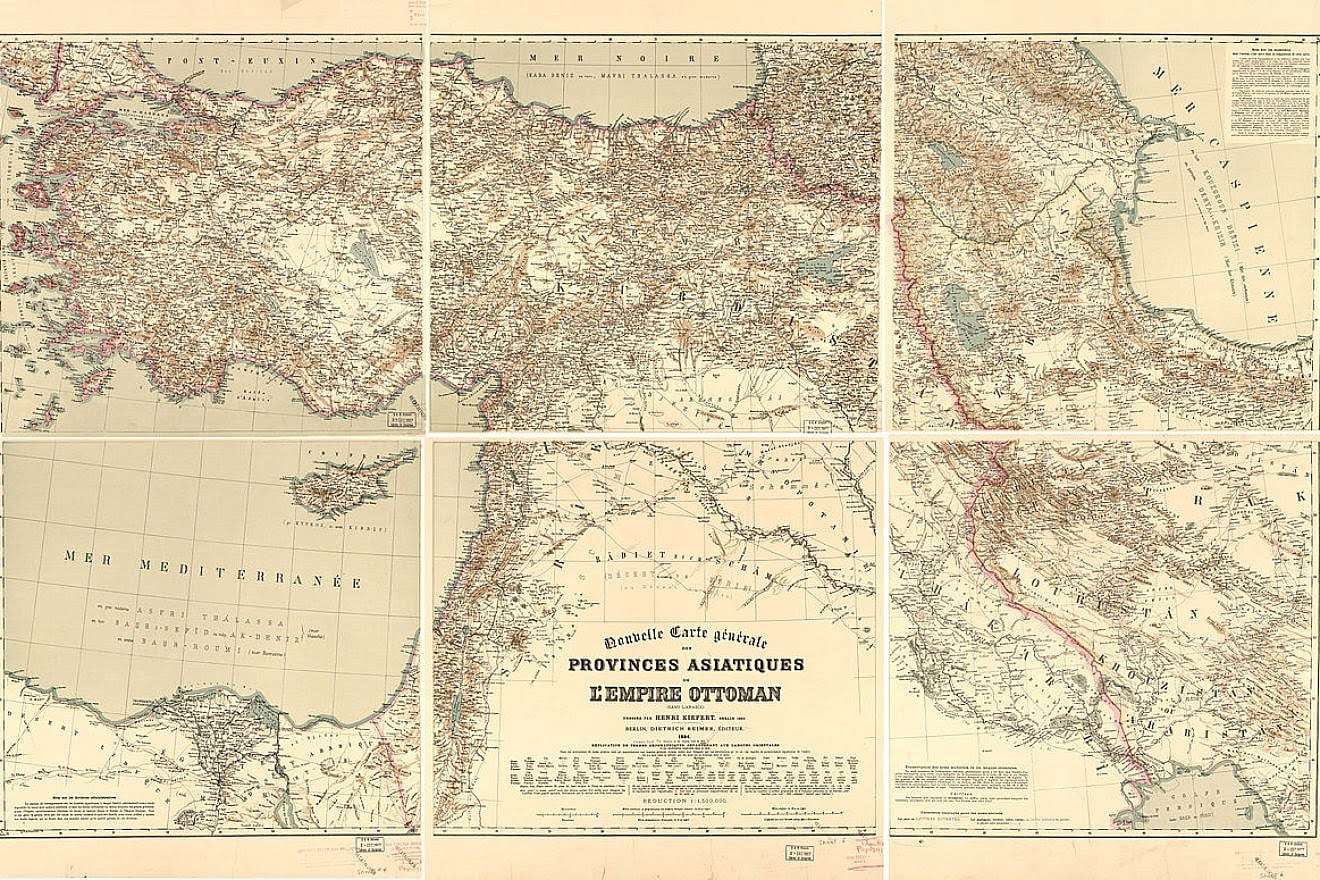
The Ottoman Empire came to an end in 1922 in the aftermath of World War I. Known for decades as the “Sick Man of Europe,” Ottoman power waned in the 19th century until the empire ultimately collapsed and split apart. Many modern nation-states were once part of the Ottoman Empire. Its successor is the Republic of Türkiye, whose diplomatic muscle has been growing as its increasingly authoritarian
Erdoğan has allowed his country to act as a base for Hamas, as well as the ideological extremists of the Muslim Brotherhood. The arrival of Turkish soldiers on Israel’s doorstep in Gaza, when they are already entrenched to the north in Syria and Lebanon and at sea in Cyprus, must be viewed with concern.
The International Stabilization Force, part of the second stage of the recent ceasefire proposal in Gaza, is just another way Erdoğan is trying to leverage political capital to strengthen Turkish influence in the region. This leverage stems from Türkiye’s extensive ties to Hamas, which Erdoğan leveraged to help secure the ceasefire brokered by Washington. U.S. President Donald Trump even publicly thanked Erdoğan for helping bring forth the agreement.
Make no mistake: Türkiye is no benevolent actor working to broker peace in the region. As recently as Oct. 21, 2025, the Turkish foreign minister expressed supportive words for Hamas and a desire to “reject the occupation’s aggression.”
Türkiye has repeatedly praised the grievously compromised U.N. Relief and Works Agency for Palestine Refugees (UNRWA), which has well-documented ties to Hamas and other extremist groups. On Oct. 14, Türkiye openly threatened Israel, accu
Türkiye’s leadership has long been among the most outspoken supporters of Hamas. Just weeks after the Hamas-led massacre in southern Israel on Oct. 7, 2023, Erdoğan publicly claimed that “Hamas is not a terrorist organization, it is a liberation group.”
In fact, his formal relationship with the terror group dates to 2006, before they seized control of Gaza, when Erdoğan invited Hamas to visit the Turkish capital of Ankara.
Israel recently uncovered a Hamas financing network, following its trail to roots in Türkiye. Türkiye has a rich history of hosting, housing and sheltering scores of Hamas and other terrorist operatives, including Hamas officials, who were welcomed after being expelled from Qatar. The U.S. State Department was even forced to warn Ankara against creating a Hamas headquarters on Turkish soil.
Under its current government, Türkiye has evolved from one of Israel’s closest Muslim partners to a reliably anti-Israel actor. Erdoğan himself publicly prayed on March 30, 2025: “May Allah make Zionist Israel destroyed and devastated.”
On Oct. 22, Hamas leaders met with Turkish intelligence in Doha, Qatar, to discuss their plans in Gaza, where they are actively attempting to reassert control. This effort to degrade Israel takes place outside of Gaza, too, both at the United Nations and in Türkiye’s sponsorship of and support for multiple attempts to breach Israeli sovereignty with “aid flotillas.”
Ankara’s ambitions extend beyond Gaza. Türkiye is actively trying to reshape the Middle East. Ahmad al-Sharaa, a one-time Al-Qaeda terrorist, is now the president of Syria. Since al-Sharaa’s takeover, Syria and Turkey have developed their economic relationship rapidly and engaged in military coordination. During Syria’s bitter civil war, which only ended with al-Sharaa’s takeover last December, more than 3.2 million refugees fled into Turkey.
Turkey has been quietly extending its military mandates in Lebanon and Iraq as well, and has maintained a military occupation of half of Cyprus since it invaded and ethnically cleansed Christian Greek villages in 1974. The Turkish military arsenal is arming rapidly and buying from both sides: leaning into NATO membership to press for a new fleet of U.S. fighter jets, while also purchasing Russian S-400 air-defense systems from NATO’s historic adversary. Turkey is also working independently on its own fifth-generation fighter jet, known as the KAAN program.
It is no surprise that Israel has signaled clear opposition to Turkish involvement in the post-war reconstruction of Gaza. To Erdoğan, already entrenched in Syria to Israel’s north, the Mediterranean strip would serve as an outpost of Turkish power expansion—and worse.
Gaza’s strategic position between Tel Aviv and the Suez must not become a base for a country that engages in proxy support for genocidal
If Erdoğan’s dream of rebuilding the Ottoman Empire becomes a reality, it would be a nightmare for the Middle East and the whole world.