Israelis among top 10 foreign visitors to Azerbaijan
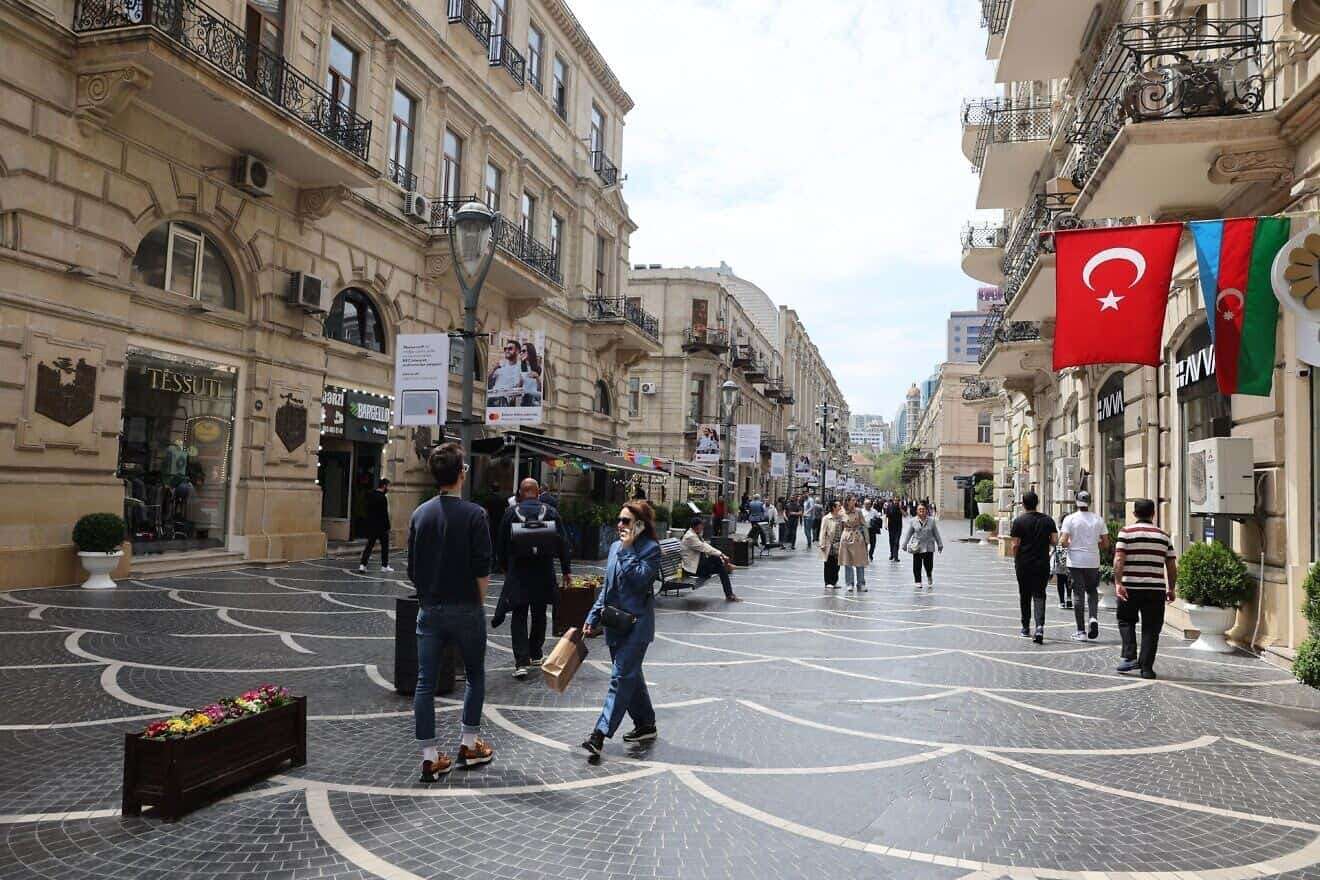
Nearly 60,000 Israelis tourists visited Azerbaijan between January and November, with an additional 90,000 Israeli travelers connecting through Baku.
“Israelis can walk the streets of Azerbaijan speaking Hebrew without fear and wear Jewish symbols feeling safe,” said Ambassador Mukhtar Mammadov.
Nearly 60,000 Israelis tourists visited Azerbaijan between January and November, with an additional 90,000 Israeli travelers connecting through Baku.
Azerbaijan Airlines, which operates 14 weekly flights connecting Baku and Tel Aviv, has requested permission from the Israel Airports Authority to increase their operations to 21 flights, with an eye to reaching 28 weekly flights.
The tourism figures highlight the burgeoning ties between the Jewish state and the predominantly Shi’ite Muslim Azerbaijan, which has proven to be a safe haven for Israeli tourists amid rising antisemitism around the globe.
For Israel, ties with Azerbaijan—which shares a 428-mile border with Iran, a country home to tens of millions of ethnic Azeris—are of strategic importance. Azerbaijan supplies nearly half of the Jewish state’s oil.
At the same time, Azerbaijan is a leading purchaser of Israeli military hardware, which helped Baku in the 2020 Second Nagorno-Karabakh War with Armenia. The victory greatly strengthened Baku regionally.
Three years ago, Azerbaijan made history by becoming the first Shi’ite Muslim country to open an embassy in Israel, defying threats from Iran and putting its longstanding ties with Israel out in the open.
At a time of heightened antisemitism across the globe, Azerbaijan prides itself on being free of such animus, with the country’s 25,000 to 30,000 Jews living in harmony with their predominantly Muslim neighbors.
Historically, Azerbaijan is home to three distinct Jewish communities: European Jews, who settled in the area during the late 19th to early 20th centuries, and during World War II; Jews from the former Soviet Republic of Georgia, who settled mainly in Baku during the early part of the 20th century; and Mountain Jews, the most sizable and ancient Jewish group in the country.