
Santa Came When the Lights Were Out
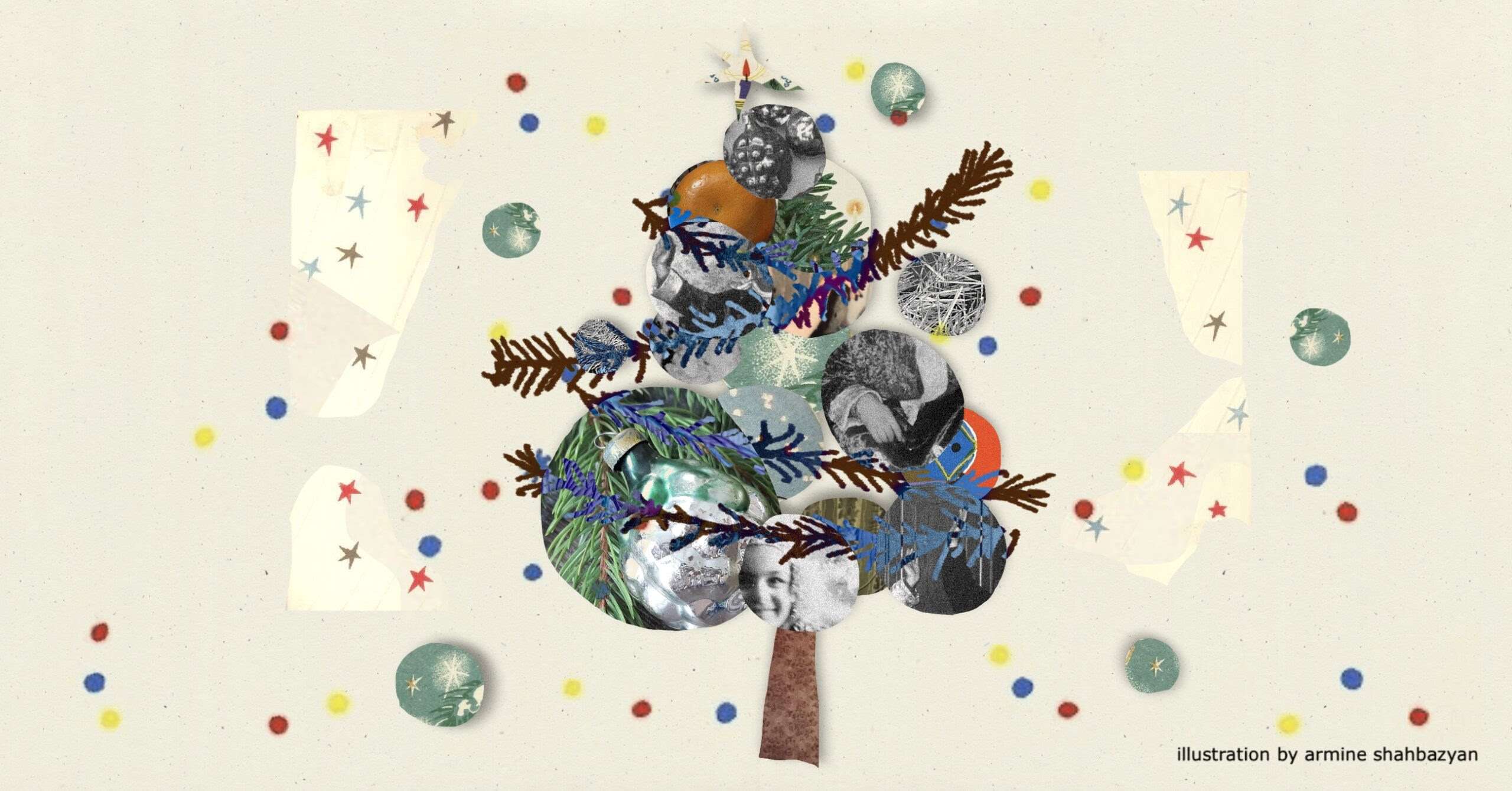

I was born in the Soviet Socialist Republic of Armenia, which in 1986 was not exactly a place of childhood wonder and whimsy. I spent the first six years of my life on my parents’ shoulders at protests, playing while the adults talked about wars and revolutions, and living through the collapse of the Soviet Union and the birth of independent Armenia.
By December 1992, I’m six and a half, my brother is three, and the Republic of Armenia is just fourteen months old. Cut off from former Soviet pipelines and blockaded by a war with a neighboring republic, this newborn nation’s growing pains include food shortages, rationed electricity, and virtually no fuel.
These years will become known as the “dark and cold years.” But being six (and a half), I don’t care about any of this. It’s almost New Year, and I have one thing on my mind: Santa—or Dzmer Papi—will be coming soon.
I’m not sure if I believe in Santa anymore. I got a globe for my birthday this year and learned how to tell time. There are 197 countries on my globe, and 24 hours in a day. I don’t understand how one person can visit all the kids in all those countries all in one night.
I have a lot of questions, so I ask the smartest people I know—my cousins who are 15 years older than me. They insist that Santa has magical powers that handle all the logistics of international present distribution. I’m not convinced either way, but I don’t want to risk not getting presents, so I make a list just in case.
Even if Santa is real, I’m worried he won’t be able to find us this year. So much is different this winter. We almost never have electricity anymore, and the streetlights are always off. What if he flies over our country and can’t see that there are kids living here? The radiators don’t work either, so we installed a rusty metal stove in the middle of the living room. Its chimney is a small metal tube sticking out of the window—there’s no way Santa can fit through it. It barely fits my mom’s arm when she cleans it. And, there’s always a fire burning to keep our house warm. We feed it with wood from the trees in our yard and pages torn from old books. Even if Santa could squeeze through the small chimney, wouldn’t all our presents burn in the fire?
On New Year’s Eve, I make it my mission to find empirical evidence that Santa is real. In the past, presents just appeared under the tree when I wasn’t looking, so this year I won’t take my eyes off it. Our Christmas tree is much smaller this year—people needed the big trees to heat their homes. It’s really just a tall branch my brother and I brought home from the park, which makes it easier to see everything happening around it.
As the family gathers for the holiday dinner, I pick a seat at the table with a direct view of the tree. Everyone is chatting excitedly—about finding oranges at the market, about bribing someone to buy meat, about how this is just temporary and things will get better next year. But I’m not distracted. For the first time in months, we’re going to have electricity all night tonight. There is no way that Santa can make it in and out of this house without me spotting him.
Suddenly there’s a knock at the door. I don’t know who it could be. Everyone we were expecting is already here. Mom answers the door and exclaims, “Santa! Welcome to our home!”
A man wearing a long red robe and carrying a large sack enters the room with a cheery “Ho! Ho! Ho!” I can see my cousins smirking at me, their look saying, “See, we told you he was real.”

He’s here! I caught him! But his presence has only left me with more questions. His robe and hat look like Santa’s, but the red color is faded and the white trim has large brown stains on it. The belt looks just like the one from my mom’s bathrobe. Still, there could be an explanation. Everyone in Armenia is using the same kind of rusty wood-burning stoves this year. Everything in our house, from the parquet floors to the crystals on the chandelier, is covered in a layer of soot. Maybe Santa’s robe got dirty from climbing through all these sooty chimneys.
But there’s one other thing—he doesn’t have a beard. He has a fluffy white scarf wrapped around his head that sort of looks like a beard. But I’m not fooled. It’s not a beard. He promptly discards the fake scarf-beard when asked if he’d like to join us for dinner.
So, this dirty beardless Santa hands us our presents and takes a seat at the table near my cousins. Soon someone proposes a toast, and Santa takes a shot of vodka with everyone, then another, and then another. Soon the bottles are empty, my aunt is playing the piano, and he’s singing and dancing with my cousins.
While the alleged Santa seems to be having the time of his life, I am stressed. My calculations weren’t adding up before, but now that he’s spent hours at our house getting drunk with my cousins, there’s no way he can finish his route. If he really is Santa, my friends won’t get their presents. First we couldn’t play at school because there was no heat. Then we couldn’t watch television because there was no electricity. And now, because Santa is still here, there will be no gifts.
Hours later, I’m not any closer to figuring anything out. Then I overhear my grandma whisper to my cousin in the secret language adults use when they don’t want me to understand—also known as Russian: “How much money did you waste on that alcoholic?”
But what she doesn’t know is that along with my new geography and math skills, I’ve also learned to understand their secret language. So that confirms it—Santa isn’t real. It was just someone my cousin paid to trick me into believing.