
How Calcutta Armenian financial dynasty shaped Hong Kong
Legacy ranging from dairy production to horse racing and land reclamation.
During the century-plus of British rule that ended in 1997, Hong Kong developed into a densely populated metropolis and one of the world’s financial hubs, the territory’s identity shaped by small, close-knit communities whose influence far exceeded their numbers. Through their entrepreneurial spirit and trans-regional connections, small but ambitious communities of Parsis, Baghdadi Jews, and others — most of whom arrived via British India — left lasting institutional and commercial marks on the city.
Armenians from Calcutta also formed part of this milieu in Hong Kong. They were primarily descended from people forcibly resettled from the South Caucasus to the outskirts of Isfahan by Shah Abbas in early 17th-century Safavid Persia, later moving to British India before ending up in the Far East.
Prominent among these Armenians were Sir Paul Chater and his nephew, Gregory Paul Jordan, both Calcutta natives who settled in British Hong Kong as young adults in the mid- and late 19th century.
Born Catchik Pogose Astwachatoorean (Khachik Poghos Astvatsaturian) in Calcutta in 1846, Paul Chater joined his sister in Hong Kong at the age of 18. Educated at a prestigious colonial school in Calcutta, he secured employment in Hong Kong at a British bank active across Asia. Through connections with influential Baghdadi Jewish patrons he met via his work at the bank, Chater obtained the capital needed to launch his first independent business ventures.
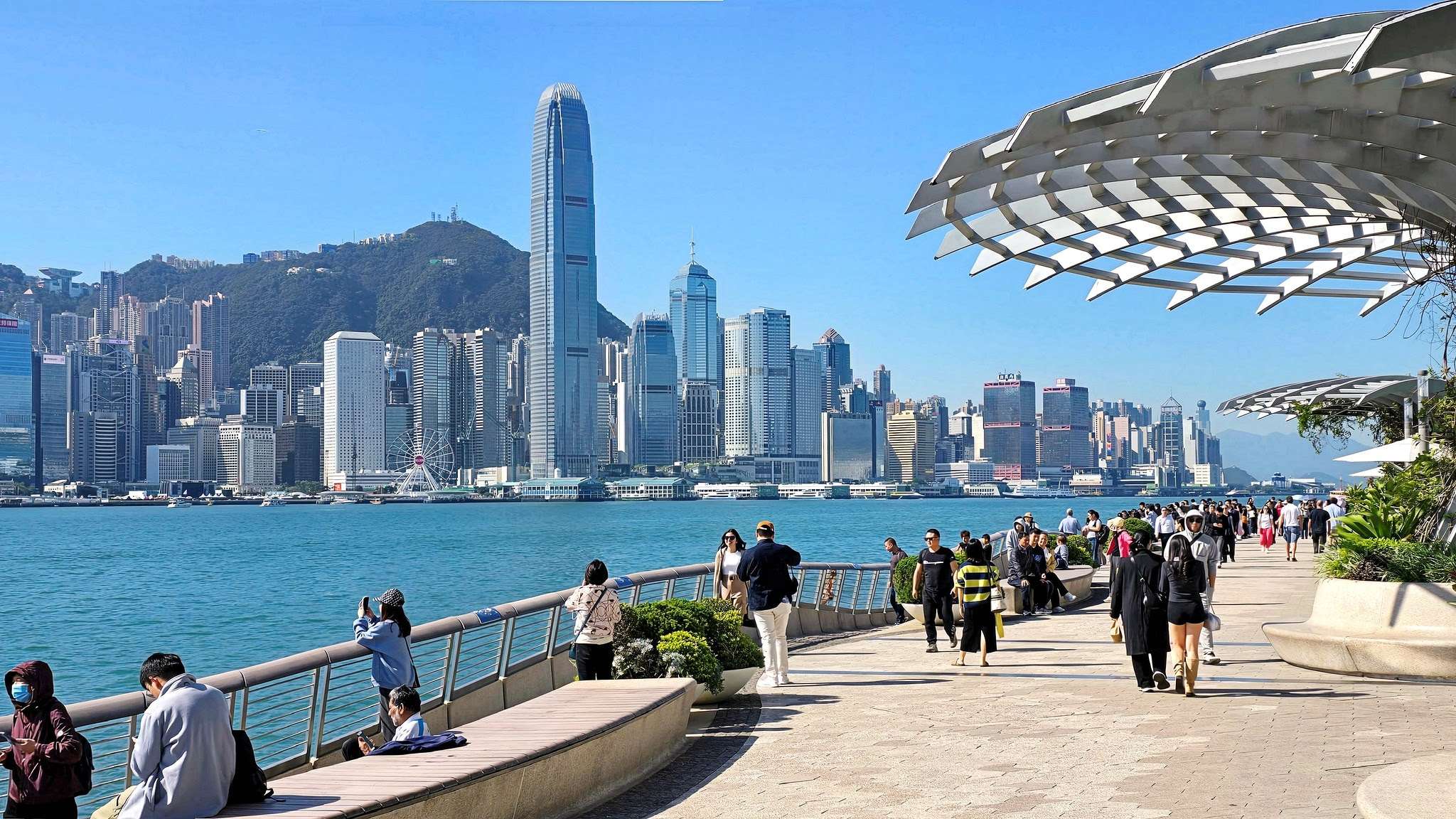
He poured much of his accumulated wealth, amassed through trading and stockbroking, into land reclamation projects promoted by the colonial administration. Acting as an intermediary between private capital and the government, Chater played a central role in the development of parcels along what would later become VictoriaHarbor, now Hong Kong’s primary transportation and financial corridor.
As British territorial control expanded through unequal treaties with the rulers of China’s Qing Dynasty in the late 19th and early 20th centuries, a reclamation company co-founded by Chater and a Parsi partner further enlarged the territory’s landmass. Today, reclaimed land accounts for only about 7 percent of Hong Kong’s total area, yet its extent exceeds twice the entire landmass of neighboring Macau.
Just as Chater reshaped Hong Kong’s physical landscape, he made significant contributions to the development of its modern urban infrastructure. In cooperation with the colonial government, Chater helped establish early electric power plants that supported the city’s rapid demographic and economic growth. His investments likewise extended to urban provisioning, including the creation of Hong Kong’s first large-scale dairy and meat supply company.
While milk tea later emerged as an icon of Hong Kong’s cultural identity, embodying the city’s distinctive East-West synthesis, Chater’s efforts contributed to the institutionalization of reliable, commercial systems for supplying perishable foodstuffs to a growing metropolitan area.
Having become one of Hong Kong’s wealthiest entrepreneurs, Chater also shaped the city’s identity in less tangible yet enduring ways. For decades, he served as an unofficial member of both the executive and legislative councils, acting as an intermediary between the colonial government and the local business community.
A lifelong enthusiast of horse racing, Chater invested heavily, both financially and emotionally, in the city’s racecourses and jockey clubs. As horse racing remains the centerpiece of Hong Kong’s cultural life and a major engine of its economy, one of the city’s most prominent racing tournaments continues to bear Chater’s name.
Despite spending most of his life in Hong Kong, Chater maintained close ties to the Armenian community of his native Calcutta. Although he is known for financing the construction of one of Hong Kong’s first Anglican churches, he remained a lifelong adherent of the Armenian Apostolic Church.
A significant portion of his wealth was donated to the Armenian cathedral in Calcutta, which, since its completion in the late 17th century under Mughal rule, has served as the unofficial center of Armenian spiritual and cultural life on the Indian subcontinent. Chater was also a patron of the arts, assembling an extensive collection of paintings, sketches, and engravings of the Pearl River Delta by Western artists. Part of this collection remains on permanent display today as the Chater Collection at the Hong Kong Museum of Art.
Chater’s nephew, Gregory Paul Jordan, left his imprint in another area of Hong Kong’s development: medicine and higher education.
Born in Calcutta in 1858, Paul Jordan arrived in British Hong Kong in his late 20s after completing medical training at various prestigious universities across Western Europe. After several years overseeing public health as a member of Hong Kong’s colonial government, Paul Jordan, alongside some of Chater’s business partners, helped found the city’s first teaching hospital of Western medicine in 1887, where he served as consulting surgeon and provided free treatment to local Chinese patients.
That same year, Paul Jordan helped establish Hong Kong’s first school of Western medical training. In 1911, the year China erupted in revolution that eventually toppled the Qing Dynasty and ushered in a short-lived, invariably unstable republic, this institution was absorbed into the newly founded University of Hong Kong, where Paul Jordan held senior academic and administrative posts, while Chater served as its first treasurer.
Paul Jordan died in 1921, followed by Chater in 1926. These days, various streets, buildings and libraries across Hong Kong still bear their names.
Beyond the lasting imprint left by Chater and Paul Jordan, the Armenian legacy in Hong Kong has endured through the ongoing activities of cultural institutions, such as the Jack & Julie Maxian Hong Kong Armenian Center. Meanwhile, the Armenian government is trying to capitalize on the Armenian connection to Hong Kong’s development, promoting Chinese tourism to the South Caucasus state. An estimated 100 Armenians live in Hong Kong today, in addition to several hundred in mainland China, including nearby cities in the Pearl River Delta, as well as in Shanghai and Beijing.