Armenian Diaspora and Dangers of a State-Controlled Diaspora Model (Youtube video)
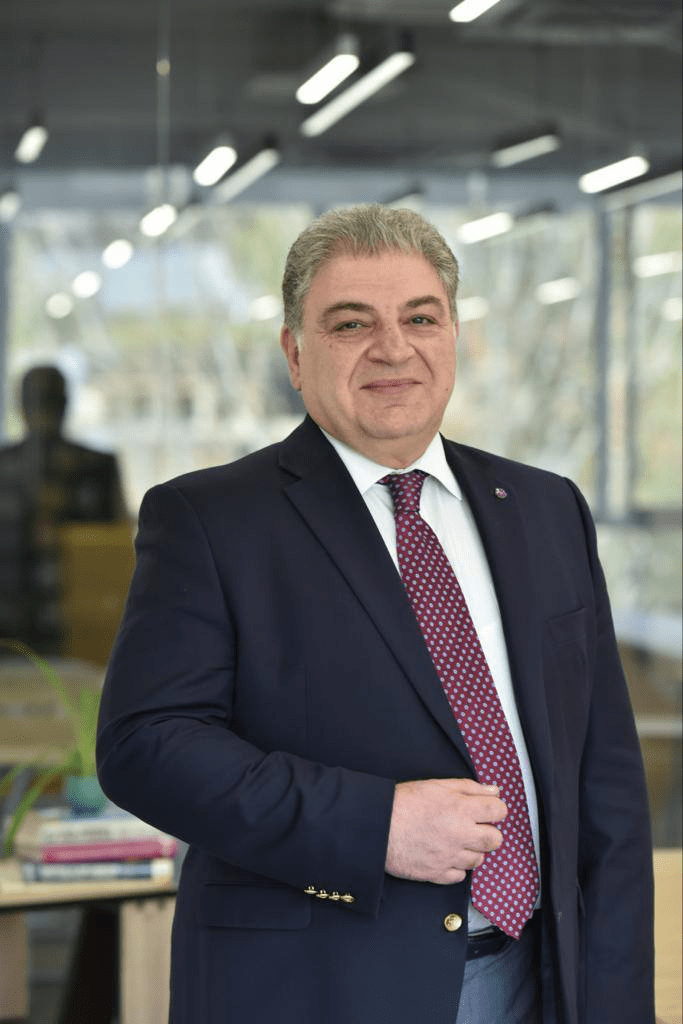
This executive summary focuses on the first portion of the program where former diplomats Karen Mirzoyan and Vahagn Melikyan discuss the strategic shifts in Armenia’s relationship with its diaspora.
The Transition to a State-Controlled Diaspora Model The diplomats argue that the current Armenian administration is intentionally dismantling the traditional, synergistic relationship between the state and the diaspora. Historically, the diaspora functioned as a “huge Armenian factor” and a key pillar of national security, where the state and the diaspora worked in a coordinated, yet autonomous, fashion to advance national interests. However, the guests contend that Nikol Pashinyan’s government is attempting to replace this dynamic, multifaceted entity with a hierarchical, centrally controlled model modeled after Turkey and Azerbaijan. Under this “Turkish model,” diaspora organizations are treated as direct “tentacles” or extensions of the state, controlled strictly from the center. The diplomats warn that this approach not only alienates the most effective, traditional diaspora structures but also risks violating the laws of host countries, as such state-led control can be perceived as foreign meddling in internal affairs.
Key Points
● The Fragmentation of the Diaspora: Karen Mirzoyan explains that Armenia was previously perceived globally as the cornerstone of a massive “Armenian factor” fueled by the diaspora’s potential. He claims the current administration is intentionally working to fragment the diaspora and disrupt the traditional distribution of roles to neutralize its influence on Armenia’s foreign policy agenda.
● Historical Synergy vs. Current Alienation: Vahagn Melikyan describes how the state and diaspora once operated in a highly coordinated “arsenal” where one filled the gaps of the other. He notes that today’s administration only embraces those in the diaspora who submissively accept their specific political agenda, while alienating traditional, effective structures.
● The Ankara Signal: Melikyan references Ahmet Davutoğlu’s view of the Armenian diaspora as the primary obstacle to Turkish interests. He suggests the current government is acting on signals from Ankara to distance itself from the diaspora’s traditional agendas, such as Genocide recognition, telling them to “mind their own business”.
● Adoption of the “Turkish Model”: Mirzoyan explicitly compares the government’s current strategy to the Turkish model of diaspora management. He defines this as a hierarchical system controlled from the capital (Ankara/Baku), where diaspora groups are merely state appendages.
● Risks of Foreign Meddling: Mirzoyan highlights that this state-controlled model causes “indignation and resentment” in European countries because it is viewed as a direct interference in their internal aff airs. He asserts that Armenia is now following this same path, which mirrors Azerbaijan’s attempts to build a state-subservient diaspora network.
● Severing the Homeland-Diaspora Link: The diplomats point to Pashinyan’s statements in Istanbul (Constantinople) as a definitive message that the traditional, organic links between the Armenian state and the diaspora are being severed, forcing communities to handle their own problems without state backing. [To better understand and more detailed information, it is recommended to watch the complete youtube video].
BACKGROUND OF KEY ACTORS:
Vahagn Melikian is an Armenian diplomat with a career spanning over three decades. Melikian has held numerous key positions in the Ministry of Foreign Affairs. His notable roles include serving as Secretary General of the Ministry from 2018 to 2021 and Deputy Minister of the Ministry of Diaspora from 2015 to 2018. Melikyan’s ambassadorial appointments have been extensive, representing Armenia in countries such as Argentina, Chile, Uruguay, Paraguay, Qatar, Bahrain, Kuwait, and the United Arab Emirates.
Karen Mirzoyan is a diplomat of Armenia and previously of the Republic of Artsakh. From September 2012 until September 2017 he served as the Republic’s Minister of Foreign Affairs.
Minutes 50:33 seconds / Language – Armenian