
Secret 1920 Document Reveals Turkey’s Plans, Just as Today, to Eliminate Armenia — By Harut Sassounian
In recent months, there have been several references to an important book in Armenian published by Turkologist Dr. Ruben Safrastyan in Yerevan in 2019. The book is titled: “Mustafa Kemal: The Struggle Against the Republic of Armenia, 1919-1921.”
The reason this book has come to special attention now is that, among other valuable information, it presents the text of a cipher telegram written by Ahmet Muhtar, Acting Foreign Minister of Turkey, to Kazim Karabekir, Commander-in-Chief of the Eastern Front Army (Armenia’s border) on November 8, 1920. This document was first published in Istanbul in 1960 by Karabekir in his book, “Our War of Independence.”
According to Dr. Safrastyan, this document reflects the position of Turkish President Mustafa Kemal (later known as Ataturk) and would not have been written without his specific direction and approval. Muhtar stated that “this secret order contains the real goal of the [Turkish] government.” Furthermore, Kemal had sent a coded telegram to Karabekir on Feb. 5, 1920, instructing him to make preparations to attack Armenia.
The value of this historic document lies in the fact that the hostile position of the Turkish government in 1920 is remarkably similar to its position today regarding the Republic of Armenia. There are stunning parallels between how Turkey viewed Armenia in the past and how it views it now. Such a comparative analysis is also useful for understanding the mindset of Azerbaijan’s leadership, Turkey’s “junior partner.” The secret document has direct relevance to Prime Minister Nikol Pashinyan’s persistent efforts to sign a “Peace Treaty” with Pres. Ilham Aliyev, while naively believing that such a piece of paper will deter Azerbaijan from attacking Armenia.
There are so many eerie parallels between what is written in 1920 and what is happening today. I have highlighted in bold letters, parts of the secret Turkish document of 1920 that are just as ominous today:
“There is no doubt that the ceasefire offer, made by Armenia, when it is isolated from both the Western and Eastern worlds, is aimed at avoiding the impending disaster. As soon as Armenia becomes stronger, it will naturally try to fulfill the obligation imposed on it by the Treaty of Sevres to sever our ties with the East, and will also, together with the Greeks, undermine our life and progress. It is impossible that Armenia, which is located at the center of the great Muslim periphery, should with conviction of heart renounce that cruel gendarmerie duty and decide to completely link its fate with Turkey and Islamism. For this reason, it is absolutely necessary that Armenia be politically and physically eliminated from the middle. At the same time, since the realization of this goal depends on the capabilities provided by our power and the favorableness of the general political situation, it is necessary to prepare the important preconditions mentioned above in a coordinated manner. It follows from this that our withdrawal as a result of a simple ceasefire agreement with the Armenians cannot be a subject of discussion. The fundamental clauses of the ceasefire conveyed to the Armenians should be aimed not at withdrawing from Armenia, but at misleading the Armenians and appearing to be peace-loving towards Europe. However, in reality, the result should be the creation of the necessary preconditions for the gradual preparation and maturation of our goal.”
“At present, it is absolutely necessary to demobilize the Armenian army and confiscate its weapons, thus giving no chance of restoring its military structure. Under the pretext of keeping the railways under control and protecting the rights of the Muslim population, it is necessary to establish our military control over the entire territory of Armenia and thus keep in our hands all the roads connecting Turkey with Azerbaijan. The above-mentioned goal must be achieved in a covert and soft way, both in the text of the peace treaty and in the actions arising from it, on the condition of always appearing peaceful in the eyes of the Armenians.”
“The acceptance of the principle of a referendum about the border, in the first point of the ceasefire conditions sent to you today for the purpose of handing over to the Armenian government, stems from the desire to hinder the final determination of the borders with Armenia. You can temporarily accept the Brest-Litovsk border line, since the goal is to first obtain a written proposal on the border from the Armenians in this matter and thus prevent the negotiations from reaching a deadlock. However, it is necessary to prepare the ground for a continuous intervention under the pretext of protecting the rights of the Muslim minority remaining on the other side of the border [in Armenia]. Clauses should be included in the agreement that would ensure the seizure of weapons from the enemy [Armenia] and the disarmament of its army as soon as possible. Special efforts should be made to arm the Turks of the region step by step and to create national armed forces. They will connect the East and the West and make Azerbaijan an independent Turkish state.”
There are several disturbing similarities between the hostile intent expressed in the 1920 Turkish document with today’s situation:
1) The “Peace Treaty” to be signed between Armenia and Azerbaijan will not prevent Pres. Aliyev from carrying out his often-declared intention to invade and occupy the entire Republic of Armenia which he calls “Western Azerbaijan.” The best evidence of Aliyev’s malicious intent is his constant threats demanding endless concessions from Armenia. The more Prime Minister Nikol Pashinyan complies with Aliyev’s wishes, the more demanding Aliyev will become.
2) If Pashinyan accepts Aliyev’s demand to resettle 300,000 Azeris in Armenia, it would likely spell the end of the Armenian Republic. Aliyev could use the slightest pretext to send his troops to Armenia ostensibly to defend his fellow Azeris.
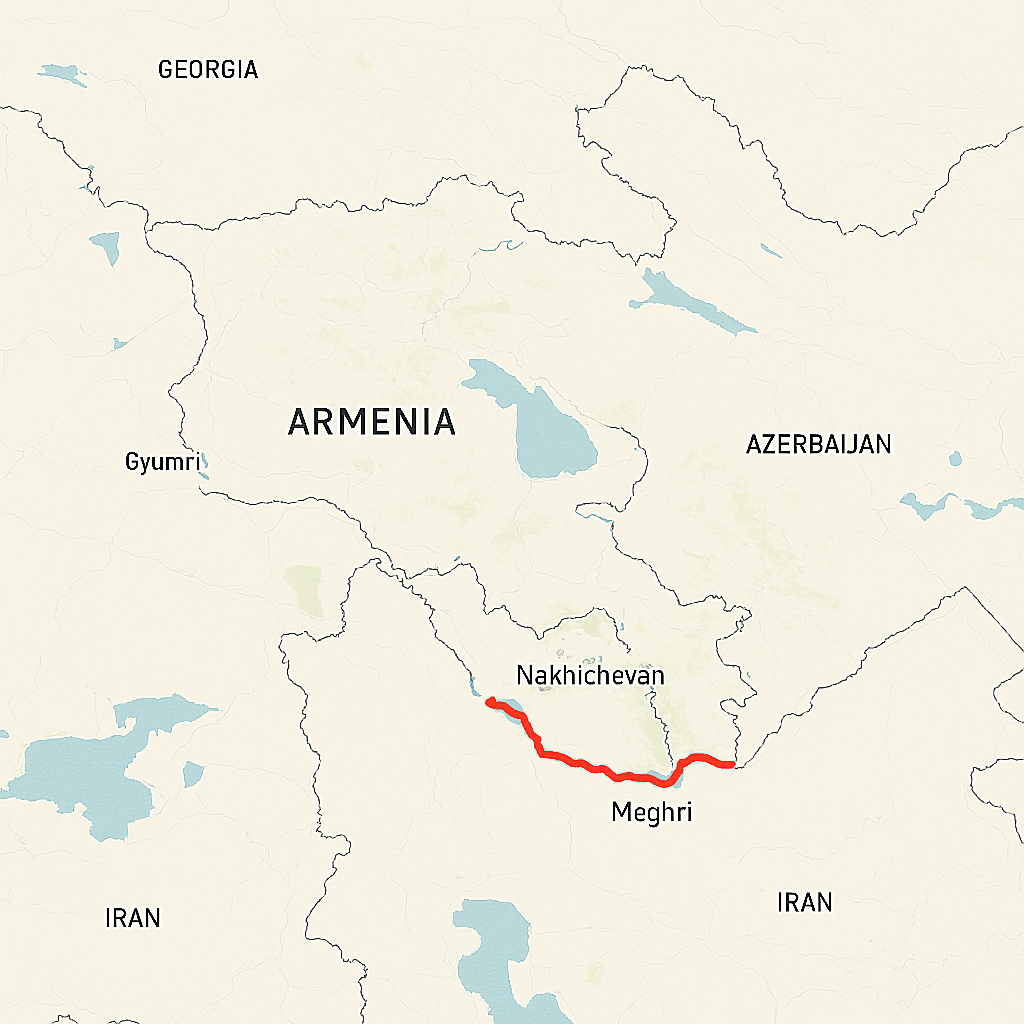
3) The reference in the 1920 document to: “keep in our hands all the roads connecting Turkey with Azerbaijan” is similar to the current demand of a “corridor” which reflects the age-old Turkish aspiration for a “Turan Road,” linking the Central Asian Turkic Republics with Turkey.