
European Court of Human Rights rejects Armenian Church foundation’s complaint over Istanbul zoning plan
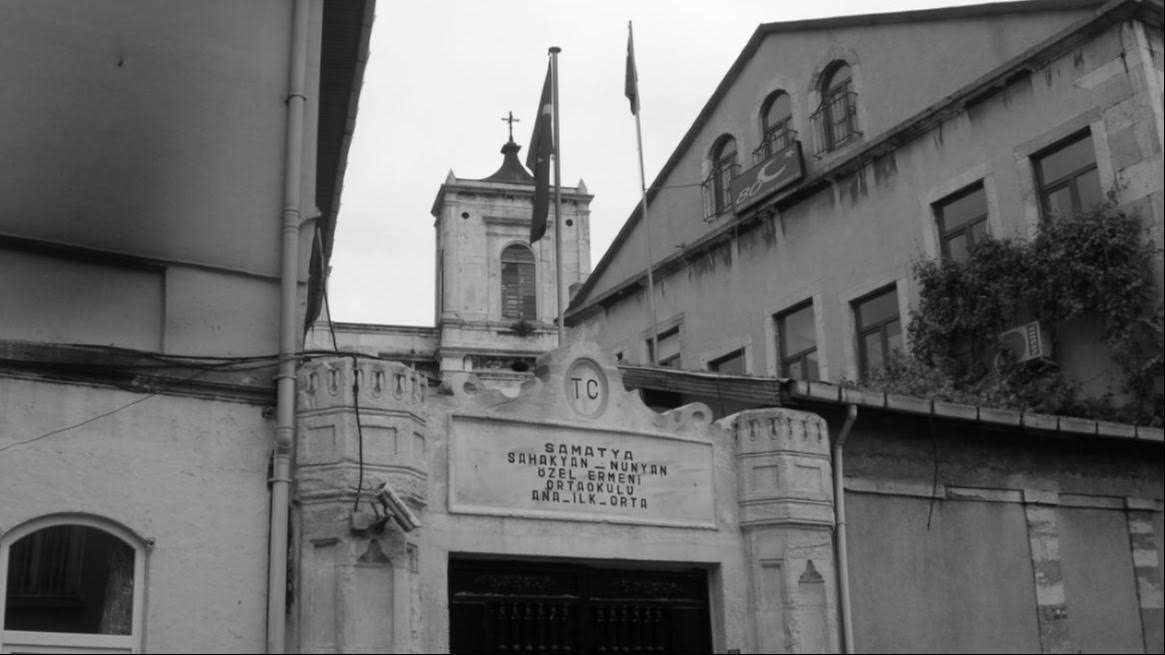
STRASBOURG / ISTANBUL — A ruling by the European Court of Human Rights (ECtHR) in January has closed a years-long legal battle between an Armenian Christian foundation in Istanbul and Turkish authorities, but it has also renewed scrutiny of how urban planning decisions can reshape, and in some cases destabilize, the economic foundations of minority religious institutions.
In a unanimous decision delivered on 22 January, the Court declared inadmissible the application of the Foundation of the Sulumanastır Surp Kevork
The case centered on several plots of land in Istanbul’s historic Fatih district owned by the Armenian minority foundation. On one of those parcels, the foundation operates a café whose income supports its religious, educational, and charitable activities. In 2011, the Istanbul Metropolitan Municipality designated certain plots in its 1:5,000-scale zoning plan as green spaces, a planning category that, while not immediately altering property use, can lay the groundwork for future expropriation.
The foundation objected, arguing that the decision failed to strike a fair balance between public interest and its property rights under Article 1 of Protocol No. 1 to the European Convention on Human Rights. It warned that the reclassification placed a revenue-generating asset on a path toward eventual loss, threatening the financial sustainability of its church and school.
Turkish administrative courts rejected the foundation’s claims. An expert report commissioned during the proceedings concluded that the zoning decision aimed to reduce population density, increase green areas and improve quality of life in Istanbul’s historic peninsula, objectives consistent with urban planning principles.
The courts also noted that the 1:5,000-scale plan serves as a broad planning framework. More detailed provisions would appear in a subsequent 1:1,000-scale implementation plan. Only at that stage, the Constitutional Court of Turkey observed, could expropriation occur, and then only with compensation, within a five-year period.
When the case reached Strasbourg, the ECtHR agreed. It held that while the zoning plan constituted an interference with the peaceful enjoyment of property, it was lawful, pursued legitimate public interests, including heritage protection and management of overpopulation, and did not impose a disproportionate burden.
The café continued to operate throughout the proceedings, and the ECtHR found no evidence that the designation had created immediate legal or factual obstacles to its use. Because no detailed 1:1,000-scale plan had yet been adopted, any potential expropriation remained hypothetical.
The application was dismissed as “manifestly ill-founded.”
Critics, however, see the case as emblematic of a broader pattern affecting Christian minority foundations in Turkey, including Armenian and Greek Orthodox institutions, whose properties have long been entangled in legal disputes.
Youssef Ayed, an associate researcher at the European Centre for Law and Justice, described the decision as part of a wider vulnerability. Rather than outright confiscation, he said, authorities may rely on zoning classifications, bureaucratic reinterpretations of foundation records, or administrative oversight to gradually erode institutional stability.
In this view, a “green space” designation does not merely reorganize land use. It signals uncertainty. Even if daily operations continue, the long-term security of revenue sources can become precarious, particularly for foundations whose mission depends on stable income from historically owned properties.
Over the 20th century, minority foundations in Turkey saw significant losses of property through confiscations and restrictive interpretations of foundation law. A 2011 decree opened a path for some non-Muslim foundations to apply for restitution or compensation for properties seized since 1936. While several properties were returned, observers note that implementation has been uneven and procedurally constrained.
One high-profile case involved the Greek Orthodox Orphanage on Büyükada, which was restored to the Ecumenical Patriarchate following a 2010 European Court judgment. Yet such successes, advocates say, often required sustained international litigation and diplomatic engagement.
Property disputes form only part of the broader debate over religious freedom in Turkey.
Ankara’s longstanding refusal to recognize the legal personality of the Ecumenical Patriarchate and the Armenian Patriarchate, as well as the continued closure of the Greek Orthodox Seminary of Halki since 1971. Critics also cite state involvement in internal governance issues, including delays in patriarchal elections.
Supporters of the government counter that urban planning decisions are neutral instruments of public policy, necessary to preserve Istanbul’s historic fabric and manage its dense population. The ECtHR itself underscored that states enjoy a wide margin of appreciation in matters of town and country planning, an area it described as “complex and difficult.”
Yet for minority institutions with centuries of history, the distinction between neutral planning and structural pressure can feel academic. Churches and schools, they argue, require continuity. Compensation, if it comes, may not replace the social and symbolic value of land that anchors a community.
Legally, the Surp Kevork Foundation’s c
But the underlying tension persists, when zoning frameworks redraw the future of minority-owned land, the consequences may unfold slowly, through administrative layers and procedural steps rather than dramatic seizures.
For Turkey’s underrepresented Christian peoples, legally present yet numerically diminished, the question is less about a single planning map than about long-term security. Urban plans, on paper, are technical documents. In practice, they can shape whether historic institutions endure as living communities or remain as fading architectural traces in a rapidly changing city.