
Armenian Officials Press Diplomatic Agenda in Los Angeles Amid Regional Tensions
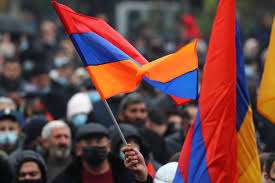
Delegation highlights U.S. ties, energy cooperation and diaspora engagement ahead of June elections
 Credit: Photo by Alexander Ryumin/TASS via Getty Images
Senior officials from the Republic of Armenia traveled to Southern California this week to strengthen U.S.–Armenian ties, counter misinformation, and explain their government’s foreign policy priorities to Armenian-American leaders. The delegation was led by Lilit Makunts, chief adviser to Prime Minister Nikol Pashinyan, and included Arayik Harutyunyan, Armenia’s Chief of Staff. Officials said the visit reflected Armenia’s broader effort to deepen Western partnerships during a period of political and security uncertainty.
During the event, officials emphasized Armenia’s push for stronger international backing as the country prepares for parliamentary elections in June. They also addressed unresolved regional disputes, economic pressures, and concerns over national security.
Harut Sassounian, publisher and editor of The California Courier and a longtime Armenian-American journalist, has written a weekly political column for more than four decades. He also served for 10 years as a non-governmental delegate on human rights at the United Nations in Geneva and has led major humanitarian efforts supporting Armenia and Artsakh.
“Armenia has to have good relations with a variety of other foreign nations, whether they’re East, West, North, or South,” Sassounian said. “Armenia cannot rely on any one of them.”
Historic U.S. Engagement Sets the Stage
Armenian officials framed the trip around what they described as a historic shift in U.S.–Armenia relations. They pointed to last week’s visit to Yerevan by U.S. Vice President JD Vance, which marked the highest-level American visit to Armenia in modern history.
Makunts called the visit a turning point and said it demonstrated Washington’s commitment to Armenia’s stability, security, and long-term development.Makunts says the partnership is intended to help Armenia diversify its energy security through expanded cooperation in civil energy and technology. She pointed to a joint statement on peaceful nuclear cooperation signed by Prime Minister Pashinyan and Vice President Vance as a central part of that effort.
Sassounian, however, questions whether recent agreements reflect long-term planning.“Unfortunately, we have a prime minister who has zero experience in foreign relations,” he said. “He is not able to maintain proper relations that are in the interest of the Republic of Armenia.”
He also raised concerns about the financial burden of proposed nuclear projects.
“Nine billion dollars is a huge amount of money for Armenia,” Sassounian said. “Armenia’s annual budget is about nine and a half billion. It’s something Armenia cannot afford.”He added that the proposed technology remains unproven.
“It’s a brand new technology. It’s untested,” he said. “We don’t know what the risks are with this new system.”
The visit also revealed diplomatic sensitivities that continue to shape bilateral relations. Vance’s team deleted a social media post referencing the Armenian Genocide Memorial after describing it as honoring genocide victims. The move sparked backlash among Armenian-Americans, many of whom view public recognition as central to historical accountability. The White House later attributed the deletion to a staff error, but the incident underscored ongoing tensions around diplomatic language.
The TRIPP Vision: Connectivity or Security Gamble?
Another major focus of the visit was the Trump Route for International Peace and Prosperity (TRIPP). The transit corridor, agreed upon in 2025, aims to connect the South Caucasus with Europe and Central Asia. Armenian officials describe the project as central to the country’s economic and strategic future, arguing that it could expand trade routes, attract long-term investment, and improve regional integration.
Makunts and other Armenian officials say regional stability is a prerequisite for economic growth, emphasizing that long-term development depends on sustained peace in the South Caucasus. Government statements and policy documents frame TRIPP as a project designed to expand trade routes and improve regional connectivity. Supporters say the corridor could reduce Armenia’s dependence on Russian-controlled infrastructure by creating alternative transit links supported by Western partners. Analysts and officials argue that broader connectivity would strengthen Armenia’s negotiating position and lower economic vulnerability by diversifying access to regional and international markets.
Critics, however, remain cautious.
Sassounian warns that language in the agreement could affect Armenia’s sovereignty.
“A corridor has sovereignty implications,” he said. “That road belongs to Azerbaijan, even though it’s inside Armenia.”
Russian officials have also criticized U.S. involvement in Armenia’s energy sector, arguing that Moscow can deliver infrastructure more efficiently. Iran has warned that Western-backed transit corridors near its northern border could shift regional security dynamics.
Elections, Disinformation, and Domestic Pressures
Armenia’s parliamentary elections, scheduled for June 7, remain a central concern for government officials. During the forum, they warned of rising disinformation campaigns targeting voters and diaspora communities. Makunts claims a surge in online and abroad of misleading narratives, which may undermine confidence in democratic institutions.
She urges Armenian-Americans to rely on verified information and official channels, warning that misinformation can undermine public trust. Although diaspora communities cannot vote in Armenian elections, officials emphasized that they influence public opinion, media coverage, and international perceptions. As a result, they described Armenian-Americans as key partners in countering false narratives and misleading information.
The visit additionally addressed lingering humanitarian concerns stemming from the 2020 Nagorno-Karabakh conflict. These include detainees and prisoners of war, as well as unresolved border and security issues. Despite a cease-fire, negotiations remain fragile. Makunts said talks continue behind closed doors and declined to provide details, citing the sensitivity of ongoing diplomatic efforts.
Diaspora: Beyond Symbolism to Strategic Stakeholder
With one of the largest Armenian populations outside the country, Los Angeles has long played an outsized role in Armenia’s political and civic life. Officials in Yerevan view the region as a center of advocacy, fundraising, and cultural leadership, where community networks help shape international awareness and policy conversations.
Makunts pointed to decades of diaspora involvement, including charitable donations, community initiatives, and educational investments that have supported Armenia’s development since independence. She described diaspora engagement not as symbolic outreach, but as a strategic component of diplomacy that strengthens Armenia’s global influence and political standing.“We all care deeply about what’s happening in Armenia,” Sassounian said. “When leaders are making wrong choices, we have no qualms about speaking up.”
At a Geopolitical Crossroads
Armenia faces pressure from multiple directions as it recalibrates its foreign policy. The government is seeking closer ties with the United States while continuing to manage long-standing relationships with Russia and Iran. Meanwhile, regional instability, unresolved conflicts, and shifting alliances remain central factors shaping policy decisions.
Officials portrayed their government as pursuing balance through economic diversification, diplomatic engagement, and long-term security planning. The Los Angeles visit reflected that strategy, aiming to reassure diaspora leaders and build political support abroad. Whether TRIPP will deliver economic gains and whether peace negotiations will succeed remain uncertain.
The coming months will test Armenia as it prepares for parliamentary elections on June 7. The government has engaged in ongoing peace negotiations with Azerbaijan following the 2020 Nagorno-Karabakh conflict, including talks over border demarcation and detainee issues. At the same time, Armenia continues to adjust its foreign policy, expanding cooperation with the United States while managing longstanding ties with Russia and maintaining relations with neighboring Iran.