
An Urgent Need to Contain Turkey
If the Iranian regime falls, beware Ankara’s regional influence.
While neutralizing the regional threat posed by Iran, the U.S. and Israel must ensure that Turkey doesn’t take its place.
“Iranian forces killed and maimed hundreds of American service members in Iraq,” President Trump said on Saturday. “The regime’s proxies have continued to launch countless attacks against American forces stationed in the Middle East in recent years, as well as U.S. naval and commercial vessels and international shipping lines.”
Turkish President Recep Tayyip Erdoğan criticized the U.S. and Israeli attacks on Iran as a “clear violation” of international law. Mr. Erdoğan also said he was “saddened” by the death of Iran’s former supreme leader Ayatollah Ali Khamenei.
Mr. Erdoğan, whose country is a key member of the North Atlantic Treaty Organization, spared no sympathy for the thousands of innocent Iranians who lost their lives during January’s protests. The Turkish government reportedly agreed to coordinate with Tehran on arresting people who protested against the Iranian regime in Turkey. NewsNation’s reporting
Mr. Erdoğan wants to lead the Islamic world and believes himself to be the guardian of Islam, a kind of modern-day Ottoman sultan. This explains why Turkey has been a bad partner for NATO when it comes to Iran. Ankara in 2012 reportedly divulged to Iran the identities of up to 10 Iranian citizens who were spying for Israel and gathering information on Iran’s nuclear-weapons program. Danny Yatom, a former chief of Israel’s Mossad, described this incident as a major blow against Western agencies trying to gather intelligence on Iran’s nuclear program.
The U.S.-led Delta Force raid in 2015 on the compound housing Islamic State’s chief financial officer, Abu Sayyaf, found undeniable links between the terrorist group and Turkish officials. At the time, ISIS was earning millions of dollars a month selling oil on black markets.
Turkey has also used the Syrian refugee crisis to extract concessions from the European Union. Examples include the 2016 EU-Turkey deal, under which the EU has agreed to provide €6 billion in aid to Turkey in exchange for Ankara’s commitment to stop irregular migration into the bloc, and the 2020 border crisis, in which Mr. Erdoğan announced that Turkey would no longer prevent refugees from entering Europe, an act the Greek government labeled “extortion diplomacy.”
Should NATO continue its relationship with Turkey? What should its role be in the Middle East after the Iranian regime falls? When considering these questions, the U.S. shouldn’t forget that Turkey opposes U.S. foreign policy and is a headache for its allies.
Mr. Martin is executive director of the Near East Center for Strategic Studies.

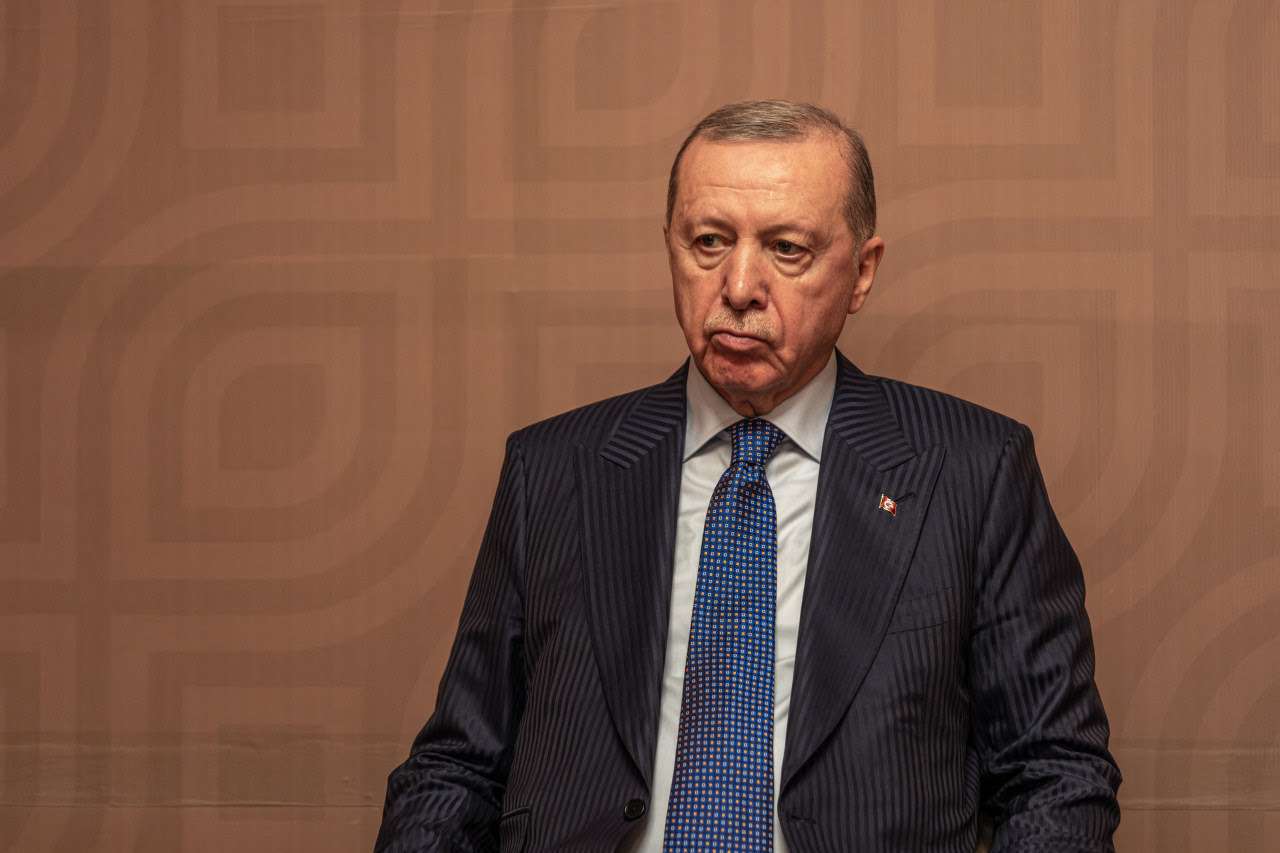
Recep Tayyip Erdoğan MARCO SIMONCELLI/AGENCE FRANCE-PRESSE/GETTY IMAGES