Radio France launches Armenian-language news targeting youth and disinformation
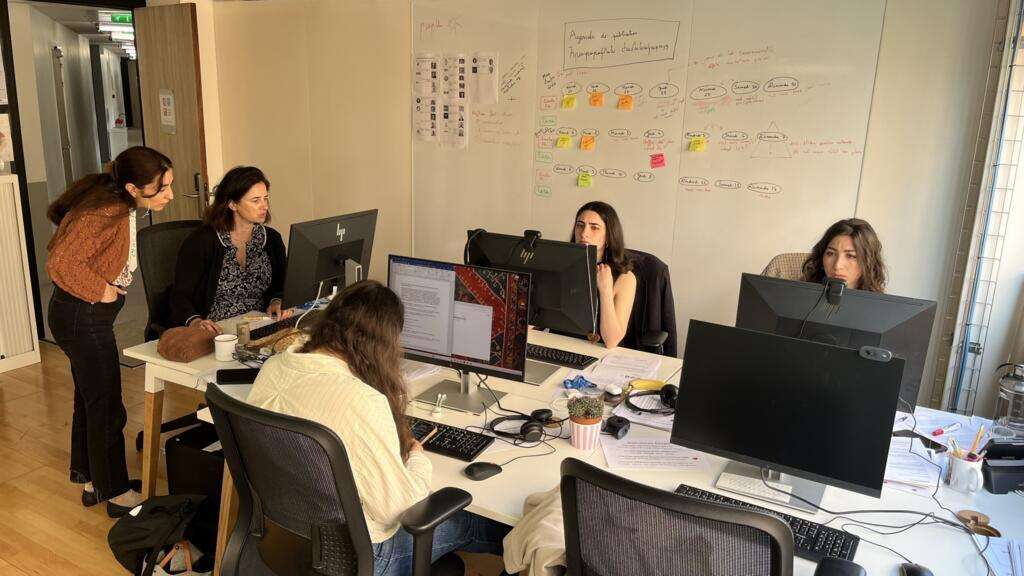
Paris – Radio France Internationale has inaugurated its eighteenth language service, opening an Armenian-language newsroom today, Monday, with a team of eight journalists and a mandate to reach young audiences through digital-only content.
As legislative elections approach, the growing spread of disinformation is reinforcing the need for fact-checking in Armenia. © Jean-Baptiste Breen
The new service, which strengthens the international footprint of France Médias Monde, will produce exclusively in Eastern Armenian, the official language of the Republic of Armenia, and will prioritize social media platforms including Instagram, Facebook and TikTok.
Speaking to young people
“Armenian youth, like most young people in the world today, are ultra-connected. Traditional media have been abandoned. So if we want to reach that audience, we have to go through social media,” said Astrig Agopian, the desk’s editor-in-chief.
The team’s primary aim is to inform, narrate the news and verify facts through innovative formats, drawing on correspondents based in-country. Reporter Lilit Shahverdyan, originally from Nagorno-Karabakh, will be deployed to Armenia from the end of May to cover the country’s upcoming legislative elections in real time, a posting she described as “a gift from heaven.”
Elections and disinformation
Those elections represent the desk’s first major test. Armenia has been at the center of regional tensions in recent years following the conflict with Azerbaijan over Nagorno-Karabakh, and the vote is already being targeted by a Russian disinformation campaign.
As in Hungary last month, the prospect of closer ties with the European Union is one of the campaign’s defining themes, and one Moscow has firmly opposed.
RFI’s Armenian-language desk officially opens its doors on Monday 25 May. © Jean-Baptiste BreenFact-checking will be a central pillar of the new service. Agopian warned that disinformation spreads quickly among audiences “not necessarily well-equipped to recognize false information, given how fragile the media landscape is.” The desk aims to provide both verified reporting and the tools audiences need to identify fake news.
A shifting press freedom picture
The launch comes against a backdrop of declining press freedom. Armenia had steadily improved its ranking under former journalist turned prime minister Nikol Pashinyan, climbing from 80th place in the Reporters Without Borders index in 2018 to 34th in 2025, nine places ahead of France. This year, however, the country has dropped back to 50th.
The choice to produce exclusively in Eastern Armenian is deliberate. Of an estimated 12 million Armenians worldwide, only around 3 million live in the Republic of Armenia, a legacy of the mass displacement that followed the Armenian genocide of the early twentieth century.
Diaspora communities have over generations developed their own dialectal variations, meaning Eastern Armenian is not universally spoken across the global community.
“Our objective, which justifies this choice, is to be able to speak directly to citizens of the Republic of Armenia,” Agopian said, while expressing hope that diaspora audiences would also tune in.
For team member Tsovinar Banuchyan, who holds a doctorate in arts, science and technology and has lived in France for sixteen years, the role carries a personal dimension too. Working on video production, she sees the desk as a way “to stay close to Armenia.”
 As legislative elections approach, the growing spread of disinformation is reinforcing the need for fact-checking in Armenia. © Jean-Baptiste Breen