The Missing Mountain on the Stamp
Keghart
Sometimes the smallest absences make people think the most. During my recent visit to Armenia, a small yet striking detail caught my attention at passport control. Something was missing from the stamp on my passport. Or rather, a familiar symbol was absent: Mount Ararat — that ancient silhouette Armenians have called Ararat for centuries.
I had heard about this change. I had read in the news that Mount Ararat had been removed from its symbolic place on Armenian passport stamps. But there is a profound distance between hearing about something and witnessing it firsthand. Only when you see it with your own eyes you do truly grasp the reality of an absence.
My first reaction was to find it somewhat absurd, because there is an undeniable geographical reality at the center of this issue. Yes, Ararat lies within the borders of Türkiye today. The boundaries drawn by geography are clear, and maps show this openly. To deny it would be to turn one’s eyes away from reality. Yet the issue was never really about which political borders the mountain belongs to. The real question is the meaning a mountain carries within the memory of a people. Does a mountain belong only to the land on which it stands? Or does it also belong to the eyes that look upon it every morning, to the memories that carry it into songs, prayers, and stories?

Some geographical formations are not merely stone, soil, and elevation. They are also memory. Silent yet powerful witnesses. For centuries, they have observed the joys, sorrows, migrations, and returns of peoples. People change, cities change, borders change; yet some mountains continue to stand with the same dignity. Ararat is one of them.
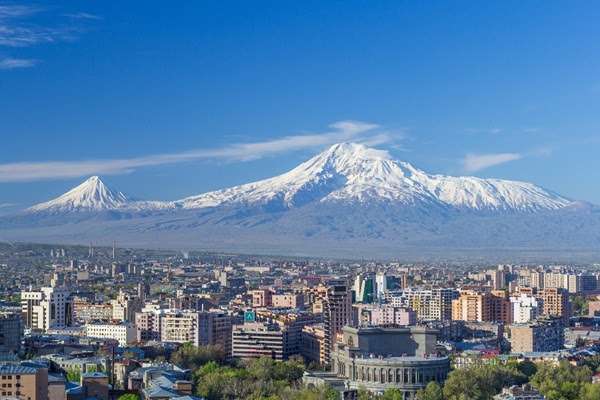
That majestic silhouette emerging in the morning light in Yerevan is not merely a landscape. It is a memory that reminds the observer of itself. Something seen through a window, yet felt not only with the eyes but somewhere deep within the human soul.
One cannot help but ask: What purpose does removing this symbol from official stamps serve? What can truly change by removing a symbol? If the existence of a mountain does not disappear when its image is erased, then for those who begin each morning by looking toward it, what exactly is diminished by removing its silhouette from a passport stamp? Does it reduce its visibility? Does it weaken its place in memory? Or does it merely reveal that even symbols can become victims of the subtle calculations of politics?
Trying to render certain things invisible does not make them disappear. On the contrary, their absence often makes them even more visible. A trace that has been erased can sometimes make itself felt even more strongly through the emptiness it leaves behind.
Perhaps this is the strongest aspect of memory. It may be removed from official documents, erased from records, and symbols may change — yet the images rooted in the human inner world continue to endure independently of all that.
You may remove Ararat from a stamp. You may erase it from official documents. But you cannot erase it from the horizon. You cannot remove it from the eyes of those who see it every day, from the memories of those who grew up gazing at its silhouette, or from the hearts of those who carry it as a longing, a silence, or a prayer. Because sometimes a mountain is not merely a mountain