Institutionalizing revenge: state-constructed narratives in Azerbaijan’s policy toward Armenia and Nagorno Karabakh
ABSTRACT
Explanatory frameworks concerning Azerbaijan’s military assertiveness against Armenia and Nagorno Karabakh have primarily revolved around hard power-based realist propensities. Although useful, the boundaries and meaning of these interpretations downplay the importance of revenge as a conceptual, ideational, mobilizational, and strategic driver. Operationalization of the phenomenon of revenge can serve as an additional analytical framework in explaining Azerbaijan’s excessively coercive stance against Armenia and Nagorno Karabakh. Drawing on the theoretical framework developed by Löwenheim and Heimann, the paper examines the instrumental utility and limitations of the concept of revenge in explaining Azerbaijan’s institutional practices and strategic choices of retribution.
Introduction and conceptual framework
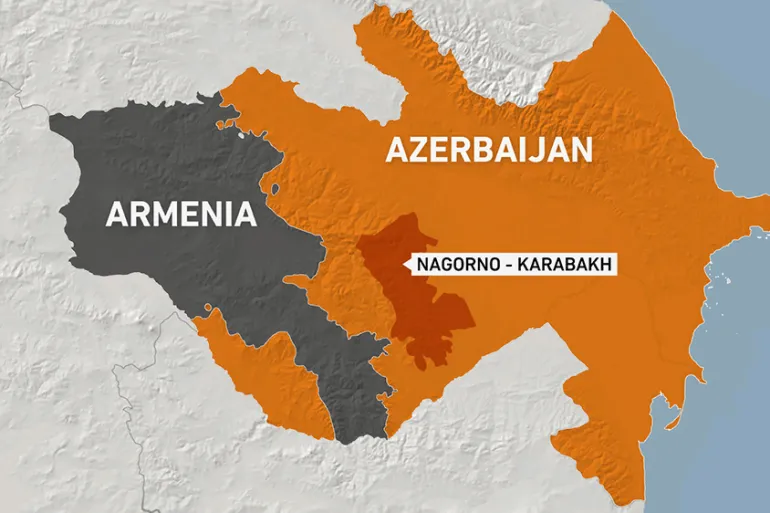
In the aftermath of the 2020–2023 war,Footnote1 Azerbaijan has emerged as both victor and avenger. After cleansing Nagorno Karabakh (Artsakh) (henceforth both names will be used depending on the context) of 150.000 Armenians between 2020 and 2023, the territory where Armenians lived for millennia was emptied. Under the threat of large-scale extermination and retribution and in order to enable safe fleeing of the local population from their homeland to Armenia, a statement was disseminated on 28 September 2023 on behalf of the President of the Republic of Artsakh, a de-facto republic proclaimed in 1991, announcing that the republic and its state institutions would cease to exist by 1 January 2024.Footnote2 Months later he annulled the decree stating that it was adopted under duress and the decree was unconstitutional as he was not entitled to issue such a decree.Footnote3 The nature of the decree went beyond mere legality as its content, which was dictated by Baku, was a manifestation of Azerbaijan’s excessive and explicit desire to uproot any traces of statehood in the territory of Artsakh.
In parallel to three years of mounting military pressure on Artsakh, Azerbaijan has also occupied around 240 km2 of Armenia’s sovereign territory as a result of several military incursions in approximately 20 sections along the 925 km of Armenian-Azerbaijani border for the period between December 2020 and September 2022. Even though Armenia also controls 21 km2 of Azerbaijan’s sovereign territory,Footnote4 which was a result of the war of the early 1990s, Azerbaijan’s disproportionate advance into Armenia’s territory took place as a result of Armenia’s incapacity to draw new defense lines along the Soviet time borderlines with Azerbaijan in the wake of the 2020 war.
Against this backdrop, how can we interpret Azerbaijan’s offensive behavior against Armenia and Artsakh in the post-2020 era? In that regard, how can the theory of revenge explain Azerbaijan’s wartime and post-war strategy of maximalist pretensions and its infinite chain of excessive demands and preconditions presented against Armenia and Artsakh. This, in turn, is linked to the third question whether the theory of revenge can help observers determine whether revenge is an end itself, or rather a means serving long-term strategic objectives? The paper argues that the triumphalist rhetoric and state-sponsored celebration of victory in Azerbaijan in the post-2020 period represent something more than the commemoration of military success; they amount to the deliberate institutionalization of state-manufactured revenge and its sustained perpetuation. The institutionalization of revenge has transformed a national grievance into a powerful political tool to secure elite cohesiveness, consolidate public institutions, impose greater national solidarity, and shape and guide popular emotions to secure support and legitimacy for the ruling autocratic regime. The institutionalization of revenge norms and negative reciprocity against Armenians have become a defining feature of Azerbaijan’s political culture, public policy initiatives, education system, and dominant popular narratives. It has permeated the socio-political fabric of the Azerbaijani society shaping the regime’s moral vocabulary and reinforcing the foundations of its symbolic authority.
In their conceptualization of revenge in the state behavior, Oded Löwenheim and Gadi Heimann delineate two primary goals and five operative means through which a revenge-oriented state acts.Footnote5 The examination of the objectives and mechanisms of revenge can help deconstruct those critical top-down power dynamics that challenge essentialist interpretations of state behavior. The primary goal of revenge, according to them, is to inflict not only physical but also emotional suffering on the harm-doer. The second goal of the revenge is to display a resolute stance through pursuing a cult of reputation for not backing downFootnote6 and instilling an image for ‘ … toughness that will dissuade the original harm-doer … from inflicting further injuries on the revenger.’Footnote7Five central means of revenge, according to them, involve the following manifestations: excessiveness and disproportionality; symbolism; explicitness; low sensitivity to material costs; longevity.Footnote8 Excessiven
As proposed and conceptualized by Löwenheim and Heimann, the two goals and five means of revenge help us understand the visible and explicit manifestations of revenge towards the harm-doer. Although helpful in contextualizing the outer manifestation of revenge and its enduring nature, they cannot singlehandedly explain how states manufacture, engineer, employ, and institutionalize revenge. Azerbaijan’s experience with the institutionalization of disproportionate revenge begs for more conceptualization and empirical evidence. Nor does their framework of revenge explain the application of other tools in Azerbaijan’s arsenal against Armenia and Artsakh such as coercion, blackmailing, intimidation, deterrence, and punitive threats. As the paper discusses, the strategy of revenge is context-dependent and various variables influence its outcomes. The institutionalization strategy of revenge also implies unavoidable uncertainties, constraints, risks, miscalculations, and the threat of reverse consequences potentially radicalizing the societal fabric of the vengeful state. The strategy of revenge, if examined through the lenses of coercion,Footnote9 can also be beguiling and ineffective as its short-term implications may be confused with mid-term and long-term gains.
From military defeat to negative reciprocity
Unlike analytic history, which is complex by nature and strives to advance an evidence-based analysis of the past that separates it from the present, collective national memory thrives on a ‘“continuing presence” of the past, often with strong emotional overtones’.Footnote10 The collective national memory, as noted by historian Peter Novick ‘ … sees events from a single, committed perspective; is impatient with ambiguities of any kind; reduces events to mythic archetypes’.Footnote11History and collective national narratives and memories, therefore exist in a state of constant tension, given the fact that historical accounts seldom run contrary to the utilitarian essence of collective memory, which, in turn, is an integral part of a national identity project. Narratives also serve as cultural tools to engineer the past and shape collective remembering. Narrative organization, as examined by James Wertsch, implies a two-fold framework: specific narratives (commemorative events, dates, places, actors) and schematic narratives.Footnote12
Since the late 1950s, Azerbaijan’s political and intellectual elites have periodically and systematically packed the national memory with incendiary material ready to be set off at an opportune moment.Footnote13 The rise of the Artsakh movement in Stepanakert and Yerevan in 1988 was met in Baku with a pervasive sense of indignation and contempt, reactions that promptly crystallized into central organizing principles of Azerbaijan’s political narratives and policy discourse. During public rallies in 1989, the still illegal Azerbaijani Popular Front’s (APF) radical political rhetoric on national sovereignty was predicated on strong anti-Armenian sentiments aimed at generating ‘an intense interest in the Artsakh crisis’ as Soviet Azerbaijan’s primary problem.Footnote14 Many of the APF ideas and strategies, which appeared too unorthodox or radical in mid-1989, were later endorsed not only by Soviet Azerbaijani leadership but also the Aliyev family, which has ruled post-Soviet Azerbaijan since 1993.
In 1990, Mark Saroyan identified three definitive approaches that the APF formulated regarding the Artsakh question. These strategic approaches were not only incorporated into the ‘Constitutional Law of the Azerbaijan SSR on Sovereignty’ adopted in September 1989,Footnote15 but also endured during the next decades and were closely pursued by the leaders of Soviet and post-Soviet Azerbaijan. The first one of these approaches was Azerbaijani nation’s sovereignty over the republic and the extension of sovereignty throughout its entire territory, including the Nagorno Karabakh and Nakhijevan; the second one was the demand that the borders of the republic could not be changed without approval by a popular referendum; and the third aspect was about the sovereign right of the Azerbaijani government to eliminate autonomous districts within its jurisdiction.Footnote16
As the developments between 1989 and 2023 showed, the Azerbaijani government stayed firmly committed to these fundamental provisions introduced by the AFP and endorsed by the still ruling communists. Moreover, even though many aspects of the AFP political strategies and initiatives during its time in the opposition and political leadership were severely criticized by Heydar and Ilham Aliyevs, the abovementioned three aspects have constituted the legal and strategic frameworks within which Azerbaijan’s diplomacy and warfare strategy have evolved. In November 1991, Azerbaijan dissolved the autonomous status of the Nagorno Karabakh Autonomous OblastFootnote17 and never formally restored it even though within the OSCE Minsk Group negotiation, Baku reiterated its willingness to grant the highest autonomous status to Nagorno Karabakh should it stop pursuing its goal of self-determination. The three approaches have also produced an emotive framework shaping the consolidation of collective narratives about the conflict’s structural causes.
Until the ceasefire of May 1994, Azerbaijan went through dramatic domestic transformations resulting in three presidencies and two interim presidencies. Each time the authorities in Baku were dealing with a domestic crisis between different political fractions its armed forces were experiencing more territorial losses and setbacks in and around Nagorno Karabakh. The resultant military defeat, humanitarian and refugee crises, coupled with immense territorial losses, resulted in a deep sense of humiliation, shame, and hostility towards Armenians and Armenia.Footnote18 The hereditary rule of the Aliyevs has periodically relied on incitement that corresponded to what Robert Harkavy’s model of revenge in international politics described as ‘collective rage and an almost ineradicable need for vengeance’.Footnote19
There is a profound difference between anger, cruelty, sadism, injustice, and revenge.Footnote20 The former instances can inspire resilience and deterrence, while the latter perpetuates cycles of violence. In contemporary Azerbaijan, that line is rather stark and plain as it is being redrawn and reintroduced by the state itself. Roger Petersen notes that in times of war and an escalating cycle of violence anger, fear, resentment, and hatred are potent factors to employ ‘strategic use of emotions’.Footnote21 Mass-led recasting of prejudices and narratives based on rage, hatred, hostile myths, and suspicion can be short-lived unless the state’s organizational and institutional capacities are employed.Footnote22 Possessing resources and facilitating the narratives of ethnic symbolism, elites are better positioned to evoke collective fears and ignite emotional appeals based on blame, anger, and aggression.Footnote23 For Kaufman, the Nagorno Karabakh conflict constitutes ‘a clear example of the symbolic politics of mass-led violence’, which occurred because Azerbaijani myth-symbol emphasizing the sovereignty and territorial integrity of the Azerbaijani republic clashed with Armenian fears of genocide.Footnote24
Instituting the legal and narrative foundations of revenge
The state policy of revenge has been manifested across a wide range of public and social domains. It extended from legal and educational frameworks to public spaces and media outlets, embedding itself in both institutional practices and everyday symbolic representation. Public monuments, martyrs’ cemeteries, and commemorative holidays – such as the Martyr’s Day or Black January, the Khojalu Remembrance Day, the Day of Azerbaijani Genocide – reinforced a shared identity shaped by trauma and humiliation.Footnote26 These collective traumas were remembered and periodically reproduced in public events and spaces.Footnote27
On the level of presidential decree, such an approach ingrained a long durée claim of victimhood with targeted and specified historical indictments. Adopted four years after the 1994 ceasefire, the decree aimed to consolidate and weaponize the prevailing emotive atmosphere of humiliation stemming from the fresh memories and experiences of military defeat, while simultaneously legitimizing authoritarian practices and social norms that were becoming increasingly visible across public policy domains. The 1998 decree came to constitute one of the watershed moments in consolidating national narratives and fueling popular anti-Armenian emotions.
Various analytical reports and studies have revealed the manufactured and overblown nature of the Azerbaijani claims regarding the Khojalu tragedy,Footnote31 however the hereditary rule of the Aliyev dynasty continues to commemorate the official version of the events in the spirit of the narrative presented in the decree. The 1998 decree has also laid out additional outright fabricated and falsified themes aimed at undermining the Armenian civilizational legacy and negating its historical trajectory in the Caucasus and Asia Minor spanning several millennia. Many of the concepts and terms introduced in the decree were later reproduced and consistently used in official statements and media communications. Building upon the legal and symbolic framework of the 1998 decree, various state sponsored and independent foundations started to amplify the negative image of Armenians and their incompatibility with the Azerbaijani notion of regional coexistence.
In an effort to document and report the cases of discrimination affecting a handful Armenians, including individuals born to Armenian-Azerbaijani mixed marriages, who continued to reside in Azerbaijan, the Council of Europe’s European Commission against Racism and Intolerance (ECRI) issued five reports on the matter in 2002,Footnote32 2006,Footnote3
School textbooks emerged as another salient manifestation of the deepening and manufactured nature of state-engineered retributive policies directed against the Armenian nation. Various textbooks in Azerbaijan teach the Artsakh conflict between 1988 and 1994 as a story of internal and external betrayal and rightful and just fight.Footnote37 Through the systemic and sustained dehumanization of Armenians in textbooks and curricula, targeting the entire Armenian nation, and distorting its history and civilizational legacy, Azerbaijani schools and academic institutions have functioned as powerful platforms for the production and internalization of a retributive worldview.Footnote38 The 2022 concluding observation of the UN Committee on the Elimination of Racial Discrimination on the situation in Azerbaijan states: ‘the Committee is concerned about reports that school textbooks promote prejudice and incite racial hatred, particularly against ethnic Armenians, and that ethnic minorities are marginalized in history education in the State party. It is also concerned about the lack of detailed information on measures taken by the State party to combat prejudice and intolerance’.Footnote39
Between 2004 and 2010, three events – one in Hungary, the other one in Nakhijevan, and the last one in Nagorno Karabakh – served as additional precursors to how the Azerbaijani leadership would react to the cases of violence and destruction of cultural heritage carried out by the state. In 2004, when Lieutenant of Azerbaijani Armed Forces Ramil Safarov struck Lieutenant Gurgen Margaryan multiple times with an axe while he was asleep in Budapest, it sent shockwaves across the Armenian society. Although he had been sentenced in Hungary to life imprisonment, with eligibility for parole only after 30 years, Victor Orban extradited Safarov to Azerbaijan in 2012, where he was promptly pardoned by President Aliyev and promoted to the rank of major. For many in Azerbaijan, Safarov ‘is the pride of Azerbaijani nation’.Footnote42 The reception and rewards he received in Baku was criticized by many, including the European Commission against Racism and Intolerance, which stated that his pardoning did not take ‘into account the risk of cultivating a sense of impunity for the perpetrators of racist crime’.Footnote43
Safarov’s act of revenge, which he never dismissed in his statements, and its subsequent public celebration and official endorsement, constituted a critical turning point in a succession of egregious crimes that unfolded through 2023. Six years later, Mubariz İbrahimov was posthumously awarded the title of National Hero (Milli Qəhrəmanı) of Azerbaijan. His case stands out among the more than 220 recipients of Azerbaijan’s highest national distinction for the explicit reference to his ‘exceptional service’ (müstəsna xidmət). The circumstances surrounding his death during the front-line infiltration operation into Nagorno Karabakh in 2010 remain contested and insufficiently documented. Acting reportedly on his own initiative, Ibrahimov carried out an act of sabotage that resulted in the killing of several Armenian soldiers under particularly cruel circumstances. Once the details emerged, Ilham Aliyev awarded him the country’s highest national honor in July 2010.Footnote44 Soon thereafter, official discourse and popular narratives began presenting his actions as exemplary acts of heroism. This case once again demonstrated the implications of institutionalized revenge narratives for the battlefield conduct of individual servicemen within Azerbaijan’s armed forces.
In an effort to cause further emotional suffering and pain, between 2005 and 2006, Azerbaijan demolished Armenian khachkars (cross-stones) in Jugha, Nakhijevan, which dated from the 9th to the 17th century. These particular khachkars were unique in their form as they served as grave markers and monuments of Armenian Christian heritage in Nakhijevan.Footnote45 The destruction of these Christian monuments marked another pattern in Azerbaijan’s state policy of institutionalized revenge against Armenian cultural heritage and presented a model of how Azerbaijan proceeded with its destructive policies once it established an effective military control over the entire Artsakh in 2023.Footnote46
Societal animosity towards Armenians was further amplified through expansive media coverage, movies, literature documentaries, and inputs from government-sponsored experts. High-ranking officials, in turn, made inflammatory statements and remarks depicting Armenians as ethnic rivals who cherish dreams of ‘Greater Armenia’, which, according to them, also included territories from Azerbaijan.Footnote47 Anti-
In 2013, Azerbaijan’s government released a list of 335 individuals, mostly officials and artists from various countries, who were declared persona non-grata for violating the country’s laws by visiting Nagorno Artsakh.Footnote49 Azerbaijan’
Throughout the 2010s, Azerbaijan’s economy, strengthened by oil revenues, allowed for a significant military buildup. With the active facilitation from the state, public opinion became increasingly focused on the possibility of a military solution to the Nagorno Karabakh conflict, with government rhetoric often emphasizing the need to restore territorial integrity with any discussion about the status of Nagorno Karabakh leaving to the future. Revanchism continued to be a powerful force, with public opinion consistently reflecting strong support for reclaiming Nagorno Karabakh and surrounding areas by force if necessary. The government’s hardline stance on the conflict was mirrored by widespread public support. Sporadic clashes along the line of contact between Armenian and Azerbaijani forces, which had been escalating since 2008, kept both expectations and emotions high. These incidents, often widely reported in Azerbaijani media, reinforced negative views of Armenians and the belief that military resolution was the only viable choice.
Available reports indicate that during the four-day escalation of hostilities in April 2016, when Azerbaijan initiated a large-scale military operation against Artsakh, Azerbaijani armed forces committed war crimes against Armenian soldiers and civilians. The reports, which were prepared by the Artsakh Human Rights OmbudsmanFootnote51 and Artsakh’s Prosecutors OfficeFootnote52 and shared with Amnesty International and Human Rights Watch, brought abundant evidence of beheading of Armenian soldiers, torture and mutilation of bodies, and murder of civilians, including elderly residents in Talish. For instance, enlisted soldier Kyaram Sloyan was beheaded while alive, while major Hayk Toroyan and a 68-year-old contractor were beheaded after their death. The graphic images were later shared online by the perpetrators themselves. This method of mutilation and subsequent public display of the bodies of the victims became another hallmark of the entrenched revengeful mindset that dominated in the armed forces of Azerbaijan. In a series of interviews with Azerbaijani media outlets (‘Yeni Çağ’ and ‘Gapp.az’) between 2016 and 2018, the perpetrators publicly admitted to committing the acts of beheading and mutilation.Footnote53
Revenge in action in the post-2020 era: further manifestations of Azerbaijani politics of retribution
Harkavy’s spectrum of revenge offers a nexus between humiliation and revenge. The humiliation part, discussed above, is extended towards the revenge side through ‘vengeance, retaliation, payback, “tit for tat” and, perhaps, revisionism and irredentism’.Footnote55
Azerbaijan’s military successes during the initial stages of the war in late September and early October 2020, which resulted in the recapture of some territories, were met with widespread public euphoria. Further reports of indiscriminate shelling of cluster munitions in civilian areas during the war, widespread use and proliferation of videos of drones attacking Armenian targets, as well as videos and images of execution, beheading, and abuse of POWs, came to emphasize that crimes of war were committed and excessive and disproportionate use of revengeful means were ubiquitous. The Ad Hoc Public Report of the Human Rights Defender of Armenia, which was prepared based on interviews with 50 repatriated civilians and combatants who fell captive to the military forces of Azerbaijan, reported a large scale mechanism ‘for processing and maintaining incoming captives in a way that allowed abuse, beatings, torture, harassment, and intimidation to be the norm’.Footnote56 The report provided documented and medically verified details of torture, mutilation, mistreatment in violation of international humanitarian law and international human rights law.Footnote57
The trilateral statement adopted on 9 November 2020, by Azerbaijan, Armenia, and Russia restored Azerbaijan’s territorial integrity outside of the former NKAO; furthermore, Azerbaijan effectively controlled the strategically important city of Shushi and the entire Hadrut region in the south of Artsakh. With close to 2000 Russian peacekeepers deployed in Artsakh and along with the contact line and the Lachin corridor, Azerbaijan formalized its military and diplomatic gains. Most of its strategic objectives achieved, Armenia-Artsakh military alliance neutralized, and Armenia’s government articulating an agenda based on the launching of an ‘era of peace’, one would expect Azerbaijan, which also suffered around 3000 casualties in 2020, to recalibrate its rhetoric of excessive retaliation and irredentist ambitions in favor of stabilization and conflict de-escalation. However, despite the decisive nature of the military defeat of the Armenian sides, Azerbaijani official rhetoric remained deeply hostile towards Armenia and Armenians. The territorial gains of the 2020 military onslaught, the negotiated return of the territories surrounding Artsakh and Armenia’s inability to promptly restore its combat capabilities have reinforced the self-sustained belief that military strength and the policy of excessive coercion were key to the final resolution of the conflict. Hence, revanchist sentiments remained strong, anti-Armenian racial narratives and stigmatizations continued to circulate widely across political rhetoric and social media platforms, suggesting not a post-conflict moderation but the consolidation of an enduring antagonistic paradigm.
In that vein, starting from December 2020 until late 2023, Azerbaijan has carried out several operations and incursions both in Artsakh and Armenia, which resulted in territorial losses of the Republic of Armenia but also led to the ethnic cleansing of Artsakh. Five out of ten Armenian provinces, which border Azerbaijan, have lost territories as a result of Azerbaijani incursions. Some of them were lost in the early 1990s, but the significant part was lost after December 2020. Around 240 km2 of Armenia’s sovereign territory that Azerbaijan refuses to de-occupy, despite the initialing of the draft ‘Agreement on the Establishment of Peace and Interstate Relations between the Republic of Azerbaijan and the Republic of Armenia’ and other agreements reached during the Summit held in Washington on 8 August 2025, is another example of excessive nature of revenge politics modelled by Löwenheim and Heimann. The refusal of Azerbaijan to de-occupy Armenia’s sovereign territory, which equals to Yerevan’s size, may also be linked with the longevity means of revenge, which aims to inflict pain for a long period of time.
The nine-month blockade of the Lachin corridor, the only link connecting Armenia to Artsakh between December 2022 and September 2023, created shortages of food and medicine, and cases of malnutrition and power, water, and gas outrages became frequent. These created widespread suffering among civilians. Elyse Semerdjian borrows the concept of ‘genocide of attrition’ introduced by Raphael Lemkin to characterize Azerbaijan’s starvation warfare against Artsakh’s civilian population between December 2022 and September 2023. For her, mass starvation and extreme deprivation constituted a weapon of mass destruction.Footnote58 The policy of starvation proceeded in parallel with Azerbaijani arrests of Artsakh civilians, including teenagers and elderly men, carried under a range of fabricated legal pretexts.
During the entire period of the blockade, Azerbaijan has exercised an unprecedented level of informational and psychological pressure on the population of Artsakh, which was documented in a report published after the exodus.Footnote59 It documents narrative frameworks, rhetorical strategies, methods of information operations, and the mechanisms through which Artsakh Armenians received, disseminated, and countered these efforts, as well as their overall effectiveness. The study also contends that the information-propaganda techniques and psychological-behavioral influence tools, initially tested by Azerbaijan in 2020 and subsequently refined over the following three years, gradually crystallized into an institutionalized and state-coordinated system. These methods were deployed as a meticulously developed toolkit, applied systematically and persistently against the Armenian population of Artsakh, cultivating a pervasive atmosphere of discrimination, powerlessness, hopelessness, and distrust toward the future. Consequently, these techniques undermined the resilience of Artsakh Armenians and, within the prevailing military-political context, compelled them to leave their homeland.
On 19 September 2023, after a 9 months-long siege warfare, which ‘rendered Artsakh Armenians too starved to resist’,Footnote60 Azerbaijan launched a large-scale aerial and land operation on visibly weakened and outnumbered positions of Artsakh’s Defense Army. Despite the presence of Russian peacekeepers, the 24-hour carnage that followed resulted in chaos, excessive combatant and civilian losses and internal displacement. Within the next few days after declaring ceasefire on September 20, Artsakh’s state institutions or what was left of them, decided to surrender and negotiated the exodus of the population. An act of ethnic cleansing unfolded, causing the remaining 100,000 Armenians of Artsakh to leave for Armenia during the next 10 days.
Azerbaijan’s September 2023 assault was both explicit and excessive in nature. Forcing Armenians to leave within a short period of time accompanied by demonstrative arrests of its former political and military leadership were explicit and were aimed at frightening the Artsakh Armenians. It was also consistent with the third means of the Löwenheim and Heimann, who defined explicitness of the revenge to be ‘essential to the revengers in coming to terms with the past’.Footnote61 Targeting military and political leaders by arresting them in front of cameras while Artsakh’s population was fleeing its homeland, taking them to the Baku prison, releasing photos of torture, humiliation, and mutilation, also fit symbolic means of the model developed by Löwenheim and Heimann. The treatment of Armenian prisoners of war and civilians captured after the 2020 conflict has drawn international criticism. Human rights organizations have documented cases of abuse, torture, and extrajudicial detentions further demonstrated practices of punitive mindset rather than a rule-of-law approach to post-conflict justice. In March 2025, Azerbaijan started a trial of Artsakh’s former political-military leadership. In a highly orchestrated and staged trial, Azerbaijan’s judicial system was trying to reinforce those images of Armenians that long persisted in popular narratives and embraced by state officials. Access to a fair trial was denied. In February 2026, the Military court of Baku sentenced them to life sentences except for two former presidents because of their age, who were sentenced for 20 years.
Symbolism and longevity means of revenge are also reflected in eclectic expansionist claims and irredentist visions towards Armenia. Termed ‘augmented Azerbaijan’ by Laurence Broers, Azerbaijan has long, albeit erratically and inconsistently, promoted territorial claims towards Armenia, particularly focusing on Syunik, lake Sevan, Yerevan.Footnote62 Heydar Aliyev’s 1998 decree, in addition to introduction and institutionalization of the Azerbaijani genocide, has also promulgated the concept of ‘Western Azerbaijan’ as opposed to ‘Greater Armenia’ concept, which was discussed and criticized in the decree. During the next several years, various quasi-academic publications appeared in Azerbaijan promoting the concept. In 2005, the YerAz clan in Azerbaijan announced the creation of the ‘Western Azerbaijan Liberation Front’.Footnote63
Similar endeavors proliferated in the post-2020 period, partly inspired by Ilham Aliyev’s irredentist and vengeful statements and partly by emanating from popular sentiments of causing long lasting symbolic trauma to Armenians. Astourian has discussed two additional initiatives: the first one was the creation of a ‘Republic of Western Azerbaijan’ in exile in 2020 and the creation of the second one, named ‘The West Azerbaijan Goyce-Zangezur Turkish Republic’, was declared in September 2022.Footnote64 In late 2025 and early 2026, the Open Caucasus Media and Hetq investigative journalist websitesFootnote65 published reports demonstrating how Azerbaijan’s presidential administration financed and orchestrated various initiatives, including conferences, workshops, paid media campaigns, aimed at promoting the ‘Western Azerbaijan’ project. Another related feature of the Western Azerbaijan project is the consistently promoted project related to the safe and secure return of 300.000 Azerbaijanis to Armenia. Ilham Aliyev, who periodically speaks about Azerbaijanis’ ‘right to return as a fundamental human right principle’,Footnote66 never mentions about the rights of 150,000 Artsakh Armenians who were forced to leave Artsakh between 2020 and 2023 and 350,000 Armenians who lived in various parts of Soviet Azerbaijan before Sumgait, Kirovabad and Baku pogroms occurred between 1988 and 1990 forcing them to flee Soviet Azerbaijan.Footnote67
During the 2020 war and afterwards, Azerbaijan has also deliberately targeted religious and cultural monuments widely sharing the images to create shock and awe. Artsakh, being one of the cradles of Armenian Christianity and enlightenment, has an infinite number of cultural and religious monuments. Aiming at symbols and icons and demonstratively sharing the photos of destruction ‘are designed to intensify the suffering of the target’.Footnote70 The UN CERD’s concluding observations on the situation in Azerbaijan touched upon the question of Armenian cultural heritage and reported ‘ … on the destruction of and damage to Armenian cultural heritage, including to churches and other places of worship, monuments, landmarks, cemeteries and artefacts, and the lack of information on investigations carried out into such allegations’.Footnote71 The UN document further recommended adoption of ‘measures to prevent such acts, facilitate the mission proposed by the United Nations Educational, Scientific and Cultural Organization to draw up a preliminary inventory of significant cultural properties, and strengthen its efforts to preserve these sites while ensuring effective and meaningful consultation with ethnic Armenian communities’.Footnote72
In the years sincew the UN document, Azerbaijan has not permitted any international organization working on preserving cultural heritage to carry out any mission on the territory of Artsakh. In addition to destruction and damage, Azerbaijan has also embarked on a parallel effort to erase Armenian cultural heritage, such as changing the historical narratives of churches, graves, and monuments, revealing another dimension of institutionalized revenge. Altering or erasing inscriptions on historical monuments, denying the Armenian identity of churches and monasteries, and declaring them ‘Caucasian Albanian’ were the hallmarks of Azerbaijan’s revanchism against cultural and symbolic sites. This has particularly intensified after the 2023 forced exodus of Armenians from Artsakh. The state’s approach to post-war development is not just physical but symbolic: invention of cultural identity through erasure.
For the last four-five years, Azerbaijan has also launched massive reconstruction projects in the territories reclaimed during the war. Since 2021, roads, airports, mosques, and villages started to be erected in and around Nagorno Karabakh.Footnote73 According to a state-affiliated outlet, between 2021 and 2025 Azerbaijan has spent $12,6 billion on these projects.Footnote74 Yéléna Mac-Glandières names these projects Pax Logistica as they constitute ‘a dromocratic and authoritarian endeavor in which the territory of Artsakh is physically and symbolically reconnected to Azerbaijan through infrastructuring practices that are defined by accumulation, speed and spectacle’,Footnote75 remain underused because of the underpopulated nature of Artsakh. This project fits into another means of revenge proposed by Löwenheim and Heimann, which is low sensitivity to material costs. Although the authors employed that category during the conflict phase, it is also applicable in our case-study and can also be applied to the revenger’s post-war initiatives. The symbolic nature of these reconstruction projects, coupled with territorial and demographic engineering as well as infrastructural reordering, aims to signal the readiness of the revenger to bear considerable material costs – equal to approximately 10% of the annual budget – to inflict symbolic suffering on the people who prevented and delayed the conflict from development.
The post-2020 educational system in Azerbaijan has increasingly blurred the line between patriotic education and ideological brainwashing. Schoolchildren are taught about the ‘glorious liberation’ of Artsakh, with an emphasis not only on military might but on the national humiliation of Armenians and the eventual triumph of Azerbaijanis. The inauguration of the War Trophies Park in Baku in April 2021 was another manifestation of the dehumanization of the harm-doer. Among exhibits, some mannequins depicted Armenians in humiliating and demeaning postures.Footnote76 The government promoted the park as an educational venue where schools held classes. Responding to criticism from Armenia and human rights watchdogs, the Ministry of Foreign Affairs of Azerbaijan stated: Azerbaijan has ‘a moral right to immortalize this glorious victory forever through parades, parks, museums and other means’.Footnote77 In a similar vein, since the late 2020 Ilham Aliyev has also put forward the symbol of ‘Iron Fist’ (dəmir yumruq). Over the past years, this widely popularized symbol has acquired several explicit and implicit meanings signifying victory, national unity, military might, revenge, as well as a warning to the adversary against retaliation.Footnote78
Lack of methodologically solid public opinion data in authoritarian countries deprives observers any chance of comprehending how top-down projects and initiatives are perceived. Azerbaijan is no exception. Leaving the issues of social desirability bias for surveys aside, it is rather difficult to understand how engineering of goals and means of revenge are perceived and internalized by the Azerbaijani society. Perpetual reproduction of entrenched narratives and their enforcement oftentimes are backed by state-mediated representations of public opinion. Surveys designed and conducted by companies closely affiliated to the executive and legislative branches of Azerbaijani government have imposed and reinforced stigmas and norms, which are difficult to violate or challenge.Footnote79 One such example was in early October 2020, a week into the war, when the survey data released by the Social Research Center in Baku (Sosial Tədqiqatlar Mərkəzi (STM)) showed that 90–95% of the respondents supported the military offensive against Nagorno Karabakh. In August 2022, when Azerbaijan, in violation of the 2020 November ceasefire, launched another military operation explicitly named ‘Qisas’ əməliyyatı (Operation Revenge) against the self-defense forces of Artsakh. The same STM presented data that the 80% of the respondents supported the Qisas operation.Footnote80
Many nations mythologize victory and demonize their enemies in the wake of war. In Azerbaijan’s case, the ongoing institutionalization of revenge has only intensified since 2020. The parameters of, what Barberis and Huseynli call, ‘the national community’s emotional obligation of hatred against Armenians’Footnote81 have become even clearer. One obvious and more recent example was the aftermath of the August 8 Washington declaration and the explicit incompatibility between continuation of the state-mediated policy of revenge and the officially declared and internationally supported peace process. Parallel to the rhetoric aimed to please the international community, the Aliyev administration continues to promote narrative patterns and rhetorical constructions, which hardly differ from the pre-August 8 practices.
Overt manifestations of this policy are the consistent use by Azerbaijani state and political circles of the terms like ‘western Azerbaijan’, ‘return of western Azerbaijanis’, ‘Zangezur Corridor’, and so on, which the Armenian side vehemently opposes. In this regard, the above-mentioned report of Armenia’s Foreign Intelligence Service asserts that ‘the continuous assessment of the true intentions behind the state policy of promoting’ these narratives ‘will be’ ‘a priority task for the Service’. The report goes on to elaborate on its declared task: ‘ … it needs to be assessed whether by using these narratives as a new national ideology Azerbaijan intends to transport the conflict into the territory of Armenia in some new form or to use it as a tool for foreign policy bargaining and, more precisely, as a way to offset the issue of the return of Karabakh Armenians’.Footnote82 Since 2021, another explicit objective of Azerbaijan has been its frequently repeated request for Armenia to amend its constitution. Notwithstanding the overwhelmingly conducive atmosphere of hope and reconciliation heralded in Washinton on 8 August 2025, Azerbaijan’s President Aliyev reiterated, within minutes after the declaration’s signing, Armenia’s ‘home assignment’ to amend its constitution as a final condition for the success of the peace process. Although the preamble of Armenia’s constitution has only an implicit reference to the 1989 joint decision of the Armenian Supreme Council and the Artsakh National Council on the reunification of Artsakh with Armenia, Azerbaijan officially considers it as a legal and political obstacle towards normalization of relations and establishing lasting peace between the two nations.
The examples discussed in the previous sections of the paper demonstrate that the policy of revenge has been transformed from its early stages of inception. While initially being shaped and promoted as an end itself, it has now become a means for imposing perpetual cycle of concessions on Armenia. Azerbaijan’s rhetoric of peace in the post-Artsakh phase contradicts Azerbaijan’s policies and strategic choices. For a sustainable peace to take hold, the institutional structures that sustain Azerbaijan’s revenge industry must be dismantled. Doing otherwise will always raise questions about Azerbaijan’s ultimate objectives in its search of peaceful co-existence with Armenians. Restoration of Azerbaijan’s territorial integrity in 2020 and its takeover of the de facto Republic of Artsakh in 2023 — objectives articulated and institutionalized in the aftermath of the 1994 military defeat – did not prevent Baku from continuing to undermine Armenia’s legitimacy as a sovereign state and cast doubt on the prospects for a durable peace.
Conclusion
The paper demonstrated that when Löwenheim and Heinmann’s conceptual model of revenge, with its two goals and five means, is applied, many revanchist practices of Azerbaijan versus Armenia and Armenians make more sense. Emotional and material satisfaction of the retaliator and inflicting suffering on the harm-doer constituted the basis of Azerbaijan’s public institutions, popular narratives and dominant discourse. Public opinion, widely shaped and directed through the official discourse, continues to view Armenians through the lenses of stigmatization, distrust, and hostility. Although there is a sense of finality, as many believe the conflict has been resolved in Azerbaijan’s favor after the mass exodus of remaining Armenians in 2023, the memory of the war and the displacement of Azerbaijani communities continue to fuel negative perceptions.
By the time Azerbaijan controlled the entire Artsakh and sovereign territories of Armenia, the idea of revenge had already become embedded in the fabric of the state institutions. Anti-Armenian propaganda, dehumanization, and inflammatory rhetoric of state officials, which present territorial claims and intervene in the domestic affairs of Armenia, have not only persisted but also became more systemic and organized. Wrapped in peace negotiations, Azerbaijan’s state policy promotes excessive demands. No meaningful attempts to promote coexistence, peace-building, or post-war healing exist. Nor are there talks about returning Artsakh Armenians to their indigenous homes. Instead, the national story continues to be told as one of unfinished justice suggesting that military victory and possible peace are not the end but a milestone in a longer arc of historical retribution.
Disclosure statement
No potential conflict of interest was reported by the author(s).
Correction Statement
This article has been corrected with minor changes. These changes do not impact the academic content of the article.
Additional information
Funding
Notes on contributors
Vahram Ter-Matevosyan
Vahram Ter-Matevosyan is a Full Professor at the College of Humanities and Social Sciences at the American University of Armenia.
Notes
1. The war that Azerbaijan launched in September 2020 and culminated in September 2023 should be interpreted as a single, continuous campaign sequence. Unlike the dominant interpretative approach that treats the six-week high-intensity war of 2020 as distinct from the subsequent seven high- and low-intensity military operations conducted in 2021, 2022, and 2023, the author views the military operations initiated by Azerbaijan over those three years within the context of a unified, large-scale military-strategic design and phased operational planning, reflecting continuity in objectives, force employment, operational conduct, and escalation management.
2. Stepanian, “Artsakh Dissolution Decree Annulled.
3. Ibid.
4. Hovhannisyan, “Mapping the Occupation.”
5. Löwenheim and Heimann, “Revenge in International Politics,” 685–724.
6. Tang, “Reputation.” 40.
7. Löwenheim and Heimann, “Revenge in International Politics,” 691.
8. Ibid., 692–3.
9. George, Forceful Persuasion, 2
10. Wertsch, “How Nations Remember,” 115.
11. Novick, “That Noble Dream,” 3–4.
12. Wertsch, “The Narrative Organization of Collective Memory,” 120–35.
13. Bölükbaşi. “Azerbaijan. A Political History,” 61–75.
14. Saroyan, “The ‘Karabagh Syndrome’ and Azerbaijani Politics,” 24.
15. “Azerbaichan Sovet Sosialist Respublikasinin Suverenliyi Hagginda Azerbaijan SSS-in Konstitutsiya Ganunu.”
16. Ibid.
17. “Azərbaycan Respublikasının Dağlıq Qarabağ Muxtar Vilayətini ləğv etmək haqqında”
18. Guliyev, “Internally Displaced Persons (IDPs) in Azerbaijan,” 1–20; and Guliyev and Gawrich, “OSCE Mediation Strategies in Eastern Ukraine,” 569–88.
19. Harkavy, “Defeat, National Humiliation,” 345.
20. Löwenheim and Heimann, “Revenge in International Politics.”
21. Petersen, “Western Intervention in the Balkans.”
22. Kaufman, “Modern Hatreds,” 10–11.
23. Ibid., 29–30.
24. Ibid., 49.
25. Saroyan, “The ‘Karabagh Syndrome’ and Azerbaijani Politics,” 22.
26. Sahakyan, “Framing the Nagorno-Artsakh Conflict,” 383–99.
27. Tokluoglu, “Definitions of National Identity,” 722–58.
28. Kösen and Erdoğan, “Now We Are Whole,” 571–88.
29. United Nations General Assembl, Letter Dated April 8, 1998.
30. Ibid.
31. Ter-Matevosyan, “The Khojalu Events in the Azerbaijani-Turkish Relations,” 103–14; Kharatyan. “Khojaly ‘Genocide’”; and Stepanyan. “The February 25–26 of 1992 Events,” 354–64.
32. ECRI Report on Azerbaijan, “Cri (2003)3.”
33. ECRI Report on Azerbaijan, “Cri (2007) 22.”
34. ECRI Report on Azerbaijan, “Fourth Monitoring Cycle.”
35. ECRI Report on Azerbaijan, “Fifth Monitoring Cycle.”
36. ECRI Report on Azerbaijan, “Sixth Monitoring Cycle.”
37. Hovsepyan and Tonoyan, “Sustaining Conflict,” 963–95.
38. “Armenophobia in the Textbooks Used in Azerbaijan.”
39. UN Committee on the Elimination of Racial Discrimination, “Concluding Observations on the Combined,” 8.
40. ECRI Report on Azerbaijan, “Sixth Monitoring Cycle,” 10.
41. Ibid.
42. Geybullayeva, “Nagorno Artsakh 2.0.” 180.
43. ECRI Report on Azerbaijan, “Fifth Monitoring Cycle,” 9.
44. M.A. İbrahimova “Azərbaycanın Milli Qəhrəmanı” adının verilməsi haqqında.
45. Donabedian. “The Monumental Heritage of Arts’akh and Nakhichevan,” 65–88; Fidanyan. “Destruction of Jugha Necropolis,” 57–68; and Broers and Toal. “Cartographic Exhibitionism?” 16–35.
46. Saparov, “Normalizing Conflict,” 14.
47. Tokluoglu, “The Political Discourse,” 1223–52.
48. Astourian, “Origins, Main Themes and Underlying Psychological Disposition,” 222–5, 227.
49. “Baku Publishes ‘Black List’.”
50. “Azerbaijan’s Foreign Minister Clarifies status of MFA blacklist.”
51. “Human Rights Defender, Nagorno Artsakh Republic.”
52. This and many official documents and reports are no longer available online since 2023 when all the state institutions and their media resources ceased to exist.
53. Hovhannisyan, “The War Crimes of April 2016.”
54. Gonzales, “An Execution Near Sev Lake.”
55. Harkavy, “Defeat, National Humiliation, and the Revenge Motif,” 350.
56. The Ad Hoc Report, “The Human Rights Defender,” 2
57. Ibid.
58. Semerdjian, “Gazafication and Genocide,” 1–22.
59. Ter-Matevosyan, “The Information Warfare.”
60. Semerdjian, “Gazafication and Genocide.”
61. Löwenheim and Heimann, “Revenge in International Politics,” 693.
62. Broers, “Armenia and Azerbaijan.”
63. Yunusov, “Azerbaijan’s Clans,” 117, 127.
64. Astourian, “Origins, Main Themes and Underlying Psychological Disposition,” 235–6.
65. Canback, “Exclusive: Azerbaijan’s “Western Azerbaijan” Campaign; and Sarukhanyan. “Leaked Documents.”
66. Buniatian, “Aliyev Sticks to Demands.”
67. Rumyantsev and Huseynova, “The Most and the Least International,” 904–23; Austin, “As the Forest Is Chopped.” 423–446; and De Waal. “Black Garden.”
68. Foreign Intelligence Service of the Republic of Armenia. On External Security Risks. 6.
69. Ibid. 9.
70. Löwenheim and Heimann, “Revenge in International Politics,” 692.
71. UN Committee on the Elimination of Racial Discrimination (CERD), “Concluding Observations On the Combined,” 2.
72. Ibid.
73. Ghahriyan, Torosyan, and Harutyunyan, “Azerbaijan’s Power Plays.” 747–76.
74. Huseynova, Azerbaijan allocates over $477 million; and Mamadli. Azerbaijan Spent 94.5% of the 2025 Budget.
75. Mac-Glandières, “Pax Logistica?” 1095–112.
76. “In pictures: Azerbaijan’s Controversial War Park.”
77. “Azerbaijani MFA Responds to Armenian MFA’s Statement.”
78. Geghamyan and Elbakyan, “Peculiarities of Azerbaijan’s Political Culture.”
79. Barberis and Huseynli, “Obliged to Hate,” 431
80. “Qisas’ əməliyyatı ilə bağlı ictimai rəy.”
81. Barberis and Huseynli, “Obliged to Hate,” 445.
82. See note 68 above.
Bibliography
- The Ad Hoc Report. The Human Rights Defender of the Republic of Armenia. Responsibility of Azerbaijan for Torture and Inhuman Treatment of Armenian Captives: Evidence-Based Analysis (The 2020 Nagorno Artsakh War). 2021. https://ombuds.am/
images/files/ 5c7485fdc225adfd8a35d583830dcd 17.pdf(open in a new window). - “Armenophobia in the Textbooks Used in Azerbaijan.” https://
azerichild.education/en/(open in a new window). - Astourian, Stephan. “Origins, Main Themes and Underlying Psychological Disposition of Azerbaijani Nationalism.” In Monuments and Identities in the Caucasus: Karabagh, Nakhichevan and Azerbaijan in Contemporary Geopolitical Conflict, edited by Igor Dorfmann-Lazarev and Haroutioun Khatchadourian, 222–225, 227. Leiden: Brill, 2023.
- Austin, Lyudmila. “As the Forest Is Chopped, the Chips Fly: The Fall of Soviet Internationalism and Late Perestroika’s ‘Refugee’ Problem, 1988–1990.” Slavic Review 82, no. 2 (2023): 423–446.
- ”Azerbaichan Sovet Sosialist Respublikasinin Suverenliyi Hagginda Azerbaijan SSS-in Konstitutsiya Ganunu.” 1989. Baku: Azerbaichan Dovlet Nashriyati.
- “Azerbaijani MFA Responds to Armenian MFA’s Statement on Opening of Military Trophy Park.” April 13,https://en.apa.az/nagorno-
garabagh/Azerbaijani-MFA- responds-to-Armenian-MFAs- statement-on-opening-of- Military-Trophy-Park-346717( open in a new window) - “Azerbaijan’s Foreign Minister Clarifies Status of MFA Blacklist.” December 26, 2025.https://en.apa.az/
foreign-policy/azerbaijans- foreign-minister-clarifies- status-of-mfa-blacklist-487583 (open in a new window). - Azərbaycan Respublikasının Dağlıq Qarabağ Muxtar Vilayətini Ləğv Etmək Haqqında.https://legalacts.az/
en/document/125/118(open in a new window). - “Baku Publishes ‘Black List’.” 2013. https://www.commonspace.
eu/index.php/baku-publishes- black-list-government- azerbaijan-has-declared-335- individuals-including-mps-and( open in a new window) - Barberis, Cesare Figari, and Mirkamran Huseynli. “Obliged to Hate: The Successful Stigmatisation of Anti-War Voices in Azerbaijan.” Review of International Studies 51, no. 3 (2025): 431–448.
- Bölükbaşi, Suha. Azerbaijan. A Political History. New York: I.B. Tauris, 2011.
- Broers, Laurence. Armenia and Azerbaijan: Anatomy of a Rivalry. Edinburgh: Edinburgh University Press, 2019.
- Broers, Laurence, and Gerard Toal. “Cartographic Exhibitionism? Visualizing the Territory of Armenia and Artsakh.” Problems of Post-Communism 60, no. 3 (2013): 16–35.
- Buniatian, Heghine. Aliyev Sticks to Demands for “Return of Western Azeris to Armenia”. December 5, 2025. https://www.azatutyun.
am/a/33614315.html(open in a new window). - Canback, Rasmus. Exclusive: Azerbaijan’s “Western Azerbaijan” Campaign Exposed in Leaked Documents. OC Media, 2025 November, 25.https://oc-media.org/
exclusive-azerbaijans-western- azerbaijan-campaign-exposed- in-leaked-documents/;(open in a new window). - De Waal, Thomas Black Garden: Armenia and Azerbaijan Through Peace and War. New York: New York University Press, 2003.
- Donabedian, Patrick. “The Monumental Heritage of Arts’akh and Nakhichevan: Christian Architecture.” In Monuments and Identities in the Caucasus: Karabagh, Nakhichevan and Azerbaijan in Contemporary Geopolitical Conflict, edited by Igor Dorfmann-Lazarev and Haroutioun Khatchadourian, 65–88. Leiden: Brill, 2023.
- ECRI Report on Azerbaijan. “Cri (2003)3.” 2002. https://rm.coe.int/
first-report-on-azerbaijan/ 16808b5579(open in a new window). - ECRI Report on Azerbaijan. “Cri (2007) 22.” 2006.https://rm.coe.int/ecri-
second-report-on-azerbaijan- adopted-on-15-december-2006- published/16808b78b4(open in a new window). - ECRI Report on Azerbaijan. “Fourth Monitoring Cycle”. CRI(2011)19. 2011.https://www.ecoi.net/en/
file/local/1159760/1226_ 1307449000_aze-cbc-iv-2011- 019-eng.pdf(open in a new window). - ECRI Report on Azerbaijan. “Fifth Monitoring Cycle”. CRI(2016)17. 2016.https://rm.coe.int/
fourth-report-on-azerbaijan/ 16808b5581(open in a new window). - ECRI Report on Azerbaijan. “Sixth Monitoring Cycle.” 2023.https://rm.coe.int/sixth-
report-on-azerbaijan/ 1680ab9e35(open in a new window). - Fidanyan, Marine. “Destruction of Jugha Necropolis with Armenian Khachqars (Cross-Stones) in Azerbaijan.” Journal of Art Crime 10 (2013): 57–68.
- Foreign Intelligence Service of the Republic of Armenia. On External Security Risks of the Republic of Armenia. 2026.https://armenpress.am/
storage/content/2025/pdf/ NewFolder/FISA_Annual_Report_ 2026_English.pdf(open in a new window). - Geghamyan, Varuzhan, and Elbakyan Edgar. “Peculiarities of Azerbaijan’s Political Culture After 2020 Third Artsakh War: The Symbol of “Iron Fist.” History and Culture 21, no. 2 (2024): 165–175.
- George, Alexander. Forceful Persuasion: Coercive Diplomacy as an Alternative to War. Washington: US Institute for Peace, 1997.
- Geybullayeva, Arzu. “Nagorno Artsakh 2.0: How New Media and Track Two Diplomacy Initiatives Are Fostering Change.” Journal of Muslim Minority Affairs 32, no. 2 (2012): 180.
- Ghahriyan, Mushegh, Veronika Torosyan, and Anush Harutyunyan. “Azerbaijan’s Power Plays: Analyzing Baku’s Policy Towards Armenia and Nagorno-Artsakh After 2020.” Small Wars & Insurgencies 35, no. 5 (2024).
- Gonzales, Carlos. An Execution Near Sev Lake. Bellingcat. October 20, 2022.https://www.bellingcat.
com/news/2022/10/20/an- execution-near-sev-lake- armenia-azerbaijan/(open in a new window). - Guliyev, Farid. “Internally Displaced Persons (IDPs) in Azerbaijan: From Protracted Displacement to ‘Great Return’.” Central Asian Survey, November 1–20, 2024.
- Guliyev, Farid, and Andrea Gawrich. “OSCE Mediation Strategies in Eastern Ukraine and Nagorno-Artsakh: A Comparative Analysis.” European Security 30, no. 4 (2021): 569–588.
- Harkavy, Robert. “Defeat, National Humiliation, and the Revenge Motif.” International Politics 37 (2000): 345–368.
- Hovhannisyan, Hayk. “Mapping the Occupation: 241 Km2 of Armenian Territory Remains Under Azerbaijani Control.” October 23, 2025. https://www.civilnet.am/
en/news/981665/mapping-the- occupation-241-km-of-armenian- territory-remains-under- azerbaijani-control/(open in a new window). Civilnet. - Hovhannisyan, Taron. The War Crimes of April 2016. Azerbaijan – A Country Where Killing an Armenian Is Heroism. 2019. https://armenpress.am/
hy/article/964770(open in a new window). - Hovsepyan, Levon, and Artyom A. Tonoyan. “Sustaining Conflict: Identity, Ontological (In)Security, and Azerbaijan’s Policy Toward Armenia After the 2020 Nagorno-Artsakh War.” Small Wars & Insurgencies 36, no. 5 (2025): 963–995.
- Human Rights Defender, Nagorno Artsakh Republic. “Atrocities Committed by Azerbaijani Military Forces Against the Civilian Population of the Nagorno Artsakh Republic and Servicemen of the Nagorno Artsakh Defense Army on 2-5 April 2016.” 2016.https://anca.org/assets/
graphics/2016/Public-Report- Ombudsman-of-NKR.pdf?utm_ source=chatgpt.com(open in a new window).” Shushi. - Huseynova, Naila. Azerbaijan Allocates Over $477 Million for Reconstruction of Liberated Lands in Q1 2025. Caliber.az, 2025. https://caliber.az/en/
post/azerbaijan-allocates- over-477-million-for- reconstruction-of-liberated- lands-in-q1-2025?utm_source= chatgpt.com(open in a new window). - “In Pictures: Azerbaijan’s Controversial War Park.” April 26, 2021.https://www.bbc.com/news/
world-europe-56885719(open in a new window). - Kaufman, Stuart. Modern Hatreds: The Symbolic Politics of Ethnic War. Ithaca: Cornell University Press, 2001.
- Kharatyan, Hranush. Khojaly “Genocide” and Its Mission in Artsakh Conflict. Yerevan. Institute of Archeology and Ethnography, 2021.
- Kösen, Gökcan Mustafa, and Emre Erdoğan. “‘Now We Are Whole:’ Humiliation, Shame and Pride in Aliyev’s Discourse on the 2020 Nagorno-Artsakh War.” Southeast European and Black Sea Studies 23, no. 3 (2023): 571–588.
- Löwenheim, Oded, and Gadi Heimann. “Revenge in International Politics.” Security Studies 17, no. 4 (2008): 685–724.
- Mac-Glandières, Yéléna. “Pax Logistica? Mapping the Interplay Between War, Peace and Infrastructure in Azerbaijan After the 2nd Artsakh War (2020–2023).” Mobilities 20, no. 6 (2025): 1095–1112.
- Mamadli, Sabina. Azerbaijan Spent 94.5% of 2025 Budget for Reconstruction of Liberated Territories. Caliber.az. 2026. https://caliber.az/en/
post/azerbaijan-spent-94-5-of- 2025-budget-for- reconstruction-of-liberated- territories?utm_source= chatgpt.com(open in a new window). - Novick, Peter. That Noble Dream: The “Objectivity Question” and the American Historical Profession. Cambridge: Cambridge University Press, 1988.
- Petersen, Roger. Western Intervention in the Balkans: The Strategic Use of Emotion in Conflict. Cambridge: Cambridge University Press, 2011.
- Rumyantsev, Sergey, and Sevil Huseynova. “The Most and the Least International: The City and the Countryside in Azerbaijan and Armenia from the Early 1960s to January 1990.” Europe-Asia Studies 70, no. 6 (2018): 904–923.
- Sahakyan, Naira. “Framing the Nagorno-Artsakh Conflict: An Analysis of the Narratives of the State Leaders of Azerbaijan, Armenia and Turkey, 2002–2022.” Central Asian Survey 43, no. 3 (2024): 383–399.
- Saparov, Arsène. “Normalizing Conflict – Concealing Genocide? Expert Neutrality in the Armenian Azerbaijani Conflict.” Southeast European and Black Sea Studies (September 2024): 1–21.
- Saroyan, Mark. “The ‘Karabagh Syndrome’ and Azerbaijani Politics.” Problems of Communism 39, no. 5 (1990): 14–29.
- Sarukhanyan, Vahe. Leaked Documents: “Western Azerbaijan” Project Is Directly Financed by the Aliyev Administration. 2026. https://hetq.am/hy/
article/178995(open in a new window). - Semerdjian, Elyse. “Gazafication and Genocide by Attrition in Artsakh/Nagorno Artsakh and the Occupied Palestinian Territories.” Journal of Genocide Research (July 2024): 1–22.
- Stepanian, Ruzanna. Artsakh Dissolution Decree Annulled. Radio Liberty, 2023 December, 22. https://www.azatutyun.am/
a/32743402.html(open in a new window). - Stepanyan, Stepan. “The February 25-26 of 1992 Events in Khojalu in the Context of the Power Struggle in Azerbaijan.” In Strategic Security Studies, edited by Kotanjian. Hayk ch. 1. 354–364. Yerevan: Institute of National Strategic Studies, 2014.
- Tang, Shiping. “Reputation, Cult of Reputation, and International Conflict.” Security Studies 14, no. 1 (2005): 34–62.
- Ter-Matevosyan, Vahram. “The Khojalu Events in the Azerbaijani-Turkish Relations. Assessments from Armenian National Security Perspectives.” Working Papers 2, no. 10 (2009): 103–114.
- Ter-Matevosyan, Vahram. The Information Warfare Conducted by Azerbaijan Against the Statehood and Society of Artsakh in 2023. 2025. https://people.aua.am/
wp-content/uploads/2018/08/ The-Information-Warfare- Conducted-by-Azerbaijan- Against-the-Statehood-and- Society-of-Artsakh-in-2023-4. pdf(open in a new window). - Tokluoglu, Ceylan. “Definitions of National Identity, Nationalism and Ethnicity in Post-Soviet Azerbaijan in the 1990s.” Ethnic and Racial Studies 28, no. 4 (2005): 722–758.
- Tokluoglu, Ceylan. “The Political Discourse of the Azerbaijani Elite on the Nagorno-Artsakh Conflict (1991–2009).” Europe-Asia Studies 63, no. 7 (2011): 1223–1252.
- UN Committee on the Elimination of Racial Discrimination (CERD). “Concluding Observations on the Combined Tenth to Twelfth Periodic Reports of Azerbaijan”. CERD/C/AZE/CO/10-12. 2022. https://tbinternet.
ohchr.org/_layouts/15/ treatybodyexternal/Download. aspx?symbolno=CERD%2FC%2FAZE% 2FCO%2F10-12&Lang=en(open in a new window).
- United Nations General Assembly. Letter Dated 8 April 1998 from the Permanent Representative of Azerbaijan to the United Nations Addressed to the Secretary-General. 1998. https://documents.un.
org/doc/undoc/gen/n98/099/40/ pdf/n9809940.pdf(open in a new window). - Wertsch, James V. “The Narrative Organization of Collective Memory.” Ethos 36, no. 1 (2008): 120–135.
- Wertsch, James V. How Nations Remember: A Narrative Approach. Oxford: Oxford University Press, 2021.
- Yunusov, Arif. “Azerbaijan’s Clans and the Concentration of Power Under Ilham Aliyev.” In “44-Day War: Armenia, Azerbaijan, and the Struggle for Nagorno-Artsakh”, edited by Vicken Cheterian, 117, 127. London: I.B. Tauris, 2026.