
Houses Are Being Built on the Armenian Cemetery in Kharpert
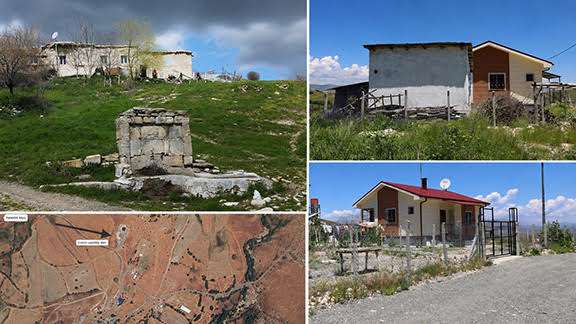
According to reports circulating in the Turkish media, the Armenian cemetery located in the village of Garpeork (Kharapuk) in the Elazig (Kharpert) province in Turkey has been completely demolished, and two houses have been built on the site by the Turkish government’s Housing and Urban Development Department.
According to local sources, the cemetery has been completely destroyed due to the construction of these houses, which were completed in 2023. The bones and skulls of the deceased have been scattered throughout the cemetery as a result of the construction work. The villagers say that the area used to be a cemetery and, despite their objections, the graves were demolished during the works. They are dissatisfied that the housing department is building houses on the graves instead of using the free areas of the village.
The memorials made by Armenians in the village have also been demolished. It is noted that the stones of the village church and cemetery have been stolen or destroyed over the years. The village’s mud (kavas) houses have also been demolished by the state, with the excuse that “we have built new houses, there is no need for mud houses anymore.”
The Turkish press had a telephone conversation with one of the village residents, Hasan Yildirim. He confirmed the rumors and noted: “We heard that there was construction there. I said, “Isn’t it shameful that you built houses on the graves of these poor people?” The bones were thrown here and there. By the way, before you reach the cemetery, there is an area near the fig trees, which is the treasury area. Why didn’t they build there?”
He also confirmed that the cemetery had previously been looted and dug up many times by treasure hunters. There were 80-90 tombstones there, but they were also stolen. The Turkish press reports that in official archival records, the name of the village was mentioned as “Varapuk” in 1912. The Armenians of that village were massacred during the Armenian Genocide carried out by the Ottoman Empire in 1915. A few children survived from the generations of the families of Maso, Toro, Elo, Melik, Manu, Atto, and Sevan. Now, only Alevis and Sunnis live in the village.