Aliyev Escalated to the UN, His Demand To Resettle 300,000 Azeris in Armenia — By Harut Sassounian
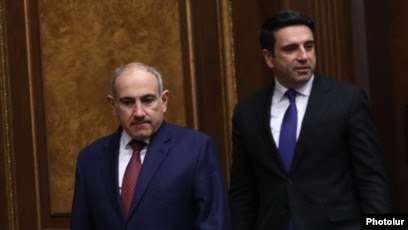
With each passing day, the Government of Azerbaijan is tightening the screws on Prime Minister Nikol Pashinyan in an effort to extort more concessions from Armenia.
Pashinyan and Aliyev have two different reasons for raising the issue of the so-called peace plan.
Pashinyan’s goal was to secure Armenians’ votes in the June 7 parliamentary elections and hold on to power by misleading them into thinking that he had achieved peace.
Aliyev, on the other hand, has a completely different objective. He is in no rush to finalize a peace deal with Armenia. Seeing that Pashinyan is eagerly accepting all of his demands, Aliyev is pressing for additional concessions, such as the return of the former Azeri enclaves within Armenia, the acquisition of new Armenian territories under the guise of “delimiting and demarcating” the border between the two countries, changing Armenia’s constitution, and securing the resettlement of 300,000 Azeris in Armenia.
To carry out the resettlement of Azeris, Aliyev has taken several important steps:
1. Formed and funded an organization called the “Community of Western Azerbaijan”.
2. Insisted that Armenia has no choice but to accept the return of 300,000 Azeris.
3. Promoted the resettlement plan by arranging for visiting foreign officials to meet with the “Community of Western Azerbaijan” Board.
4. Organized conferences around the world, including one held last week in the halls of the U.S. Congress.
However, most Armenians are not aware that Aliyev has initiated a much more significant effort by circulating two “Community of Western Azerbaijan” appeals to all members of the United Nations on January 17, 2023 (three pages) and March 14, 2023 (nine pages), seeking the support of the international community for his resettlement plan.
In the January 17 appeal, Azerbaijan asked the UN General Assembly and Security Council to pressure “the Government of Armenia to enable, within an international process, the safe and dignified return of ethnic Azerbaijanis to their homes in Armenia,” and to guarantee “their collective and individual rights after their return.”
Azerbaijan’s appeal accused Armenia of committing “violence, massacres, and other crimes against humanity and human rights violations,” claiming that “this process was especially violent and cruel in 1905–06, 1918–21, 1948–53, and 1988–91.”
How can Azerbaijan accuse Armenia of committing mass violence against ethnic Azeris in 1905-06, since the Republic of Armenia did not exist at that time. The other listed periods are also based on false claims, as Azerbaijan is accusing Armenia of atrocities that were, in fact, committed by Azeris against Armenians in Baku, Nakhichevan, Sumgait, and Artsakh. Azeris living in Soviet Armenia between 1988 and 1991 left the country voluntarily after selling their houses and belongings. The Azeri appeal also accuses Armenia of demolishing mosques and graveyards. Azerbaijan itself destroyed thousands of ancient khachkars, churches and other Armenian monuments in Nakhichevan, as well as dozens of religious and cultural monuments in Artsakh.
However, instead of criticizing the government of Azerbaijan for its hostile “Western Azerbaijan” agenda, Pashinyan has claimed that the Armenian opposition provoked Aliyev to raise the issue of the resettlement of Azeris in Armenia by talking about the right of Armenian refugees to return to Artsakh. Pashinyan is wrong because Azerbaijan confirmed in its UN appeal that the “Community of Western Azerbaijan” was initiated in 1989 as “Society of Azerbaijani Refugees,” long before the expulsion of Artsakh Armenians in 2023.
Incredibly, Pashinyan dismissed Aliyev’s plan to bring 300,000 Azeris to Armenia. However, it is hard to trust the words of someone who once declared, “Artsakh is Armenia, period,” and later stated, “Artsakh is Azerbaijan.”
Moving 300,000 Azeris to Armenia would be a total disaster for the Republic of Armenia. Here is why:
1. Any minor altercation between a resettled Azeri and a local Armenian could be used as a pretext for Azerbaijan to send its troops into Armenia under the guise of protecting its own people. The appeal to the UN stated that the Azeri “Community does not trust this State [Armenia] in security matters.” It seeks protection for Azeri settlers from Azerbaijan’s military or other foreign troops, possibly including Turkey.
2. The Azeri appeal to the UN also stated that, after the Azeris settle in Armenia, they must “have equal rights [to] enable them to study in their mother tongue and use the Azerbaijani language in the legislative, executive and judicial branches of the Government.” They would demand their own schools, mosques, community centers, and police force. As a result, a large number of Azeri language teachers and imams would be brought to Armenia. The UN appeal added that “Azerbaijanis shall be entitled to form local security forces and take an appropriate role in courts.”
3. The resettled Azeris would have the right to vote and elect their own representatives to the Armenian Parliament, resulting in laws that would protect their interests.
4. Armenian history books would be altered so as “not to offend” the sensitivities of Azeri students regarding the history of Artsakh and Christianity.
5. The UN appeal demanded that “the Government of Armenia ensure the return of property and community lands belonging to Azerbaijanis and pay compensation for property damage and losses caused by preventing the use of such property.”
6. The Azeri appeal also demanded that “Armenia cease its policy and practice of instilling hatred and discrimination against Azerbaijanis, hand over those who have committed crimes against Azerbaijanis to the court of justice, immediately cease glorifying them, demolish monuments to military and political figures and terrorists who took part in crimes against Azerbaijanis, and reverse the changes to toponyms.”
No one should be surprised if Aliyev soon adds the return of 300,000 Azeris to his long list of preconditions for signing a peace agreement.