The Victory Armenia Refused
By Varouj Pogharian, Bogota, Colombia,
Keghart
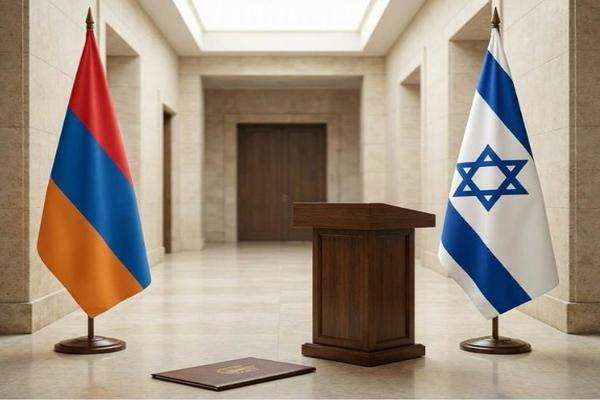
Israel spent decades blocking the recognition of the Armenian Genocide for reasons of state. When it finally reversed course, Armenia inexplicably failed to capitalize on one of its greatest diplomatic successes.
Israel’s recognition was deeply ironic. For decades, successive Israeli governments refused to recognize the Armenian Genocide despite overwhelming historical evidence. Israeli officials, historians, and members of the Knesset repeatedly acknowledged the reality of the genocide, yet the state itself remained officially silent. The reasons were geopolitical. Maintaining strategic ties with Turkey, and later cultivating a close military and intelligence partnership with Azerbaijan, consistently took precedence over historical truth.
When asked about Israel government’s decision, Prime Minister Pashinyan declared that Armenia saw “no need to respond,” explaining that his government opposed the “weaponization” of the Armenian Genocide. At first glance, the statement appears measured and statesmanlike. Armenia, after all, is attempting to normalize relations with Turkey, negotiate a peace agreement with Azerbaijan, and reduce the risk of renewed war.
The central flaw in Pashinyan’s reasoning lies in assuming that silence is politically neutral. It is not. In international politics, every silence communicates something. By emphasizing the avoidance of “weaponization,” he inadvertently supplies language that denialist governments could exploit.
Pashinyan’s position misunderstands the nature of historical memory. He speaks as though genocide recognition becomes problematic once it enters politics. In fact, recognition has always been political. Recognition by national parliaments is political. Recognition by presidents is political. Recognition by international organizations is political. Even denial is political.
The question is therefore not whether history intersects with politics. It always does. The real question is whether politics serves truth or obscures it.
When governments acknowledge historical crimes despite diplomatic costs, they strengthen international norms against denial. When governments remain silent despite favorable circumstances, they weaken those same norms.
Pashinyan deserves credit for recognizing that Armenia cannot define itself solely through victimhood. Nations require hope as well as memory. They require confidence as well as grief. Yet rejecting victimhood does not require abandoning historical truth. Remembering genocide does not prevent building democracy. Commemorating the dead does not obstruct economic development. Acknowledging history does not preclude reconciliation with former enemies. The challenge lies in balancing memory with statecraft. That balance requires confidence rather than silence. Armenia’s greatest diplomatic asset has never been military power or economic influence. It has been moral credibility.
The history of the Armenian Genocide, painstakingly documented by historians across the world, has provided Armenia with a unique voice in international discussions concerning human rights, prevention of atrocities, and historical accountability. That voice should not be surrendered lightly.
Israeli government’s recognition of the Genocide strengthened the international consensus surrounding one of the twentieth century’s defining crimes. It weakened the global architecture of denial. It offered Armenia an occasion to demonstrate both gratitude and dignity. Armenia did not need to endorse Israel’s motives. It needed only to welcome the outcome.
It is understandable that Armenia cannot remain permanently trapped by history. But neither can it escape history simply by refusing to speak about it. For more than a century, recognition of the Armenian Genocide has been one of the central objectives of Armenian diplomacy and of Armenian communities throughout the world. Successive governments and diaspora organizations have invested enormous effort in persuading governments to acknowledge the events of 1915 as genocide.
Recognition was not sought merely for symbolic satisfaction. It serves larger purposes. It affirms historical truth. It combats denial. It strengthens international norms against crimes against humanity. And most importantly, it reminds future generations that mass atrocities should neither be forgotten nor repeated. Israel had a unique place in this debate.
Geopolitical calculations changed due to the dramatically deteriorating relations between Israel and Turkey. Recognition suddenly became politically advantageous to Israel. Few observers can fail to notice the timing. This does not diminish the importance of the decision. Recognition does not become meaningless because states also pursue national interests. Governments often arrive at morally correct positions for imperfect reasons. International recognition of historical crimes has rarely been detached from politics. France, Germany, the United States, and many other countries reached their decisions through political processes shaped by domestic and international considerations.
Indeed, Israel’s long resistance makes its recognition all the more significant. A government that spent decades preventing recognition has now abandoned that position. That represents a genuine defeat for denial, regardless of the political calculations behind it. It suggests that historical truth could prevail over geopolitical expediency. That alone deserved acknowledgment.
This was precisely why Armenia should have welcomed the decision, not respond with studied indifference. Armenia declined even to express appreciation. By remaining silent, Yerevan missed the opportunity to acknowledge not only a historic act of recognition but also the collapse of one of the last major obstacles to the international acceptance of the Armenian Genocide.
Foreign policy is not simply about avoiding conflict. It is also about recognizing opportunities. Israeli government’s decision represented precisely such an opportunity. By declining even to welcome the recognition, Armenia squandered one of the most significant diplomatic developments in decades. In diplomacy, silence is sometimes wisdom. At other times, it is surrender. Prime Minister Pashinyan’s response to Israel’s recognition of the Armenian Genocide belongs in the latter category: surrender.
Official recognition of the Armenian Genocide is never cost-free. Governments weigh consequences carefully before making such choices. Israel can reasonably conclude that Armenia failed to appreciate the significance of its decision. Expressions of gratitude by Armenian officials would reinforce future cooperation. Silence, on the other hand, diminishes incentives for other governments to take similar risks.
Supporters of Pashinyan would argue that Armenia cannot afford additional confrontations. The argument deserves serious consideration. The country remains militarily vulnerable following the loss of Nagorno-Karabakh in 2023. Relations with Russia have deteriorated. Dependence upon Western political support has increased. Every diplomatic move must therefore be carefully calibrated.
But acknowledging Israel’s recognition need not have constituted confrontation. A carefully worded statement could have accomplished several objectives simultaneously. Armenia could have welcomed Israel’s decision as an affirmation of historical truth. It could have thanked Israel without criticizing Turkey. It could have emphasized reconciliation. It could have reaffirmed its commitment to regional peace while insisting that honest recognition of history strengthens, rather than weakens, reconciliation. Such an approach would have balanced principle with pragmatism. Instead, Armenia effectively chose absence.
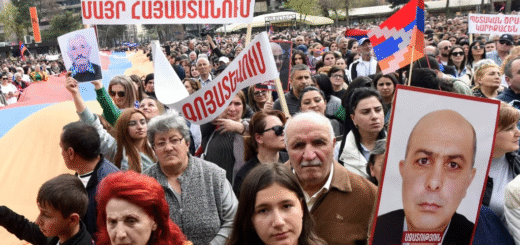
Pashinyan’s position also carries implications for the Armenian diaspora. For more than one hundred years, Armenian communities across North America, Europe, Latin America, Australia, and the Middle East have pursued recognition through scholarship, public education, political advocacy, and legal initiatives. Their efforts transformed what was once a largely forgotten tragedy into one of the world’s best-documented cases of genocide. When Armenia’s own government appears reluctant to acknowledge these achievements, many in the diaspora inevitably question whether their sacrifices continue to enjoy official support. The result risks widening the growing gap between Yerevan and the global Armenian community.
None of this suggests that Armenia should abandon its efforts to normalize relations with Turkey or negotiate peace with Azerbaijan. Indeed, lasting peace remains essential. But genuine reconciliation cannot rest upon selective amnesia. Germany did not become Europe’s strongest democracy by minimizing the Holocaust. It confronted its crimes openly. South Africa did not emerge from apartheid by pretending injustice never occurred. It established institutions dedicated to truth. Historical honesty is not an obstacle to reconciliation. It is its foundation.
History rarely offers small nations diplomatic victories. Even when they arrive for imperfect reasons, wise governments recognize them. Pashinyan did not. It may prove to be one of the greatest strategic miscalculations of his tenure.