
An Armenian Drone Fleet At Last?
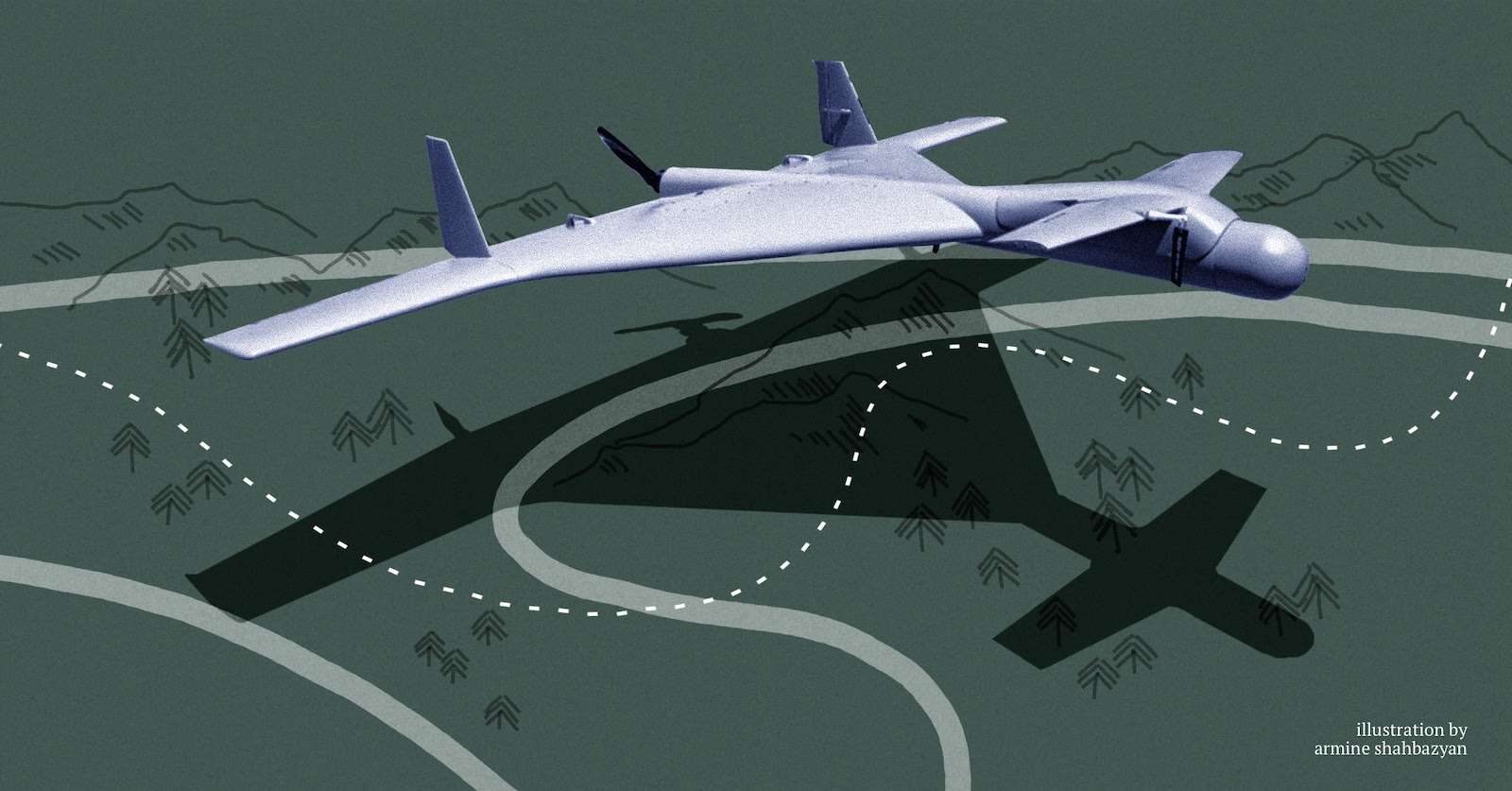
When Azerbaijan launched the Second Nagorno-Karabakh War in 2020, Armenia had no meaningful drone fleet. It had a handful of reconnaissance aircraft, virtually no loitering munitions, and a military leadership that had dismissed the threat posed by Azerbaijan’s drones, despite the lessons of the April 2016 Four-Day War. Azerbaijan, meanwhile, had spent the previous decade building an entirely different capability. During the six weeks of the 2020 war, Azerbaijan’s drone campaign devastated Armenian armor and personnel, while Armenia had few effective means to defend against or respond to the strikes.
Nearly six years later, Yerevan showcased a very different picture. Thirteen indigenous drones from six private companies were displayed during the May 28 military parade, alongside several foreign acquisitions, and further prototypes were shown at a defense expo days later. Armenia’s domestic drone industry has grown considerably, driven by active private investment and state support. Whether the systems on display meet their stated specifications and can be produced at scale is a question that only battlefield conditions can answer.
How Armenia Fell Behind in the Drone Race
After the May 1994 ceasefire which ended the First Nagorno-Karabakh War and froze the conflict along a line of contact, Baku struggled to procure arms from many traditional suppliers. Israel’s “relaxed attitude about its customer base [was] a perfect match for Azerbaijan” as other many Western countries were reluctant to sell military hardware. Baku’s first reconnaissance drones purchased from Israel (Aerostar and Orbiter), were debuted at the June 2008 military parade in Baku. By 2011, a joint venture with the Israeli UAV manufacturer Aeronautics opened in Azerbaijan for local assembly of drones.
Armenian plans to build UAVs were first revealed in March 2010, but work had reportedly begun four years earlier at the Khanperyants Military Aviation Institute. When an Israeli recon drone was downed in Nagorno-Karabakh in September 2011, military analyst Artsrun Hovhannisyan noted that it is “absolutely indisputable” that Armenia “urgently needs UAVs, and not just a few” and that the issue “must remain at the center of our attention.” He argued that while Baku is purchasing Israeli drones, Armenia is building its domestic tech from scratch, “which could make us a leader in the sector in a few years.”
The first Armenian reconnaissance drone, Krunk-25 (“Crane”), was unveiled during the military parade in Yerevan on September 21, 2011, although it had reportedly been developed around 2009. During the parade, it was presented as being “by no means inferior to foreign drones in terms of their tactical and technical specifications.” Developed by the Khanperyants Military Aviation Institute for aerial surveillance and photography, it was reported to have flight endurance of 3.5 hours, and an operational range of 70 km. Armenia was said to possess 15 units with five mobile control stations, which were integrated into the automated artillery fire control system. At the time, the Krunk-25 was hailed as evidence of the Armenian military’s modernization, with Deputy Defense Minister Davit Tonoyan expressing confidence that Armenian drones would become “quite competitive in the international market.” By 2013, authorities reported that Krunk drones were being “intensively utilized” by the armed forces.[1]
Another recon drone, X-55, was unveiled in April 2014 and resembled the Russian UAV Ptero-E4 acquired two years earlier and on whose basis it may have been created.[2] The X-55 drone could reportedly fly six hours and had a range of 100 km. Unlike the Krunk, it was catapult launched, while the former required a runway. An upgraded version, called Armi-55M, was presented in August 2017 and deployed by the Armenian army two years later. Azerbaijan claimed to have downed X-55s on several occasions.
These early Armenian UAVs were not advanced systems and had limited capabilities. There were no known kamikaze drones or combat variants (UCAVs) capable of carrying guided munitions.
A Warning (Mostly) Ignored
In the meantime, Azerbaijan rapidly expanded its inventory with surveillance drones and loitering munitions from Israel. The Harop, Israel’s first loitering munition export to Azerbaijan, was supplied around 2015, with one hundred units delivered by 2018. During its assault on Nagorno-Karabakh in April 2016, Azerbaijan made extensive use of these Israeli systems. The first-ever use of the Harop specifically gained much international attention.[3]
Following the 2016 Four-Day War, veterans, analysts and tech leaders unanimously identified Armenia’s lack of drone capabilities as a serious deficiency. The official response was largely dismissive. The Defense Ministry pointed to the downing of 14 Azerbaijani drones during that war as evidence that the Armenian military knew what it was doing. Alik Mirzabekyan, the Deputy Defense Minister tasked with integrating advanced technology into the military, whose council the IT sector had criticized for producing “practically zero results” over four years, was nonetheless dismissed from his post. Defense Minister Seyran Ohanyan, for his part, complained that domestic industry had never presented the military with a “finished” product, a remark that raised deeper questions about the absence of a coherent policy to establish and develop a defense technology sector in the first place.
Armenia’s September 2016 military parade did not introduce any new UAVs, but the domestic industry began to finally make some progress on loitering munitions. Their development was first revealed in September 2017 and several models were showcased at a defense expo in March 2018. Two, tentatively designated as Krunk-9 and Krunk-11, entered service that year, but their deployment has not been confirmed. A kamikaze quadcopter developed by UAV Lab called Bzez (“Beetle”) was introduced in June 2019. It carried a 4.6 kg high-explosive fragmentation warhead to a range of 8 to 9 km.[4]
Drones surfaced again in active combat during the clashes in Tavush in July 2020. Armenia claimed to have hit three Azerbaijani tanks with indigenous loitering munitions, while Baku used the SkyStriker, a light Israeli drone. Armenia showcased some of Azerbaijan’s Israeli drones shot down over the years after the July fighting, while in August that year, Armenia’s Hi-Tech Industry Minister released two videos of indigenous loitering munitions being tested.
Devastation and Reassessment
By the time Azerbaijan launched the 2020 war against Nagorno-Karabakh, it had acquired from Israel at least 36 reconnaissance drones across five different models, as well as 450 loitering munitions spanning three models, according to the Stockholm International Peace Research Institute (SIPRI), which tracks global arms transfers. To address the gap in its reusable strike-drone capability, distinct from expendable loitering munitions that destroy themselves on impact, Azerbaijan also procured the Turkish-made Bayraktar TB2, capable of both reconnaissance and precision strikes. The TB2 became the first non-Israeli UAV in Azerbaijan’s arsenal.
Although described as the world’s first drone war, the conflict was characterized by a marked asymmetry in UAV capabilities. The combined Israeli-Turkish inventory provided Azerbaijan an overwhelming advantage over Armenia, which only had recon drones and loitering munitions highly limited in quantity and capability. An estimated 12 Bayraktars were acquired by Baku only months earlier and were operated by Turkish crews during the war. Armenian forces managed to take down at least two and, possibly, a third one. Strikes by Bayraktars may have been responsible for the majority of Armenian manpower losses.
Armenian drone use was underwhelming.[5] Through the six-week-long war, Armenia’s Defense Ministry released a single video of a strike by an unidentified indigenous loitering munition, possibly the same as the one shown
[Message clipped] View entire message