
Not Finding Justice in Yerevan, Armenians Should Apply to the European Court — By Harut Sassounian
While successive Armenian governments have exhibited democratic shortcomings since independence in 1991, the current situation is far worse than at any time before.
Since Prime Minister Nikol Pashinyan came to power in 2018, democratic institutions have steadily deteriorated, despite his repeated claims to the contrary. Even more troubling is that the so-called democratic West has totally ignored his abuses because he serves their geopolitical interests rather than Armenia’s.
Today, all governmental institutions are run by one man. The constitutional provision calling for the separation of powers among the executive, legislative, and judicial branches has been severely undermined. As a result, both Armenia’s domestic governance and foreign policy have suffered. Pashinyan entered office with no management experience, yet he proudly proclaims that he makes all decisions on his own without consulting anyone.
The judiciary provides the clearest example of this deterioration. In 2019, Pashinyan and his supporters surrounded a courthouse in Yerevan, preventing a judge from conducting a trial. On June 5, 2019, he made his infamous statement: “Is there a judge in Armenia today who wouldn’t do what the Prime Minister says?”
Pashinyan and his parliamentary majority replaced the members of the Constitutional Court, including the Chief Justice, with judges loyal to the government. He has repeatedly ordered the arrest of political opponents critical of his administration. Hundreds have been detained in recent months in the course of the June 7 elections. Even more alarming, authorities have confiscated the property of several prominent detainees before any trial or judicial determination of guilt. As a result, many Armenians have lost confidence in their country’s judicial system.
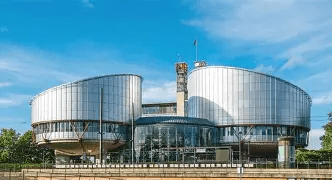
Because Armenia is a member of the Council of Europe and falls under the jurisdiction of the European Court of Human Rights (ECHR), Armenians whose constitutional rights have been violated have the right to pursue justice before that Court, after exhausting all available domestic legal remedies.
Some Armenians have already done so successfully. The ECHR has awarded compensation to complainants after finding that the Armenian government had violated rights protected under the European Convention on Human Rights.
Ironically, Pashinyan himself appealed to the ECHR in 2010 after he and his newspaper were convicted by an Armenian court in connection with the 2008 post-election unrest. After becoming Prime Minister in 2018, he chose not to withdraw his complaints to the ECHR. This is an unprecedented case in which a sitting head of government sues his own country before an international court.
Moreover, as Prime Minister, Pashinyan prevented the Armenian government’s attorney before the ECHR from defending the country’s position, thereby helping to secure a judgment in his favor in 2022. The ECHR awarded his newspaper 9,000 euros in damages, plus taxes to be paid to him by the Armenian government.
1) The Prime Minister has interfered in the internal affairs of the Armenian Apostolic Church in order to replace the Catholicos, despite the Constitution’s requirement that Church and State remain separate.
2) In 2020, he signed an agreement with Pres. Ilham Aliyev of Azerbaijan and Pres. Vladimir Putin of Russia, transferring large portions of Artsakh to Azerbaijan, despite lacking the authority to do so. As Prime Minister of Armenia, his decisions are limited to some issues exclusive to the Republic of Armenia. Therefore, the 2020 agreement he signed is an illegal document and should be considered null and void.
3) Without any jurisdiction, he later recognized the entire Republic of Artsakh as part of Azerbaijan, despite his previous declaration that “Artsakh is Armenia. Period.”
4) He violated numerous provisions of Armenian law, during the June 7, 2026 elections. Nevertheless, his appointees at the Central Election Commission and the Constitutional Court upheld the election results.
5) In July, Parliament enacted an illegal law that prohibits Armenian citizens from voting if they had not lived in Armenia for one year during the preceding two years. This law violates Armenia’s Constitution, which gives all citizens the right to vote regardless of the length of residency in Armenia. This law disenfranchises hundreds of thousands of Armenian citizens who live outside the country for a variety of reasons. Articles 8, 48, and 80 of the Constitution protect the voting rights of all adult citizens without imposing a residency requirement. Furthermore, Article 80 specifically stipulates: “The essence of the provisions on basic rights and freedoms enshrined in this Chapter shall be inviolable.”
It is important to note that legal cases can be filed with the European Court of Human Rights by individuals and organizations living inside or outside Armenia. Applicants do not have to be Armenian citizens — or even Armenian — provided they can demonstrate that they were affected by the violation.
There should be hundreds, if not thousands of cases filed with the ECHR. Because such lawsuits can be expensive, a legal defense fund should be established to cover attorney fees and related expenses. Wealthy Armenians should contribute generously to such a fund.
If justice cannot be obtained in Armenia, it must be pursued wherever the rule of law prevails.