
Rare 350-Year-Old Armenian Manuscript Returns to Matenadaran
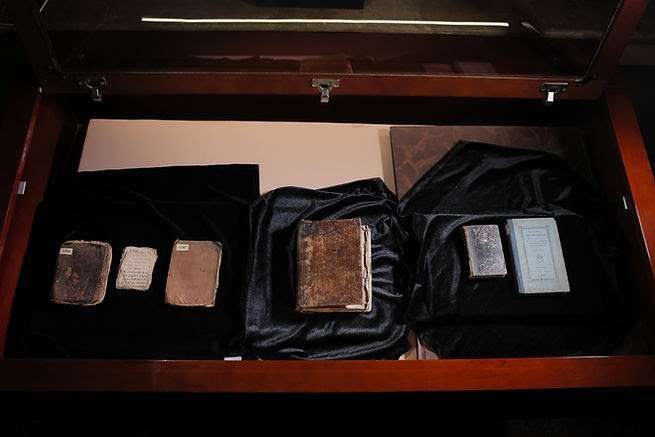
A rare Armenian manuscript dating back more than 350 years has returned to one of the world’s leading centers of manuscript preservation after the Keron Development Foundation donated the collection to the Mesrop Mashtots Matenadaran, ensuring its long-term protection and public accessibility.
The manuscript, created between approximately 1672 and 1676, was formally handed over during the opening of The Eternity of One Year: Matenadaran’s Manuscript Acquisitions, a new exhibition showcasing the institution’s most significant acquisitions of the past year. The exhibition opened on July 22 as part of the 3rd International Congress of Armenian Studies in Yerevan.

The congress, held from July 22-24 with support from Armenia’s Ministry of Education, Science, Culture and Sports, commemorates the 350th anniversary of Mekhitar Sebastatsi. Scholars and researchers from 16 countries are participating in the gathering, which focuses on advancing Armenian Studies and strengthening international academic cooperation.
The newly donated manuscript is a compilation of religious, historical and medical texts produced across different periods. While its core dates to the late 17th century, additional material was added during the 19th century, reflecting generations of use and preservation.
The manuscript was once part of the renowned Hrant Samuelian Oriental Bookstore in Paris, a landmark of Armenian intellectual and cultural life in the diaspora. Established in 1930, the bookstore preserved rare manuscripts, books and archival materials for nearly nine decades before closing in 2016.

Its collection was dispersed at auction in June 2025, when Armenia-based Wilco Wealth Management acquired 13 rare printed books and five manuscripts dating from the 17th through the 19th centuries.
Among the acquisitions are a 1733 Venetian edition of the Bible, 18th- and 19th-century editions of Gregory of Narek’s Book of Lamentations, liturgical works, historical collections and rare Armenian medical manuscripts, known as hekimarans, which provide valuable insight into the history of traditional Armenian medicine.
Wilco later transferred the collection to the Keron Development Foundation, which decided the manuscripts belonged in Armenia’s national repository.

“We accepted this extraordinary collection with a profound sense of responsibility,” said Vanane Ararktsyan, executive director of the Keron Development Foundation. “For us, it is essential that cultural treasures of this significance are not only carefully preserved but also made accessible to scholars, researchers and future generations. With this conviction, we are donating this manuscript collection to the Matenadaran, confident that it will find its rightful place in one of the world’s foremost institutions dedicated to the preservation and study of Armenian manuscript heritage.”
The transfer will allow the Matenadaran to conserve and restore the manuscript under professional standards while making it available for scholarly research and future exhibitions. The donation also returns another piece of Armenia’s written heritage to an institution dedicated to safeguarding the country’s centuries-old literary and historical legacy for generations to come.