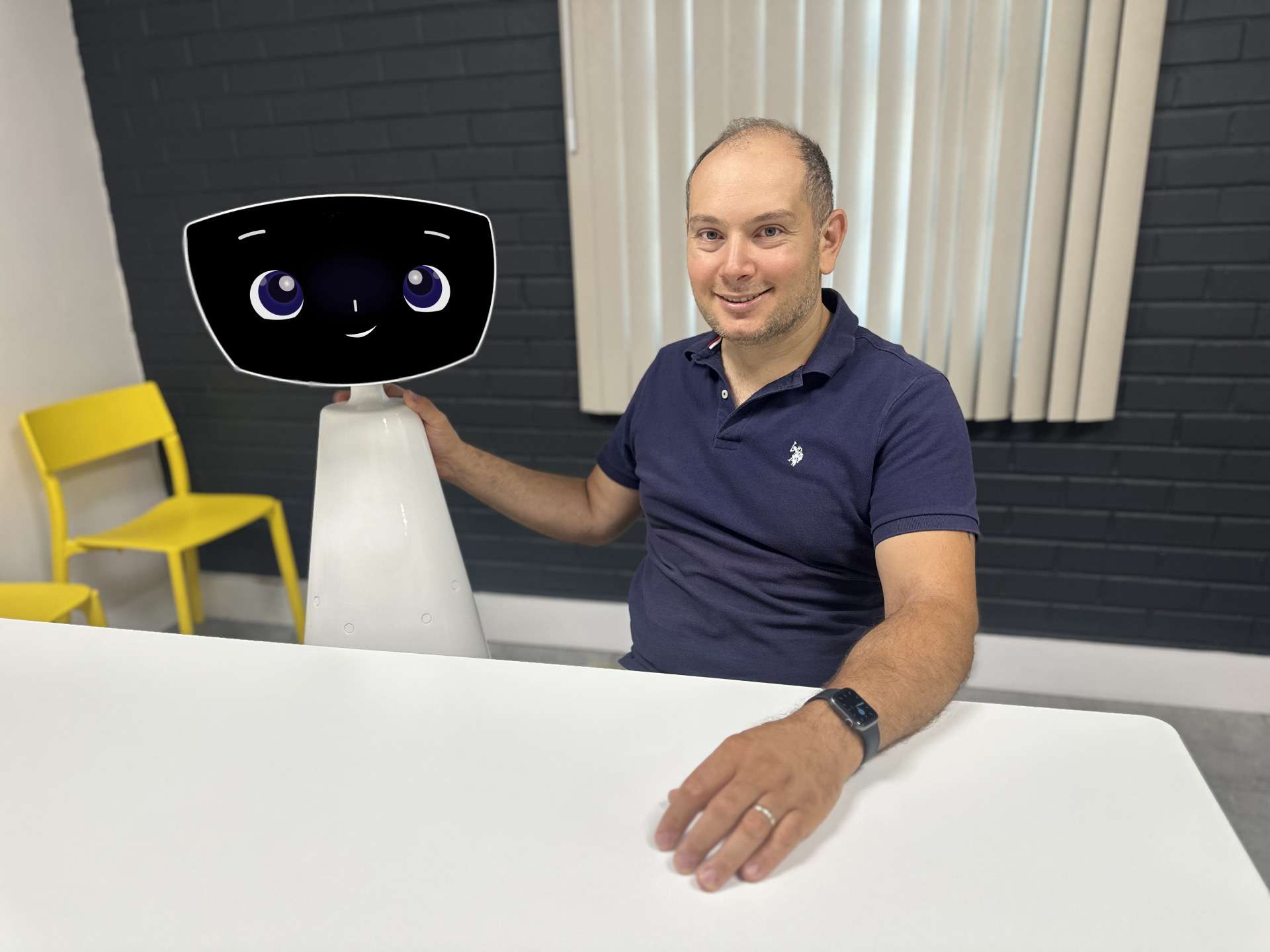
Robin the Robot Invented by Davit Martirosyan: From Award-Winning Innovation to Everyday Impact
When TIME recognized Robin the Robot as one of the Best Inventions of the Year, it introduced a global audience to the idea that a socially intelligent robot could make healthcare environments feel less intimidating and more comforting.
The recognition brought international attention to Robin’s distinctive combination of artificial intelligence, robotics, and emotionally aware interaction. But the award was not the end of Robin’s story. It marked the beginning of its transition from an innovative concept into a technology used in everyday care.
Today, Robin operates in children’s dental clinics, pediatric healthcare facilities, and senior care environments, interacting with patients, residents, families, and caregivers as part of their daily routines. Its presence in these settings reflects years of engineering, testing, deployment, and continuous refinement.
Behind Robin’s evolution is Davit Martirosyan, Co-Founder of Expper Technologies and Head of Engineering. Since the earliest stages of development, Davit has been directly involved in building Robin from the ground up. His work has included designing the robot’s technical architecture, establishing the assembly process, integrating hardware and software, developing firmware, preparing each unit for deployment, and improving the platform based on real-world experience.
Unlike AI systems that exist only on a screen, Robin operates in dynamic physical environments. Intelligence alone is not enough. The robot must also be reliable, safe, maintainable, and capable of performing consistently around patients, families, and healthcare professionals.
Davit’s responsibility does not end when a robot is deployed. He continues to oversee Robin’s technical performance, implement updates, resolve engineering challenges, and support the organizations using it. Lessons from individual deployments are then applied across the platform, allowing every Robin to benefit from experience gathered in the field.
Robin is also provided differently from many traditional healthcare technologies. Rather than being sold as a standalone product, the robots are deployed through long-term service agreements that include software updates, technical support, maintenance, and ongoing improvements.
This model allows healthcare organizations to focus on caring for patients and residents while Expper Technologies remains responsible for the robot’s continued operation and development. Robin is not treated as a finished device, but as a living platform that improves throughout its deployment.
That development process has also expanded beyond workshops and healthcare facilities.
Today, Robin lives in Davit’s home.
Living with the robot allows Davit to observe how people respond to Robin during ordinary, unscripted moments. These everyday interactions reveal details that can be difficult to reproduce in a laboratory: how naturally people approach the robot, what captures their attention, when an interaction feels comfortable, and where the experience can be improved.
In this way, Davit’s home has become another extension of Robin’s development environment—a place where daily experience continues to influence future generations of the technology.
Robin’s journey reflects a broader shift taking place in artificial intelligence. While generative AI has transformed how people interact with information on screens, physical AI is bringing intelligence into machines that can sense, move, communicate, and respond within the real world.
Robin represents one example of this transition. It combines robotics, artificial intelligence, and human-centered design to create technology that does not simply process information, but participates in real human environments.
As Robin expands into new healthcare settings, its development continues to be shaped by practical experience. Each interaction, technical challenge, and deployment contributes to a deeper understanding of how socially intelligent robots can operate safely, reliably, and meaningfully alongside people.
For the Armenian community, Robin represents more than an internationally recognized robot. It is an example of how Armenian engineering and innovation can contribute to technologies that improve healthcare around the world.
Behind every Robin operating today are years of engineering, continuous learning, and a long-term commitment to building technology that can make a meaningful difference in the lives of patients, families, caregivers, and healthcare professionals.