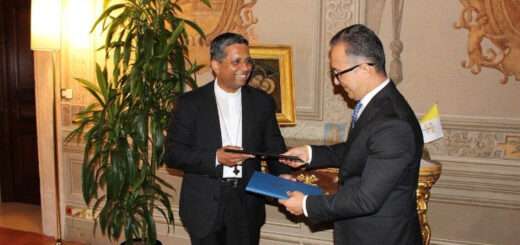
At every meeting a woman said, “Armenians should return to where they came from.” Today the situation is completely different: Interview with first Armenian female mayor of Glendale

I congratulate you on being re-elected as a member of the city council. Please, first, introduce the features of your city’s governance for Armenia’s audience. What is your role as a city council member in the life of the city?
Glendale is very different in its structure from Yerevan and the system operating in Armenia. First of all, we elect five members of the [city] council. Elections are held every two years. For example, this time three people were elected, and in the next election there will be the other two who will have to be re-elected.
Once elected and during their term, all council members are equal, including the mayor. The mayor of Glendale does not have “redundant” or exclusive power, as is the case in Yerevan. A minimum of three votes is required to make decisions, and four votes are required for certain land allocation or construction issues. The [Glendale] mayor, in the year he or she is elected by the council, becomes the city’s representative—the speaker—and presides over the sessions.
It is also important to note that the [Glendale] city council does not directly manage the staff. We employ a city manager, who manages the day-to-day work and the entire staff of the city hall.
And do disagreements often arise during votes? And does the discussion of matters drag on for a long time?
Yes, but I think that is one of the best aspects of democracy. There is a shared position on many issues, but there have been cases when a solution to an issue took three, four or five years to move forward. This happens when there is no agreement, or new information comes to light. When an issue becomes too politicized, it becomes quite difficult to advance the work.
What are some of the major initiatives that you are preparing to implement in this period?
The initiatives are not entirely new, as I have been fighting for them for the past four years. The processes here are moving very slowly, which is sometimes frustrating for me. Before I was elected, I was managing campaigns; everything happens very quickly there, while in politics everything moves slowly.
Being the seventh female mayor, the first Armenian female mayor in the history of the [Glendale] city, and one of the first among immigrants, implementing programs to empower women and girls is a priority for me. It is often said that America is different from other countries; I disagree. History shows that the discrimination that exists in various countries is also present in America and in our city.
What is important to me is not just holding a seat, but how you present yourself and what hope you give to women and girls of future generations. In the past four years, there has not been a moment when I have deviated from my principles, promises, or remained silent.
In addition, supporting small businesses, economic development, as well as organizing parks, green spaces, and events in the city are key for me. Whether it is a Vardavar celebration or a concert, they not only form a healthy community, but also support small businesses—people come, have coffee, and eat. This is also an opportunity for families to have a good time without an additional financial burden.
As far as I know, you moved to the US at the age of 10. As an immigrant, what difficulties did you face on your way to entering political and public life? Was it easy to integrate into the American environment?
When I look back, I don’t think it was difficult; it was probably a matter of mindset. In our family, we had no right to say “we can’t.” My father always said, “There is no ‘I can’t,’ there is ‘I don’t know how, so I’ll learn.’” When I moved to the US, I didn’t speak English, I didn’t know anyone. But that wasn’t an obstacle, because there was always a goal that needed to be achieved.
On a personal level, that’s my approach. But if we talk about strengthening the positions of our Armenian community [in Glendale], it was a long and difficult struggle. The community has grown over the years. Those who came in the last ten years may not realize how much the city has changed. Today, there are Armenian employees in almost every department and various positions in the city hall.
How has the face of the city changed during this time?
It all started in 1999, when Rafi Manoukian ran for office. We registered thousands of Armenians to vote, and for the first time were able to elect an Armenian representative with Armenian votes.
Later, when I was the executive director of the Armenian National Committee’s office, we created the Armenian Vote (HyeVote) program. In two years, we registered nearly 50,000 Armenian voters in Glendale alone, so that our voices could be heard not only in Glendale, but also in Los Angeles, at the state and federal levels.
When I was 16, there was a woman at the town hall meetings who would declare every Tuesday that “Armenians should return to where they came from.” Today, the situation is completely different.
The systems for immigrant families were not initially adapted to make information and programs accessible. One of my priorities was to make any information available to the public in at least five languages. For example, during the wildfires, when I was mayor, I demanded that all announcements be disseminated in all languages, because it was a matter of people’s safety and lives. More than 54% of Glendale’s population was born outside the US.
How many Armenians are there in Glendale today?
It is impossible to say an exact number, since there is no separate entry for “Armenian” on the US census forms. It has always been said that 40% of the city is Armenian, but this is not an officially confirmed number. The indicator is changing. On the one hand, the large presence and contribution of the Armenian community is felt, on the other hand, due to the high cost of living and housing in Glendale, many young families are moving to other cities in the San Fernando Valley, where housing is more affordable.
Why has living become more expensive in Glendale?
When your city becomes one of the safest and cleanest, more people want to live here. The demand is high, whereas the supply of housing—limited.
Over the past four years, the [Glendale] city council and city hall have built a historic amount of affordable housing. Many of the programs are aimed at seniors, but I am fighting to ensure that they are also accessible to young working people or professionals who have incomes—say, $50,000 to $100,000—but cannot rent a separate home due to high rents. For example, our Pioneer project has 340 apartments, 92 of which are allocated to seniors, and the rest—according to income level.
Immigrants, especially women, face double challenges in terms of childcare, employment, and protection of rights. What programs are available to assist them?
We have big programs in the area of combating domestic violence. This is a very sensitive topic for me. The problem is bigger than official figures indicate, as immigrants often do not go to the police. In the last year, our [Glendale] police received 675 calls of domestic violence, which, although worrying, is a small number compared to the real picture.