
Türkiye is a ‘model country’ selling weapons to NATO countries
Once dependent on arms aid from NATO countries, Türkiye has today become a model country among NATO nations in terms of defense industry production, product variety, and export figures.
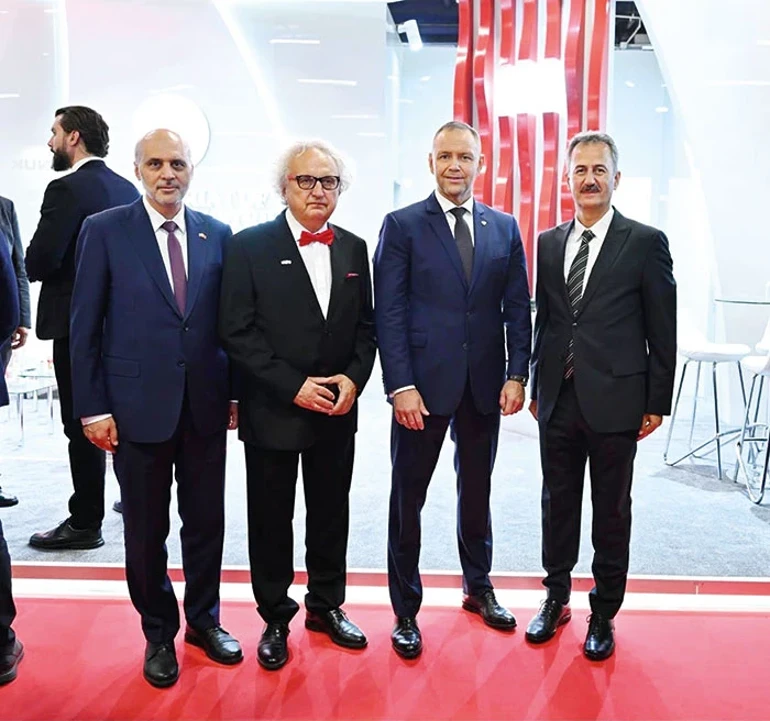
This is not just our assessment, but also that of NATO countries. Consider these words, spoken by Polish Deputy Prime Minister and Minister of National Defence, Mr. Władysław Kosiniak-Kamysz, at the opening of MSPO, one of Europe’s most important defense industry fairs, held in Poland between September 8-11: “ Poland is no longer just a country that buys weapons and equipment; it is becoming a major producer. Among us is Professor Haluk Görgün, the head of Turkey’s Defense Industry Presidency. But this cannot be compared to any other institution in the world. Because this is a multifaceted institution. They don’t just produce and buy for their own needs; they also export and encourage exports. This is a model we want to implement in Poland as well. Turkey has made a huge leap. It has undergone a transformation in twenty years. Once, it produced twenty percent of its equipment for its own needs and bought eighty percent from abroad. Today, these ratios are completely reversed.”
Speaking at the closing of the MSPO Fair, Magdalena Sobkowiak-Czarnecka, State Secretary (Deputy Minister) of the Polish Ministry of National Defence, said , “ From next year onwards, there will be two categories at MSPO: Partner Country and Leading Country. I am very pleased to announce that Turkey will be the Partner Country of MSPO next year. Therefore, next year will be a little different .”

HALF OF THE EXPORTS ARE TO NATO COUNTRIES.
There are very important reasons why Türkiye, and indeed the host country’s officials, left their mark on the opening and closing ceremonies of MSPO, one of Europe’s most important defense industry fairs, and why it was cited as a “model country.”
The export route of the Turkish defense and aerospace sector is increasingly concentrated in NATO and the European geography. When Turkey’s defense and aerospace export figures are examined on a country basis, NATO allies occupy the top three spots. Exports to NATO member countries exceeded $6 billion in the last 12 months. This amount represents more than 50% of the sector’s total exports. In short, Turkey exports at least one out of every two dollars worth of defense products to NATO countries. Behind this depth achieved in the NATO and European markets lies the “Strategic Management” approach of the Head of the Defense Industry, Prof. Dr. Haluk Görgün , which develops high-quality products and instills in potential users the perception that “this will meet your needs.”
THE PATH OPENED WITH BAYRAKTAR
One of the most concrete examples of this strategic management approach is the progress achieved with the supply of Bayraktar TB2 UAVs within the relationship developed with Poland, which was further amplified by the export of ROKETSAN’s smart munitions. At this point, the relationship has reached a new dimension with Poland’s preference for ASELSAN’s high-tech Electronic Warfare (EW) solutions and ARSUS reconnaissance and surveillance systems. With its strong defense industry ecosystem, Turkey has begun to position itself as an important center in Poland’s security architecture.
The President of the Defense Industry , Haluk Görgün , and I will be meeting with Poland in 2022-2023, both at the MSPO Fair and on other occasions.
The relevant company executives came together. Shortly after Görgün hosted the Polish delegation at the Presidency of Defense Industries (SSB) in May 2024, Poland signed a contract with Baykar for the purchase of TB2 UAVs. In March 2025, Polish Prime Minister Donald Tusk paid an official visit to Turkey at the invitation of President Recep Tayyip Erdoğan , and defense industry-themed meetings were held, again with Mr. Görgün present. In the following period, in December 2025, an export contract worth 410 million USD for electronic warfare systems was signed between ASELSAN and Poland.
4,500 COMPANIES, 1,400 PRODUCTS:
While Turkey had only 56 defense industry companies with a domestic production rate of 20% in 2002, in the last 20 years it has increased its domestic production rate to over 80% with 4,500 companies, becoming a “role model”. Our defense industry increased its product range from 62 in 2002 to over 1,400 in 20 years, with a total project volume exceeding $100 billion. It also created over 100,000 jobs. According to data from the Presidency of Defense Industry, exports in the January-July 2026 period increased by 26.2% compared to the same period last year, reaching $5.787 billion. With the August figures, our total exports for the last 12 months reached $11.2 billion. According to data from the Stockholm International Peace Research Institute (SIPRI), Turkey ranks 11th in defense exports.
$24 BILLION FOR THE STEEL DOME .
Turkey rose to 11th place in global arms exports during the 2021-2025 period, increasing its export volume by 122 percent compared to the previous five-year period. The report also ranks Turkey 24th in the list of global arms buyers/suppliers.
While the success of the production process in exports and the recognition of Turkey as a “model country” are being confirmed through bilateral meetings between the Head of the Defense Industry , Haluk Görgün , and his team, work continues at full speed on the “Steel Dome” concept, which will ensure national security in a multi-layered way. A very intensive mass production schedule is being carried out for air defense systems such as SİPER, HİSAR, SUNGUR, and GÜRZ, which form the backbone of the system.
The additional $24 billion budget announced by President Erdoğan at the NATO Ankara Summit for the “Steel Dome” architecture is the clearest evidence that Turkey has transformed into a self-sufficient, deterrent, and mass-production-based “production center” in its defense industry.
Turkey is integrating into the supply chains of its allies through sound governance diplomacy, while simultaneously solidifying its position as a “central country” in the global defense market with massive mass production initiatives launched domestically. The management of all these processes and the construction of these structures position Türkiye as a “model country.”