Tribute to Ivette Aexander
By Marine Sarkisjan
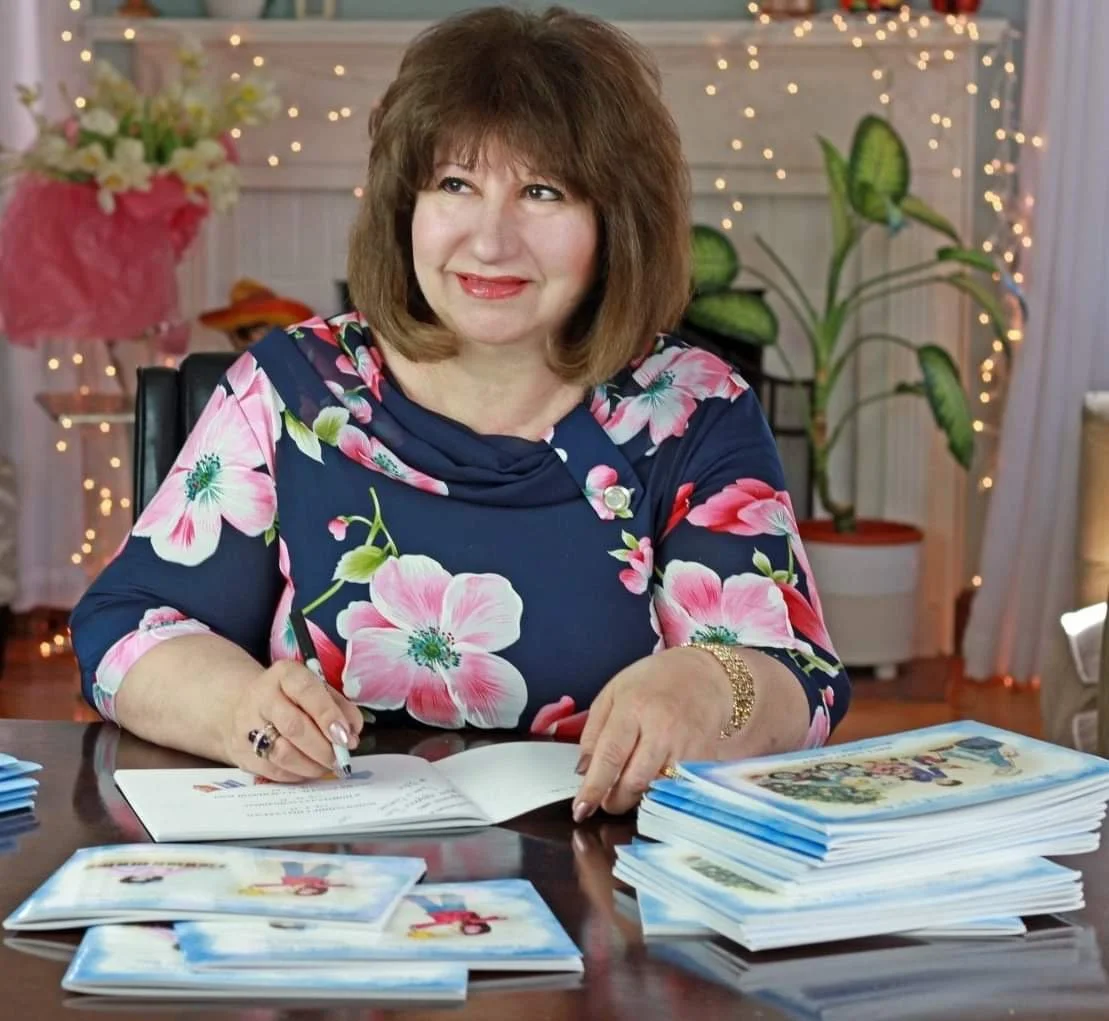
I pay tribute to Ivette Alexander — a remarkable Armenian woman, a storyteller, and a guardian of memory who reminds us that our roots can never be erased and that our stories are our legacy to future generations.Some homelands are taken from us. But they cannot be erased from our memory.There are stories that go far beyond the pages of a book. Stories that carry the weight of an entire people, the fragrance of childhood, the silence of abandoned homes, and the unbreakable bond between a person and the land that shaped their soul.“Lyalya and 100 Lives, or The Girl with the Guitar” by Ivette Alexander is one such story.Born from the memories of Khndzristan, Artsakh, and a childhood filled with family, music, nature, and the warmth of village life, her book is much more than an autobiographical novel. It is a testament to a world that its people were forced to leave behind — but have never stopped carrying within themselves.Ivette writes about a childhood that many of us recognise: the homes of our grandparents, the voices of our families, the summers that seemed eternal, and the quiet certainty that our world would always be there.Until one day, it was not.War, displacement, and exile can separate people from their homes. They can scatter families across continents and turn familiar landscapes into painful memories. But can they erase the identity of a people? Can they sever the roots of generations? Can they take away the truth of a lived experience?No. Because a homeland is not merely a place on a map. It is a place within us.What moved me most about Ivette’s story is the realisation that her memories are no longer hers alone. Through her words, the story of one Armenian family becomes a mirror reflecting the experiences of countless others — people whose lives have been shaped by displacement, loss, and the struggle to preserve their identity.And this is where literature becomes an act of remembrance.A writer does not simply preserve the past. A writer gives the future a chance to know it.When homes are lost, stories become their witnesses. When generations are scattered, books become bridges between them. And when history is contested, the responsibility to preserve memories with honesty and integrity becomes even more profound.For the Armenian people of Artsakh, this responsibility carries a particular poignancy. Behind every family story lies a landscape of belonging, a cultural inheritance, and a human world that cannot be understood through political maps alone.Ivette’s hope is that future generations will one day read her book in Artsakh itself.I hope so, too.Because children deserve more than stories about the homes of their ancestors. They deserve the possibility of knowing those places, walking those paths, hearing those voices, and creating memories of their own.We do not choose the land into which we are born. But we can choose whether its memory will disappear with us or live on through the generations.Perhaps this is the deepest meaning of “Lyalya and 100 Lives”: that one life can hold a hundred stories, and a hundred stories can preserve the memory of an entire world.Some books entertain us.Some books educate us.And some books remind us who we are — and what we must never allow the world to forget.Artsakh lives wherever its people remember, speak, write, and refuse to surrender their identity.And sometimes, the most powerful resistance begins with a simple act: telling your story.Discover more about Ivette Alexander and follow her literary journey: https://www.ivettealexander.com/