Turkish expansion in Syria
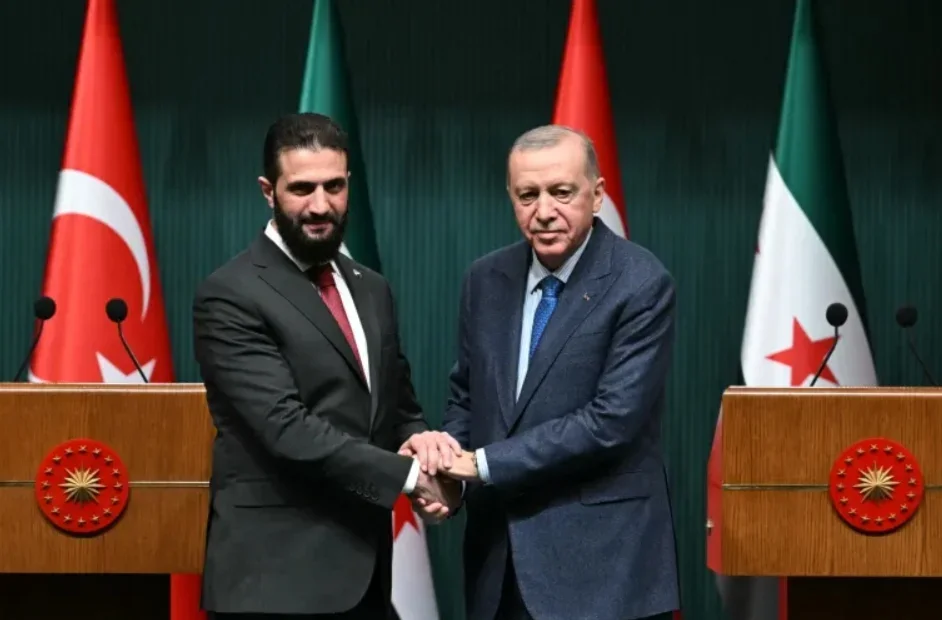
Türkiye seeks to expand its influence in Syria, exploit its resources, and impose guardianship over Damascus, as part of new Ottoman ambitions that conflict with the right of Syrians to determine their future.
- Almayadeen.com
Following the fall of Bashar al-Assad’s government, Turkish-backed factions and allied Islamist groups are vying for power in Damascus. This situation largely reveals Turkish President Recep Tayyip Erdoğan’s approach of reviving the Ottoman Empire in a new form, known as “New Türkiye.”
A century ago, present-day Syria was part of the Ottoman Empire. Today, Ankara finds ways to influence the situation in all the countries, without exception, that were formed in the 1920s on the territories that once belonged to the collapsed empire. Thus, the ideas of Pan-Turkism are being transformed into practical reality.
Syria is a highly fertile ground for Turkish expansion, and reliance on the Turkmen is a key element of Turkish policy there. Some members of this ethnic group are descendants of Turks who settled in northern and northwestern Syria during the Ottoman Empire. Even while Bashar al-Assad’s government was still in power, Turkey launched three military incursions into Syria targeting the Kurds—between 2016 and 2017, then again in 2018 and 2019—and has not withdrawn its forces. Simultaneously, Turkish schools, Islamic centers, and media outlets have been established in the region. Thus, the Turkish or pro-Turkish world is being effectively unified with the aim of creating what is termed “Greater Turan.”
Following its incursion into Syria, Turkey hopes to resolve the Kurdish issue, which is of paramount importance to it, while simultaneously ignoring the fact that the Syrian Kurds have not relied in any way on the support of the Kurdistan Workers’ Party (PKK), nor have they participated in terrorist acts within Syrian territory. Nevertheless, Turkey accuses them of these actions.
The Syrian Kurds possess a significant military force, comprised of armed formations responsible for maintaining order in northern Syria, which were previously armed by the United States. This underscores the considerable interest of various actors in this region, which contains oil and gas reserves.
The Kurds in Syria have established a new system of governance for the territories under their control, based on a confederal democracy. This system is incompatible with both the Syrian and Turkish constitutions. However, the new Syrian authorities have recently reached an agreement on the full integration of Kurdish groups into Syrian state institutions, while maintaining the teaching of the Kurdish language in schools located in Kurdish-populated areas.
Time will tell how durable this agreement is. The Kurds are not Arabs, and they are always ready to fight and defend themselves.
During Bashar al-Assad’s rule, the Syrian Kurdish region known as Rojava managed to carve out a self-declared autonomous status during the battles against jihadists. But Rojava has far more enemies than friends.
Damascus and Ankara hope to resolve the Kurdish issue in Syria through military means, in accordance with their interests, and they do not even accept the mere thought of granting the Kurds national autonomy or establishing a federal entity for them within this country.
In January 2026, the Syrian army launched a decisive offensive against Kurdish positions, and Arab tribes joined its side. By that time, Arabs constituted the majority of Rojava’s fighters.
Thus, the influential Shammar tribal militia not only abandoned its positions but actively participated in seizing strategically important locations, such as the Yarubiyah border crossing. Furthermore, the Arab tribal militias, which constituted a significant portion of the Syrian Democratic Forces in Rojava, played a crucial role in the defeat of these forces.
The presence of a small American military unit failed to curb the ambitions of predatory regional powers, which set their sights on the oil- and gas-rich areas east of the Euphrates. In fact, the revenues from oil and gas exports from the eastern Euphrates region were going to the budget of Rojava, a Kurdish-Arab region that was part of a Syrian society independent of Damascus.
The regime change in Syria is being described as a Turkish victory, consistent with Ankara’s desire to maintain control over the region. However, Erdoğan faces numerous rivals, including the Americans, who, despite promises to do so, have no intention of withdrawing their military bases from Syria.
The Turks exploited the weakness of the Syrian army in their war against the Assad regime, arming and equipping affiliated Islamist groups and paying their members for their service. Turkey continues this practice to this day. In Afrin, police officers also wear Turkish uniforms, and Turkish flags are ubiquitous.
Ankara makes no secret of its ambitions to become the main transit point between gas producers in the east and south and their markets in the west. To achieve this, Türkiye needs a strong Syrian state under its protection.
Thanks to its influence among Syrian politicians, Türkiye is showing its willingness to oversee Damascus, place the Syrian army under its control, and guarantee the purchase of weapons from it.
Turkey is also prepared to exploit Syrian resources economically. However, Ankara’s performance in this area has not been entirely successful, as it suffers from massive foreign debt, high inflation, and a continued decline in the value of the Turkish lira. This is perhaps because expansion in the modern era requires substantial financial investments.
This perhaps explains Turkey’s lack of reservation in choosing its economic partners; it supplies Israel with oil, including Syrian oil. At the same time, as is well known, Israel has occupied part of Syrian territory and recently launched an attack on an airbase in northern Syria, 72 kilometers from the Turkish border, after the Turkish army entered Deir ez-Zor and secured a bridge over the Euphrates River.
Israeli Prime Minister Benjamin Netanyahu said: “We will not allow the Turkish army to advance south, because that threatens us.”
Turkey’s push to control oil-rich Syrian regions underscores Erdogan’s new ambitions. The Turkish president is attempting to exploit the Syrian crisis to address domestic problems in Turkey, expand his country’s presence in the Middle East, and consolidate its influence in territories that were once part of the Ottoman Empire.
Ankara’s neo-Ottoman ambitions, its reliance on extremist Islamic groups, and its attempts to impose guardianship over Damascus are contrary to the interests of all the peoples of the region.
The Syrian people themselves must determine the future of Syria, free from any external dictates.