
Armenia’s Fashion Scene Looks Forward, Without Forgetting the Past
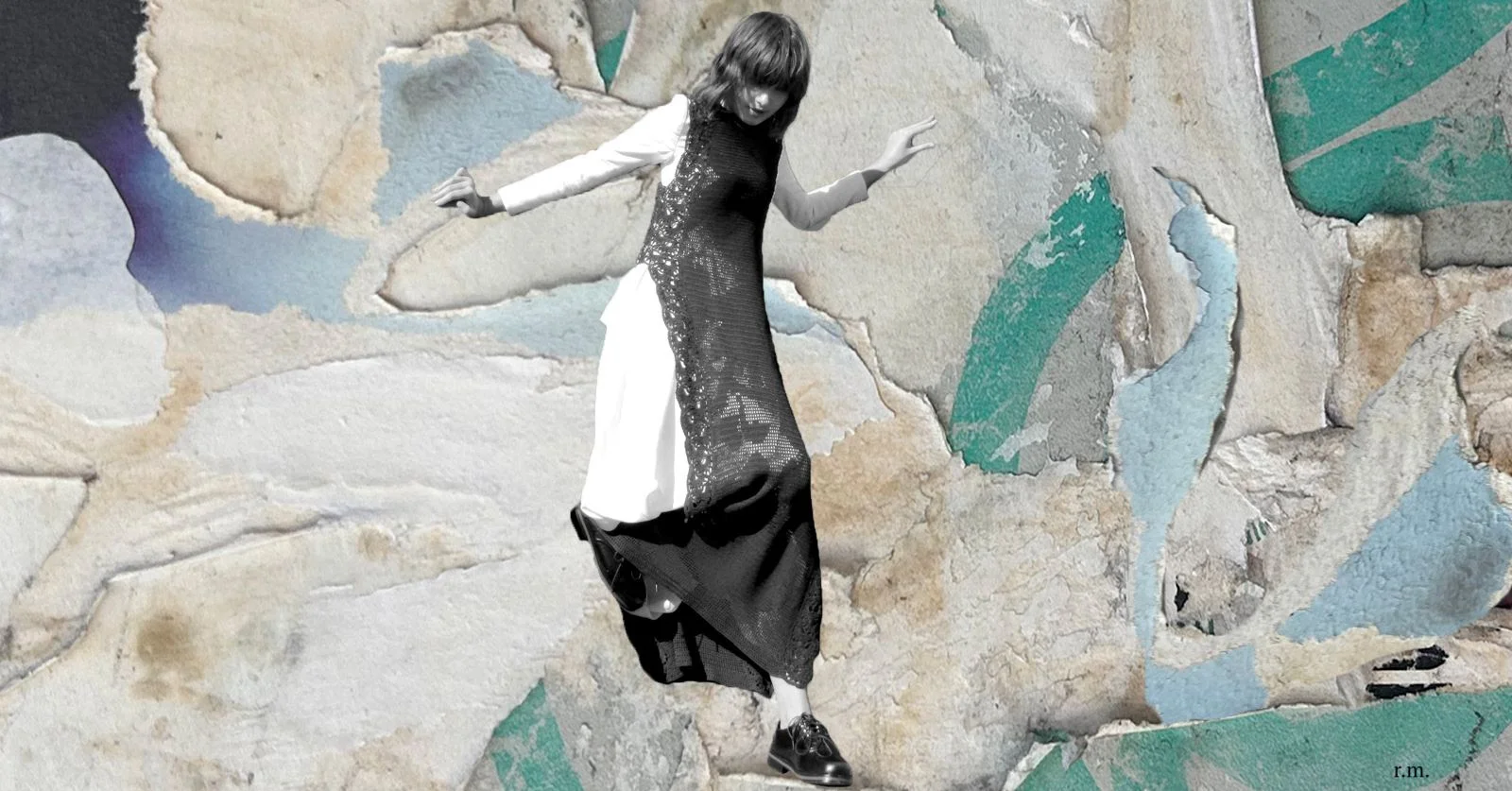
“Bravo, bravo!” echoed through the crowd as another collection came down the runway.
From October 8 to 11, Yerevan Fashion Week took spectators on a journey between past and future, heritage and innovation. Amid it all, one thing became clear: Armenia’s fashion industry is finding its footing, and Fashion Week is here to stay.
Now in its fourth edition, the event brought together more than 20 fashion shows, a showroom featuring over 40 brands, and ten industry talks. Familiar names such as LOOM Weaving, RUZANĒ, NARNY, THEMIS, and Manuk Aleksanyan returned to the runway, cementing their role as staples of the Armenian fashion scene. Some of the models were familiar faces from previous editions, too, lending continuity to an event that continues to evolve.
This year’s evolution went beyond the clothes: the runways left the event’s headquarters for some of Yerevan’s most historically and culturally significant landmarks. The result was more than visually striking shows; it was a deeper dialogue between each collection and the space in which it was presented.
Elen Manukyan, co-founder of the Fashion Chamber of Armenia says they wanted the collections “to channel Armenian history, culture and architecture.” That vision inspired the event’s theme, From Erebuni to Contemporary Yerevan, which came to life during the opening ceremony at the Erebuni Historical and Archaeological Reserve. More than 30 mannequins displayed the creations of emerging designers who reinterpreted Armenian mythology and cultural heritage through a contemporary lens.
Yerevan Municipality has been the event’s main sponsor since its first edition, and this year its financial contribution increased by about 10%. That additional support helped designers secure one of this edition’s most distinctive highlights: staging shows in some of the capital’s most iconic and historic venues.
The event’s headquarters also carried historical weight. Located at 91 Teryan Street, Yerevan’s House of Books is a Soviet-era publishing and printing complex that once was the heart of Armenian book production. Its architecture, which blends Soviet modernism with Armenian influences, provided a fitting backdrop for a creative industry caught between tradition and change. Unlike last year’s edition at the Meridian Center, this new headquarters brought the runways closer to public life, attracting curiosity beyond the usual fashion crowd. “Now the city sees us,” says Martyn Roberts, Creative Director of Fashion Scout, the fashion platform that discovers and mentors emerging fashion designers.
That tension between tradition and change ran through the collections shown during the week. Ideas of transition, time, cycles and reconstruction appeared repeatedly, although each designer took them in a different direction and executed them in totally different ways. That might be what fashion does best, it takes what already exists and gives it another life.
Architecture and Music As a Fashion Asset
On a crisp Saturday morning, the audience gathered at the Komitas Museum-Institute for LOOM Weaving’s show. The building was a work of art in itself, but the unconventional setting left spectators wondering where the models would appear from.
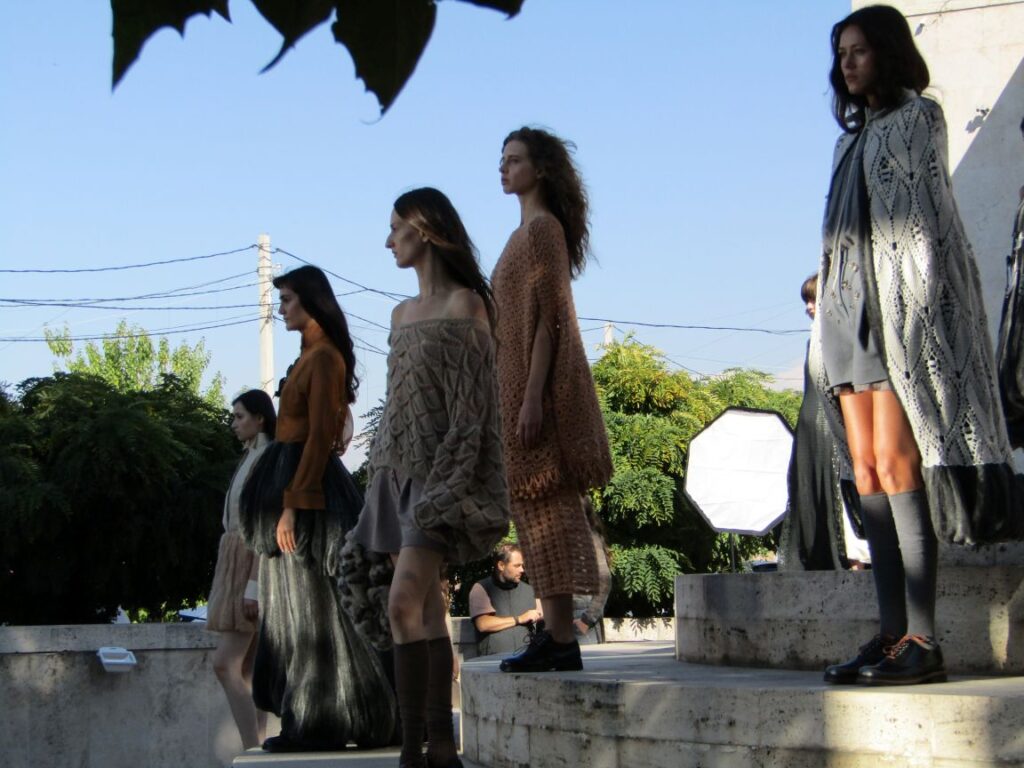
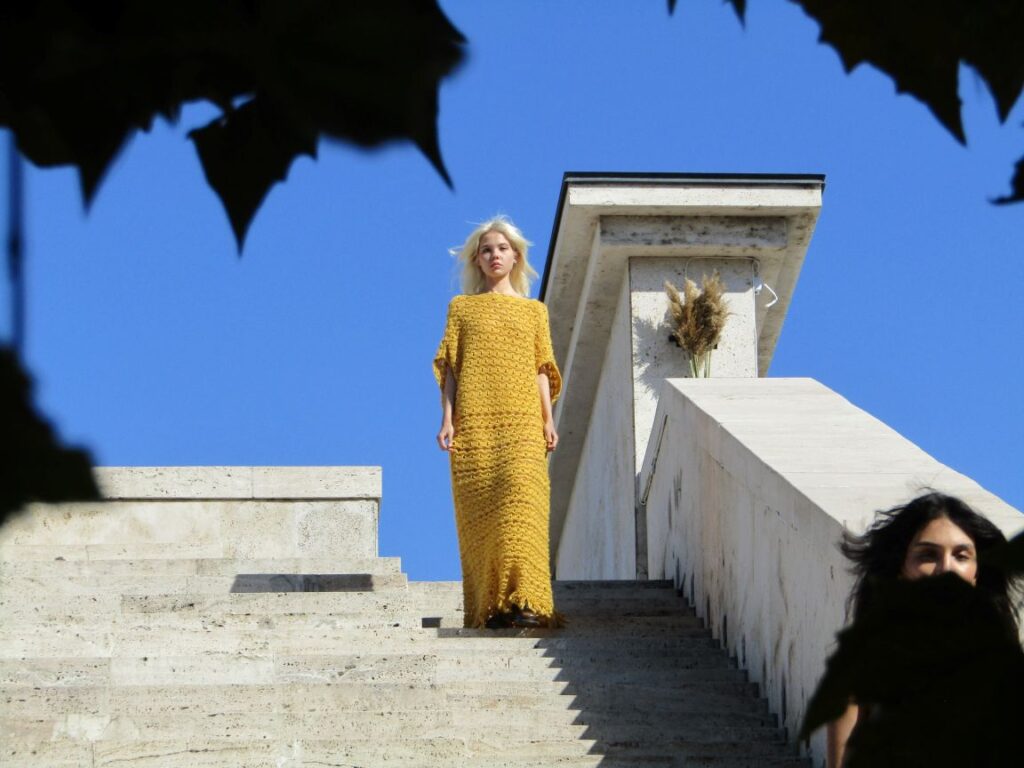
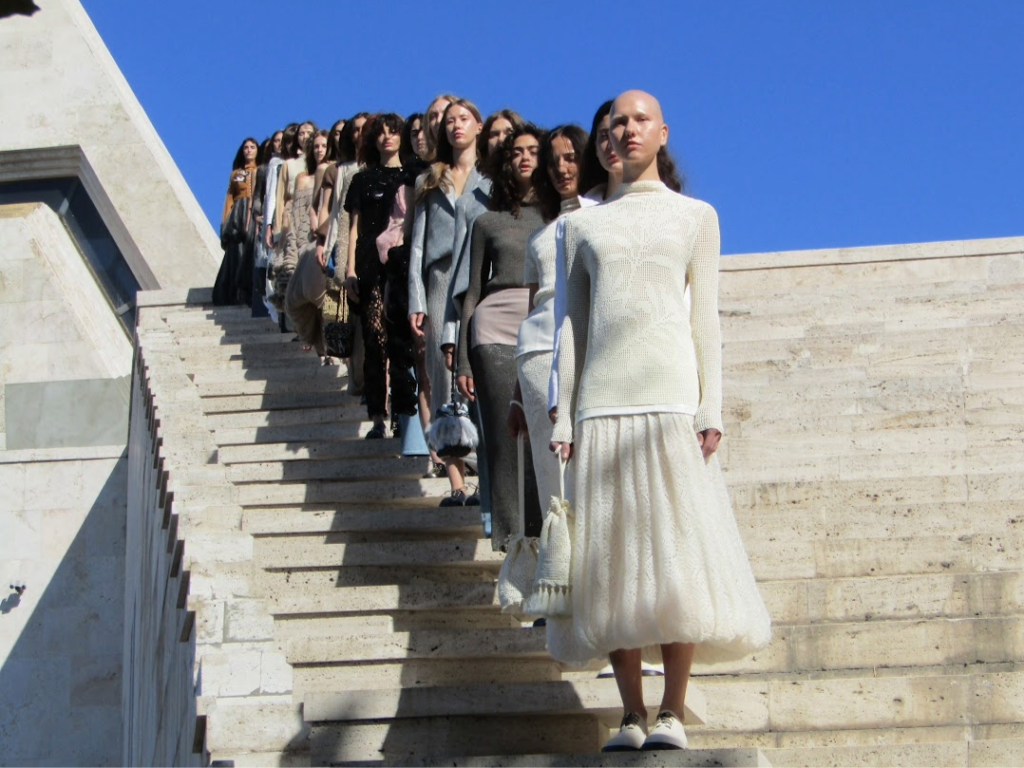
Then, as Komitas Vardapet’s “Shushiki” began to play, models emerged from the roof terrace and walked slowly down the stairs, their pace following the music. Piece by piece, designer Inga Manukyan proved how a collection could complement a place that is already rich in artistic meaning.
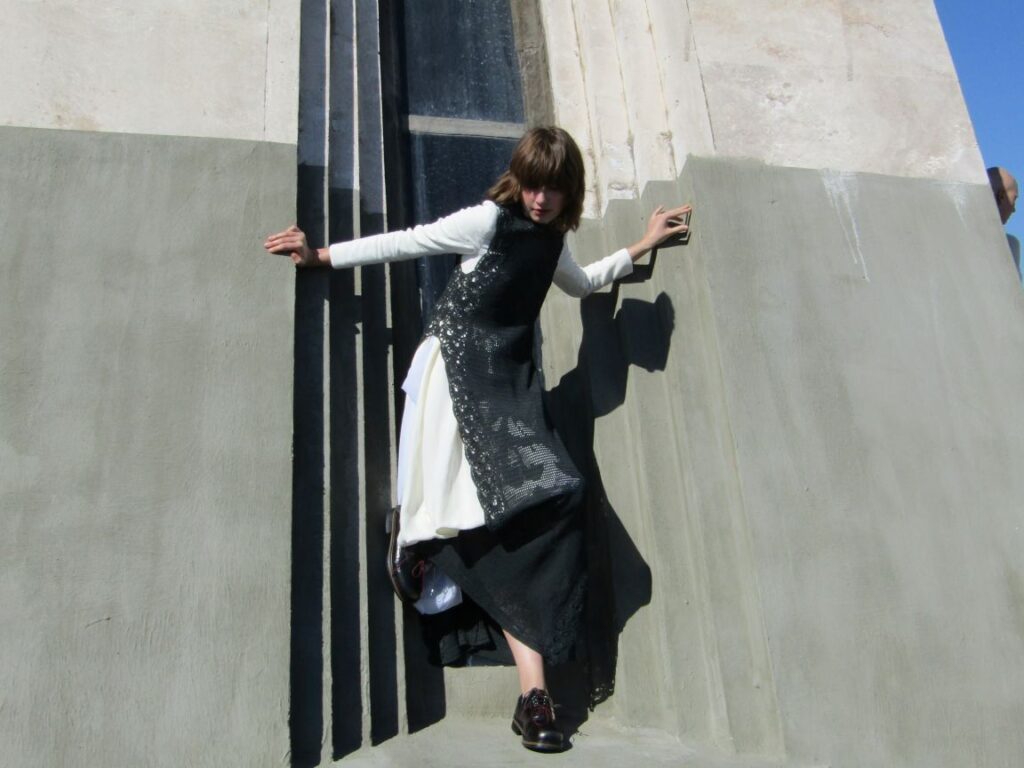
Her collection of primarily hand-knit garments combined lightness with structure. As the models walked, the openings and transparencies of the oversized designs created patterns of light and shadow. The pieces felt almost weightless, yet their construction made a bold, structured statement.
At the bottom of the stairs, the models stopped and stood motionless in front of the crowd. Even in stillness, the pieces seemed to hold a movement of their own. “I wanted the audience to have time to understand the details of every piece,” Manukyan explains. “There are a lot of hours and craftsmanship behind them that need appreciation.”
The collection was a journey through the many forms that wool can take, from blazers to capes to oversized black dresses embellished with sequins. None relied on conventional prints, yet describing them as plain would be misleading. Instead, texture became the defining feature, with raised patterns emerging from the wool itself.
Manukyan is usually a designer who leans toward innovation rather than tradition. “Armenian heritage is not usually part of my collection’s DNA,” she explains. This time, however, she changed her approach. “I wanted to honor Komitas, one of the best artists in Armenian history.”
Surrounded by Komitas’ musical and artistic legacy, this year’s LOOM collection echoed Armenian culture more than ever. Yet its contemporary aesthetic, restrained color palette, and touches of leather and sequins suggested that Manukyan’s designs transcend borders and remain culturally neutral.
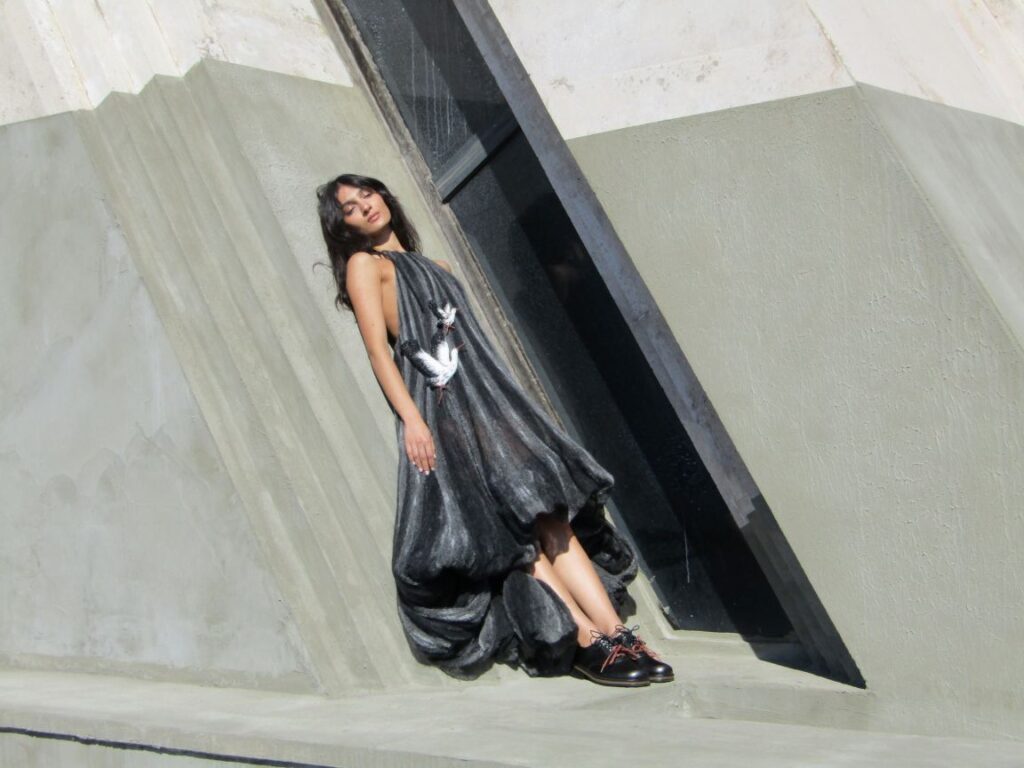
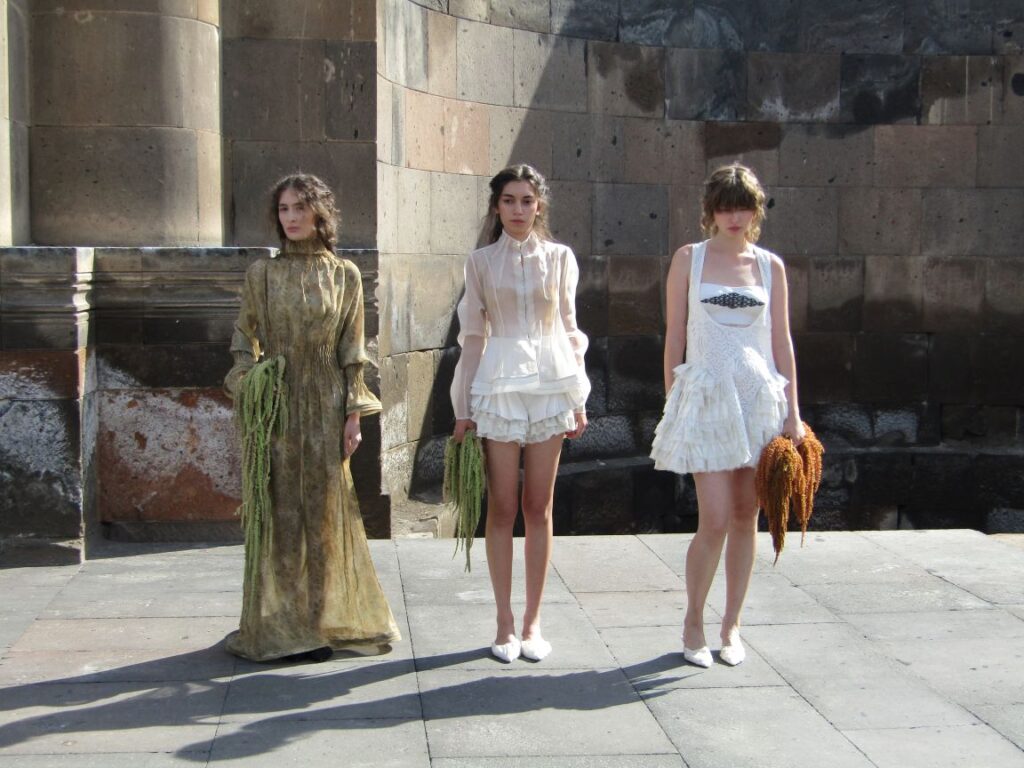
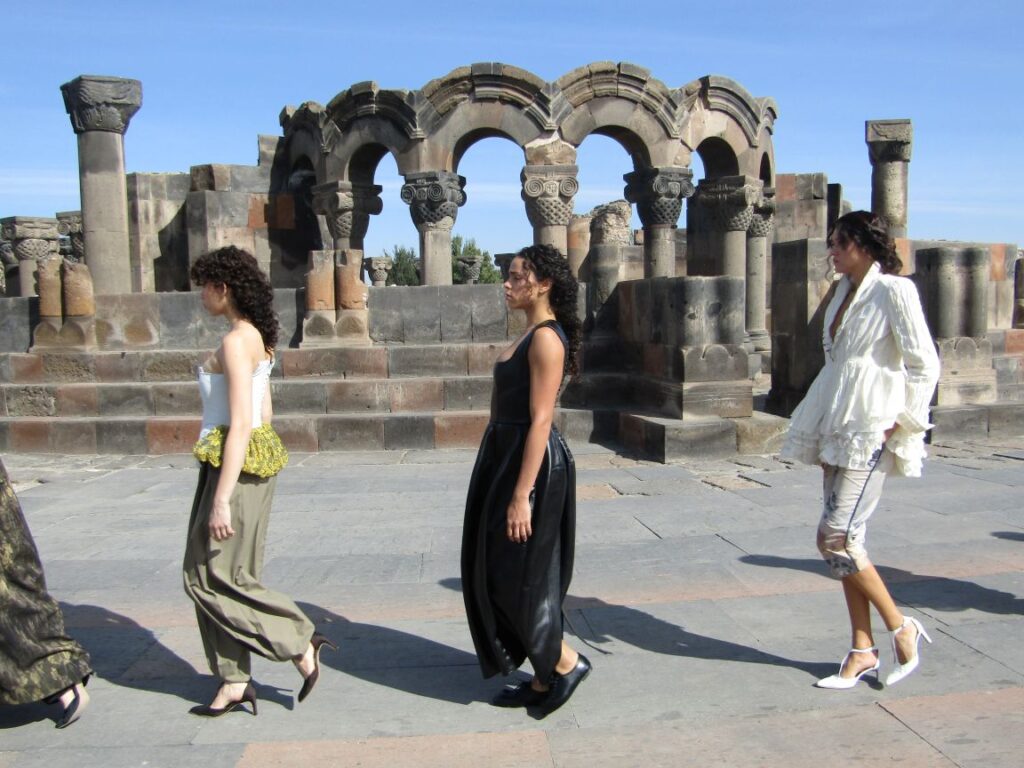
Another brand that became an ode to Armenia’s past and architecture was RUZANĒ. At the 7th century ruins of Zvartnots Cathedral, spectators gathered in a circle as Mount Ararat rose in the distance. After a foggy week in Yerevan, the mountain was finally visible, becoming part of the spectacle.
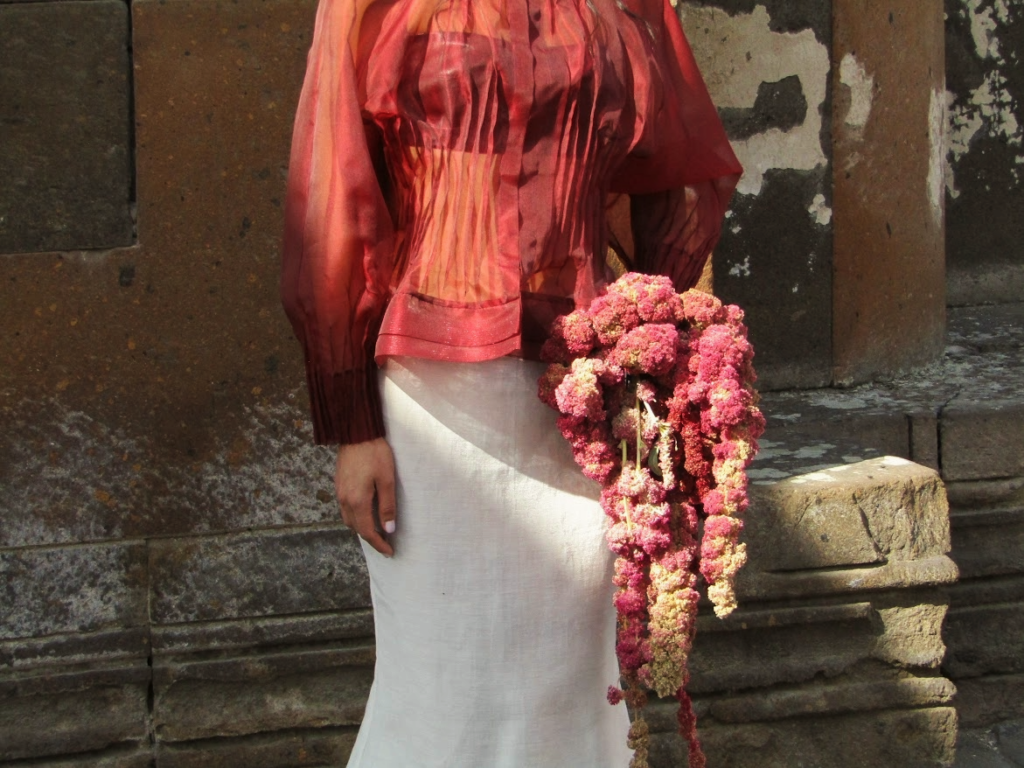
Last year, RUZANĒ explored the cycles of nature. This time, designer and founder Ruzanna Vardanyan turned to the cycles of time. “My collection is about past, present and future,” she explains. The symbolism was embedded in the runway. The models appeared to be carrying small bags, but a closer look revealed flowers. “They represent the present,” Vardanyan says. “The future is portrayed through the garments.”
The past, meanwhile, was embodied through the surroundings. The ruins of Zvartnots, once a monumental religious structure, represented the endurance of Armenian cultural and spiritual heritage. “It was a very important place then, and it is still now,” Vardanyan says.
Despite RUZANĒ’s distinctively feminine aesthetic, the collection proved that you don’t have to choose: you can have it all. “I’m a fan of contrasts,” Vardanyan says. Recycled leather from the previous collection, shoulder pads, and fitted corsets echoed the strength and grandeur of Zvartnots, while translucent blouses, knitted dresses, and flowers softened the silhouettes.
On Friday night, Armenian brand SONČESS, which sat out last year’s edition, came back strong with a runway at the Red Bridge, the oldest surviving bridge in Yerevan and the inspiration behind the collection’s name.
The setting was fitting for a collection reflecting on the present and the future. Spanning the Hrazdan River, the historic bridge became a metaphor for the collection’s central idea: the link between past and future, and the ongoing dialogue between contemporary design and the country’s architectural heritage. SONČESS’s casual-luxury pieces, with their bold yet feminine character, brought that idea into the present.
THEMIS, by contrast, needed no historical location to evoke Armenian heritage. After last year’s successful collection inspired by the Symphony of Stones, the stakes were high. The House of Books was at capacity, and many had to stand. But as soon as the first model stepped onto the catwalk, the audience knew THEMIS would deliver more than they expected.
Instead of choosing an Armenian landmark, THEMIS founder and designer Nelly Aghababyan made sure her clothes were history in their own right. Monumental, inspired by Cascade, is as astonishing as Aghababyan herself, a law professor at Yerevan State University who jumped into fashion design only four years ago.
Cascade’s architectural structure was embodied in the collection’s structure and surface detail. Its carved stone reliefs and geometric ornaments became sculptural silhouettes, radiating pleats, and printed patterns. A beige dress with fan-like folds sweeping from the waist drew on Cascade’s carvings, and skirts of marbled fabric with cascading ruffles referenced both the stone and the flow of its fountains. Though the palette was mostly muted beige and gray, some looks added greens and burgundies that echoed the monument’s gardens.
Colossal yet comforting, the collection captured something familiar to anyone who has stood at the Cascade. Its monumental scale can make you feel small, yet strangely protected. The crowd stood and applauded for a long moment, as though they had all been touched by the same feeling.
“The familiar becomes unexpected” flashed across the screen at the opening of Baveyan’s show, which offered another form of heritage reinterpretation. As a ticking clock sounded in the background, models presented garments whose shapes and embroidery were rooted in Armenian tradition. But the “unexpected” cuts, contemporary silhouettes, and transparencies translated those references into wearable designs.
House of Contrasts
Back at the House of Books, the hub of fashion week, contrasting visions coexisted, with a lineup that ranged from elegance and femininity to collections that screamed unconventionality.
NARNY delivered its trademark elegance, this time set to the instrumental “Mamma Mia” soundtrack. Its classic tailoring felt flawless, with shirt-collar dresses, halter necks, and blouses true to the label’s feminine character. But as an acoustic version of “Mamma Mia” blended into a lively “Does Your Mother Know,” one of the musical’s most mischievous songs, metallic bronze-gold pleated dresses and sets gave NARNY a touch of modernity. Whereas last year designer Narine Harutyunyan bet on polka dots, this year tartan dominated.
Some fresh local faces also appeared. Baleni, a young brand established in 2025, brought high-quality women’s tailoring that felt more timeless than modern. More unexpected was Agnes Blow, who seemed to come out of nowhere and made a striking debut with the collection Fallen Seraphin. Inspired by fallen angels and drawing on the religious motifs of gothic romanticism, the collection took an unconventional approach to iconography and marked this label as one to watch.
POSITONS’ show also challenged conventions. Built around the idea that “losing imperfection is losing freedom,” Svetlana Mkrtchyan presented garments with missing sections, asymmetrical cuts, and openings in unexpected places.
Along the same lines, Manuk Aleksanyan, a recurring figure at Yerevan Fashion Week, pushed experimentation further. Unlike the other designers in the lineup, he actively seeks to break from cultural and heritage references. Hosted at the Planetarium, his provocative collection PLASTIC explored plastic overconsumption. Spray-painted streetwear covered in plastic cable ties delivered a pointed critique of contemporary consumption.
This year’s international participants broadened the range of perspectives even more. “We aim to engage different international designers each year,” says Manukyan. International labels help solidify the status of Armenian brands while bringing them broader visibility. Dunesi, from the United Arab Emirates, staged a collection inspired by the Scandinavian summer, with light colors and delicate shapes. Lyon-based Lara Manukyan built on her Armenian origins with elegant, traditional bridal and eveningwear.
In contrast, Moldovan label SANNÀT took an avant-garde approach. Exploring the tension between freedom and control, it showcased cropped tops, miniskirts, leather and a palette dominated by black, burgundy and red. A slogan repeated across the collection, “Take me to sanatory,” reinforced its provocative character.
Seeking different styles and stories on the catwalk every year is an intentional strategy. “This brings fresh perspectives and new creative voices,” Manukyan explains. “Welcoming new designers strengthens YFW’s position within the international fashion industry.”
Armenian Fashion’s Coming of Age
“We are seeing how the designers are getting better year by year,” Elen Manukyan says. “Stronger collections and stronger concepts.”
That evolution was visible in the event’s program. As last year, panels brought together designers, industry experts, and even journalists, both local and international. But while the 2025 edition’s talks focused on building brands and establishing a fashion presence, this year’s conversations went a step further, focusing on growth rather than construction. Sustainability, artificial intelligence, and runway photography were among the topics discussed, reflecting the growing maturity of Armenian fashion.
Martyn Roberts of Fashion Scout, has noticed the change. Having visited Armenia multiple times, he has seen how fashion has changed since his first trip, on the runway and in the streets. “There is more hunger for style and for fashion,” he says, highlighting how Yerevan’s clothing culture, especially among men, has become less conservative, while the designers are demonstrating “more fashion knowledge and experience.”
Roberts also pointed to a gap in the industry that is starting to close: menswear.
This year’s edition featured Man in Town, a label founded in 2021 by Armen Galyan, which made its Fashion Week debut in a back room of the House of Books. In contrast to the elegant halls and landmarks used elsewhere, the raw, dust-covered concrete space that showcased Galyan’s latest collection became part of the experience. Light blues, pinks, soft yellows, and greens brought color to the austere surroundings.
The collection captured what Roberts considers key to menswear development among Armenian designers: “It has to be modern but nothing too radical.”
Man in Town fits that description. The collection Autumn Sun is rooted not in Armenian heritage, but in Armenian street style and culture. Inspired by the quince fruit, it reimagines everyday, comfortable menswear that, despite its Yerevan roots, could appeal to an international audience.