
Patil Karakashian, Jerusalem’s 4th-generation Armenian ceramicist
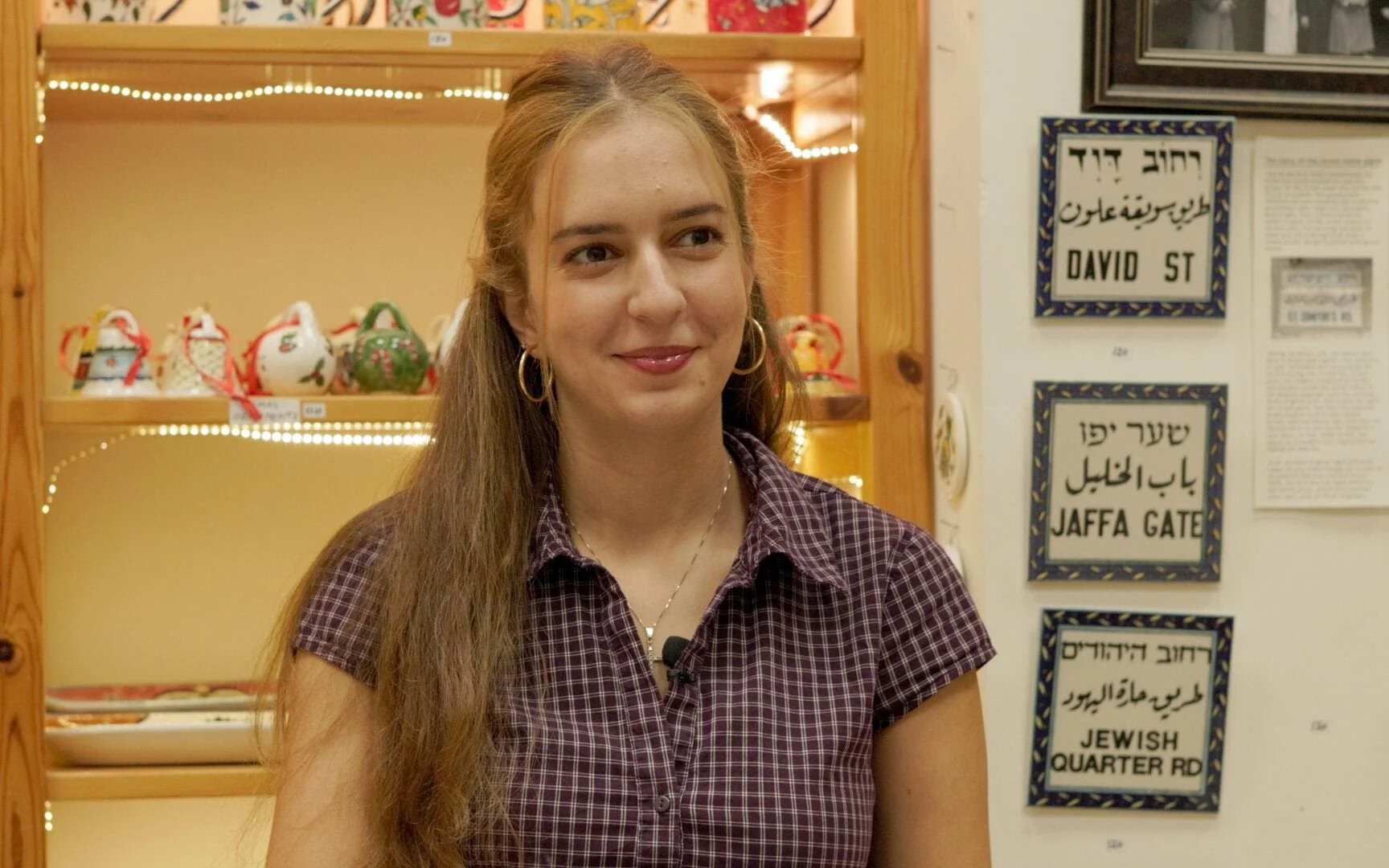
In this week’s installment, we meet a woman who is carrying on a century-old family tradition, painting the Holy City’s history
By SARAH TUTTLE-SINGER
The Times of Israel
Every time Patil Karakashian walks through Jerusalem’s Old City, she sees her grandfather’s artwork.
It’s on the ceramic street signs that guide visitors through the ancient alleyways: Arabic and English lettering framed by a yellow border adorned with delicate olive leaves, with Hebrew added above.
Now, more than 60 years after her grandfather began making those signs, 24-year-old Karakashian is painting new ones herself.
The fourth-generation Armenian ceramic artist works alongside her parents in the family’s workshop, tucked into a corner of the Christian Quarter along Greek Patriarchate Way. The shop is in a centuries-old Ottoman building, where the ghost of an old sign in English, Greek and Arabic is still visible above the entrance.
Inside, shelves are artfully displayed with hand-painted bowls, cups, plates, vases and tiles in brilliant shades of cobalt blue and turquoise. Gazelles, pomegranates, flowers and intricate patterns cover nearly every surface.
And depending on the season or the time of day, the music changes, too.
On winter days, old-fashioned Christmas songs drift through the workshop. In the mornings, it’s often Fairouz, the legendary Lebanese singer whose voice has been part of the soundtrack of Middle Eastern mornings for generations. Sometimes Frank Sinatra croons in the background.
The workshop is also a gathering place for an unlikely assortment of Jerusalemites and visitors. Israelis, Palestinians, priests, nuns and tourists from dozens of countries wander in, sometimes to buy ceramics, sometimes to paint, and often simply to talk.
Karakashian and her father offer painting classes for tourists and locals, welcoming students of all ages to try their hands at traditional Armenian ceramics.
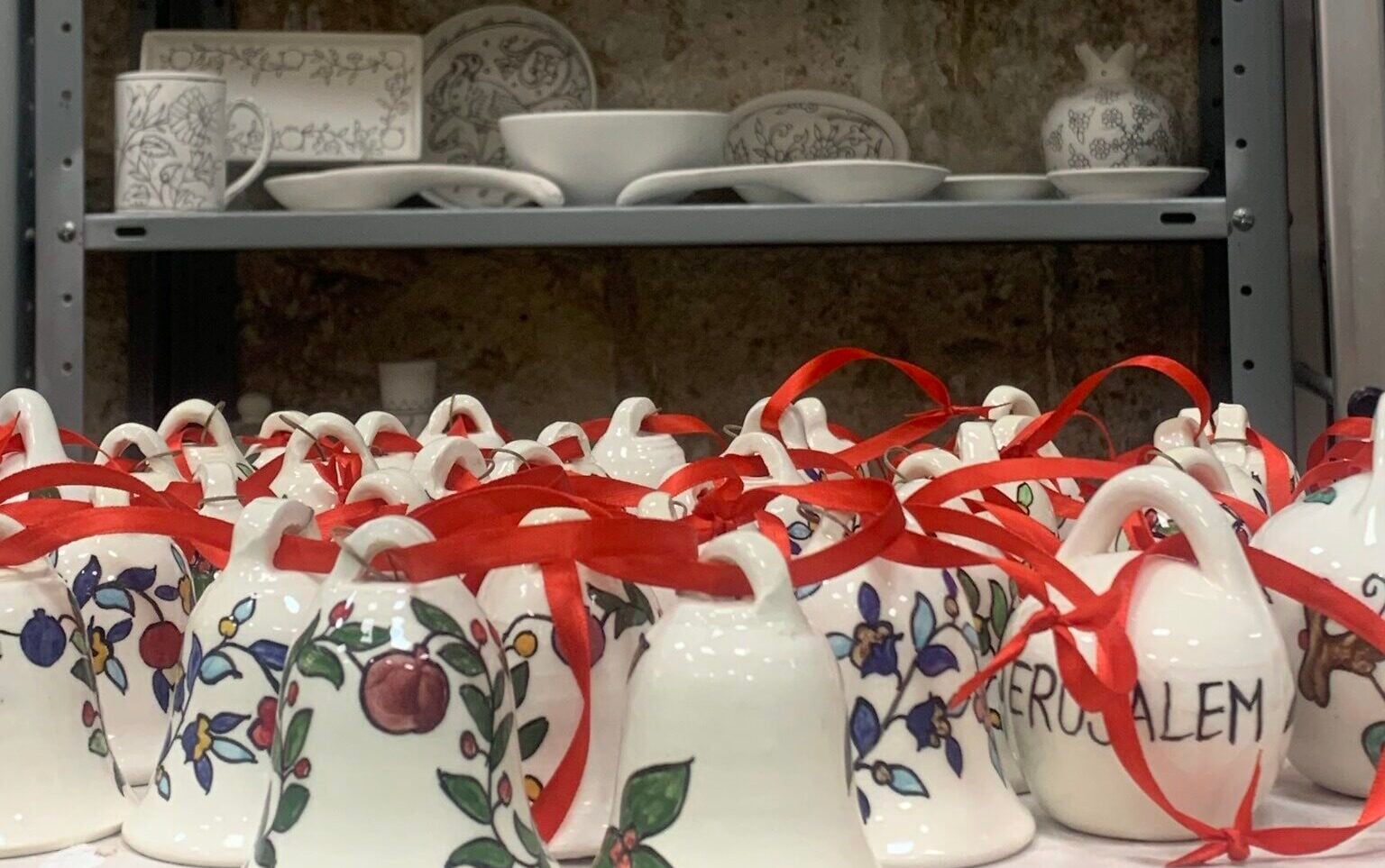 The Karakashian family is preparing for Christmas, October 2026 (Sarah Tuttle-Singer)
Today, Karakashian particularly enjoys working on larger pieces, including murals and street signs. She recently completed a ceramic sign for the Notre Dame building just outside the Old City and hopes to receive more commissions.
Her favorite color is dark blue, which she describes as bright and royal. Before it’s glazed and fired, it looks like a soft purple, and the color change is part of the magic of the craft. Her favorite motif is the gazelle, a symbol of beauty and elegance. Pomegranates, another recurring design, represent abundance and prosperity because of their many seeds.
The designs are part of a distinctive Jerusalem tradition that began with her great-grandfather, Megherdich Karakashian.
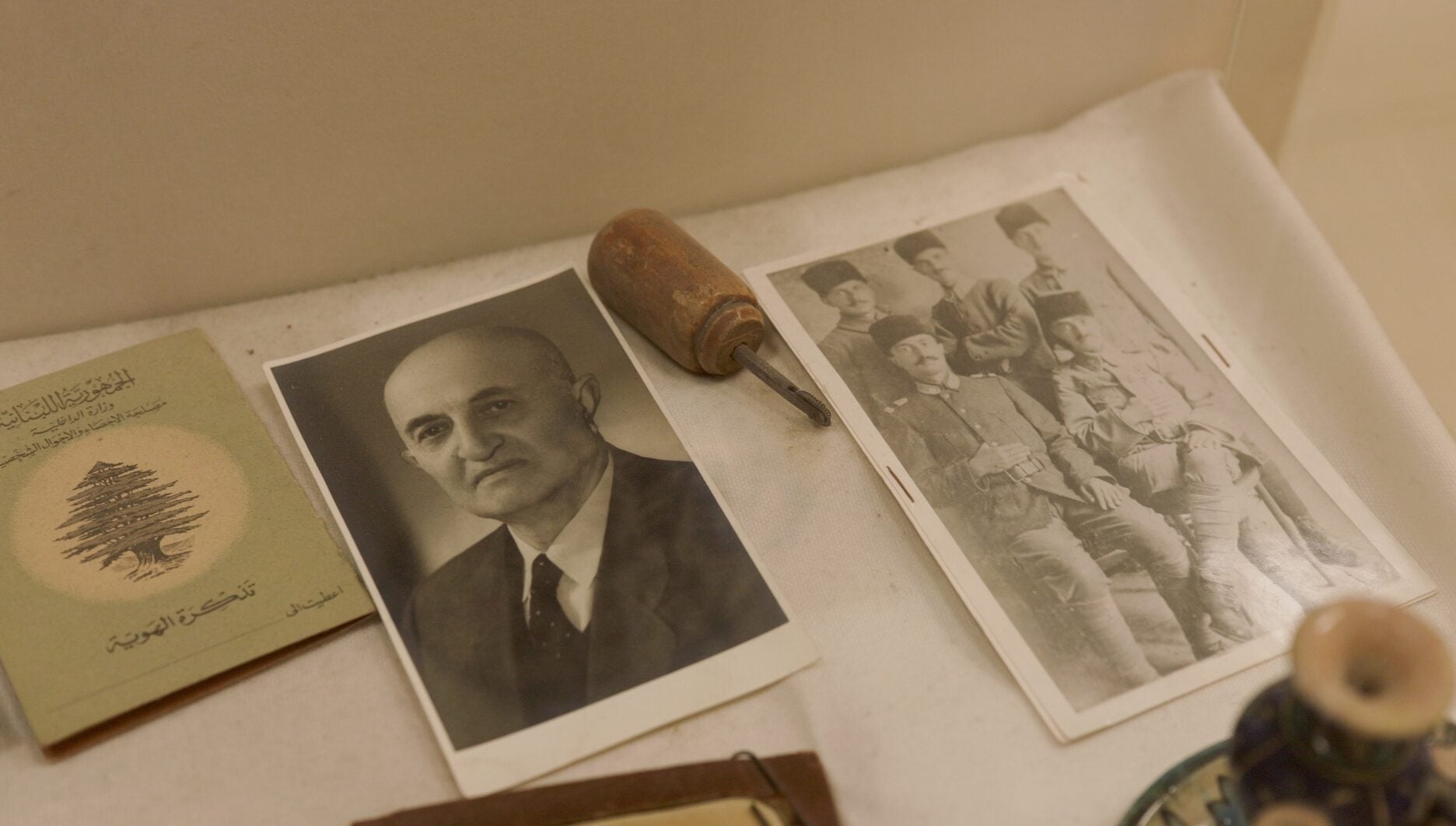 Karakashian family documents and photos, 2026. (Yitzchak Ledee)In 1919, he arrived from Kütahya, in present-day Turkey, alongside members of two other Armenian ceramic families, the Ohannessians and the Balians. The British administration had recruited them to restore the tiles of the Dome of the Rock.
The restoration project did not proceed as planned, but the families stayed, establishing workshops and developing the Armenian ceramic tradition that would become part of Jerusalem’s visual identity.
Their arrival came at a time when the Armenian Genocide had made returning to their former lives increasingly difficult.
Jerusalem already had an Armenian community dating back to the fourth century, and following the genocide, the city became a refuge for survivors. Today, the community continues to preserve its language, religious observances and traditions across generations.
Karakashian grew up immersed in that world, attending Armenian Scouts and summer camps, spending time with friends in the Armenian Quarter and regularly visiting relatives in Armenia.
Her family, meanwhile, continued painting Jerusalem, and the Karakashian story reflects the layered history of the city itself.
In 1966, during Jordanian rule over the Old City, her grandfather, Stepan Karakashian, received a commission from the Jordanian authorities to create ceramic street-name signs for the Old City.
He painted the names in Arabic and English, surrounded by a distinctive yellow border with delicate olive leaves. Then, after the 1967 Six Day War, when East Jerusalem became part of Israel and was incorporated into the reunified city under Israeli law, then-mayor Teddy Kollek personally asked Stepan to add Hebrew to the signs.
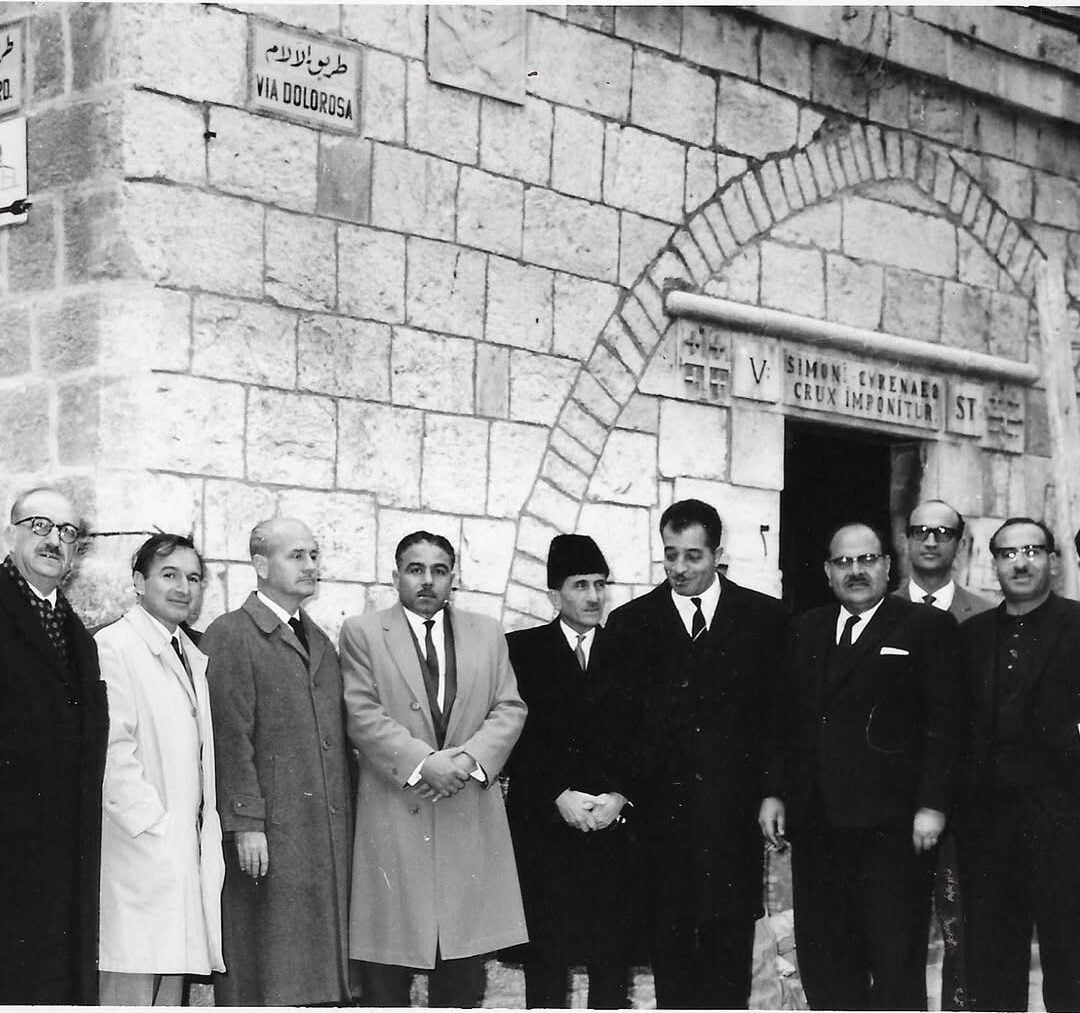 Stepan Karakashian (second from the left) stands with Jordanian officials including the Jordanian-appointed Governor of the Jerusalem District Anwar al-Khatib al-Tamimi (third from the right) on Via Dolorosa during the official ceremony for the new street signs, 1966 (Courtesy)There was one complication: Stepan couldn’t read or write Hebrew.
According to Karakashian, Kollek helped him get the Hebrew lettering right. The new lettering was placed above the original Arabic and English, separated by a line that remains visible on many signs in the Old City today.
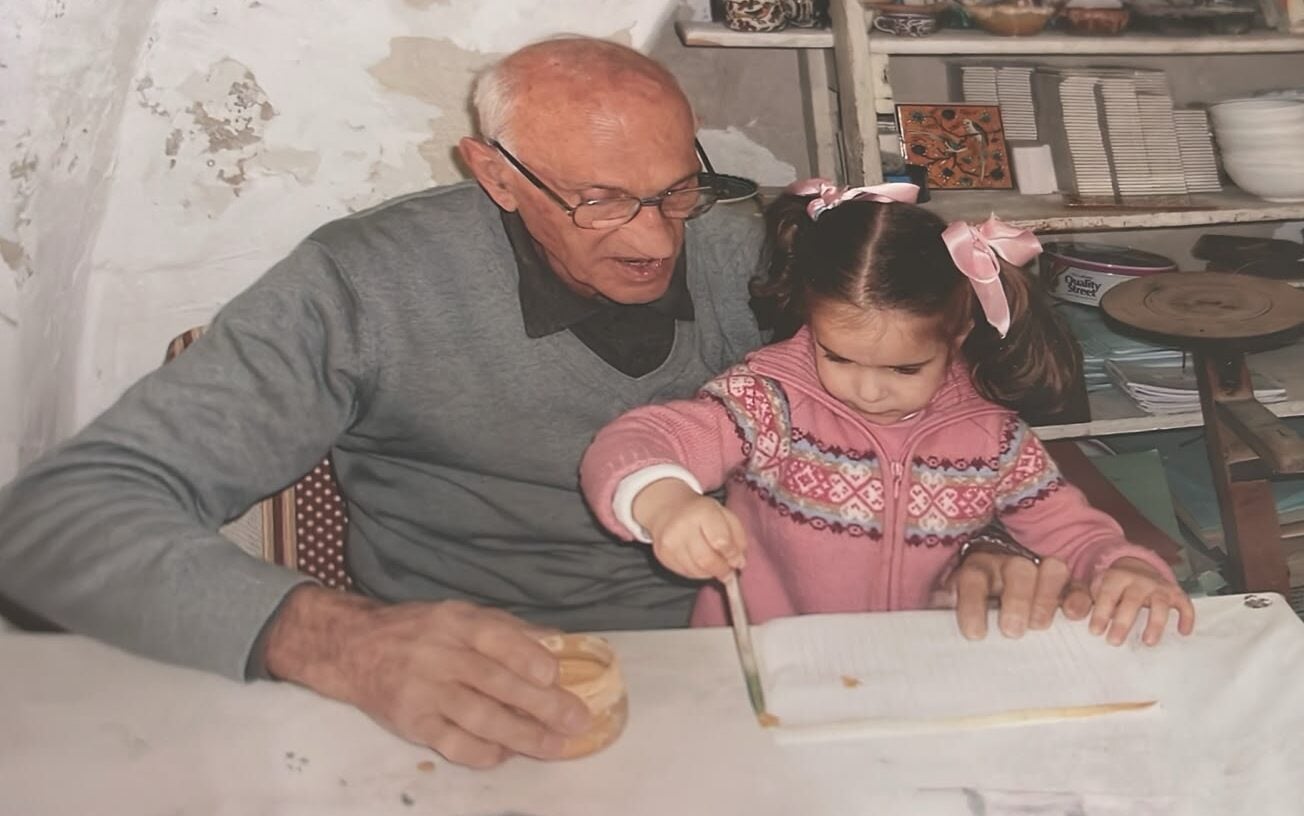
She points to a photo in his shop where her grandfather is holding a brush over the Hebrew letters. Another photo depicts Stepan Karakashian installing the original signs alongside Jerusalem’s Jordanian mayor in 1966.
Nearby hangs a letter from Kollek, and one of the original ceramic signs — removed after decades on the city’s walls — is preserved in a display cabinet. Karakashian is proud of this.
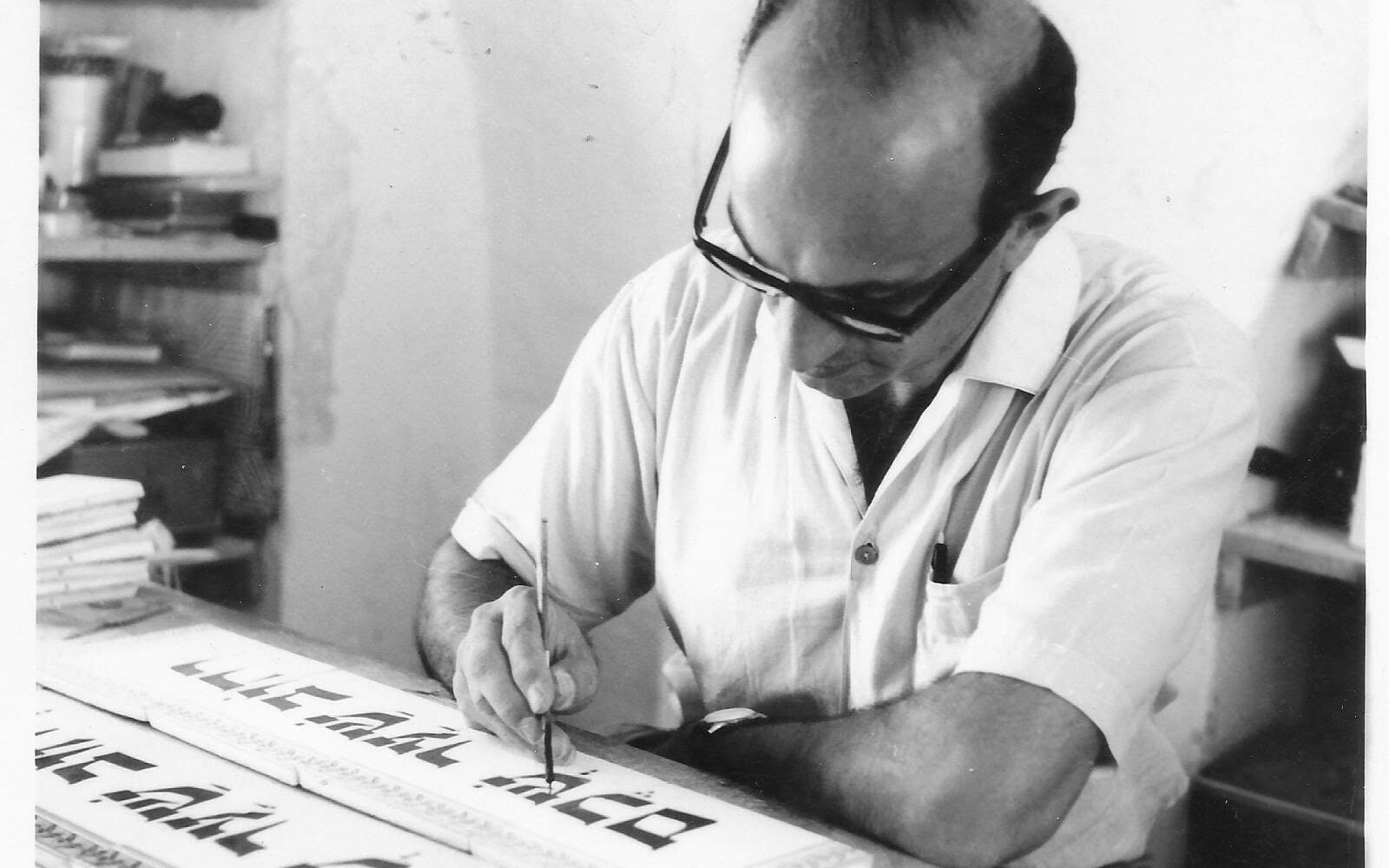 Patil Karakashian’s grandfather, Stepan Karakashian, paints the Hebrew letters for the street signs in the Old City, circa 1967 (Courtesy)“Each time I walk in the Old City, I also see the work of my grandfather,” Karakashian says. “It’s very inspiring. It’s the reason I continue this work and want to be part of this heritage.”
Her father, Hagop Karakashian, also began learning the craft as a child and continues to work in the studio. “Art is in our DNA,” he says. Her mother, Tzoghig, paints alongside them, sometimes introducing new designs and variations on the traditional patterns.
The family’s ceramics reflect the many cultures that have shaped Jerusalem, drawing on Armenian, Ottoman and other local artistic influences.
“I think this kind of ceramics is very important to Jerusalem and the Old City,” Karakashian says. “Because without it, there’s a feeling that something is missing.”
The art itself, she explains, isn’t only Armenian — it carries the echo of the Ottoman period, Levantine Arab influences, and even Jewish motifs.
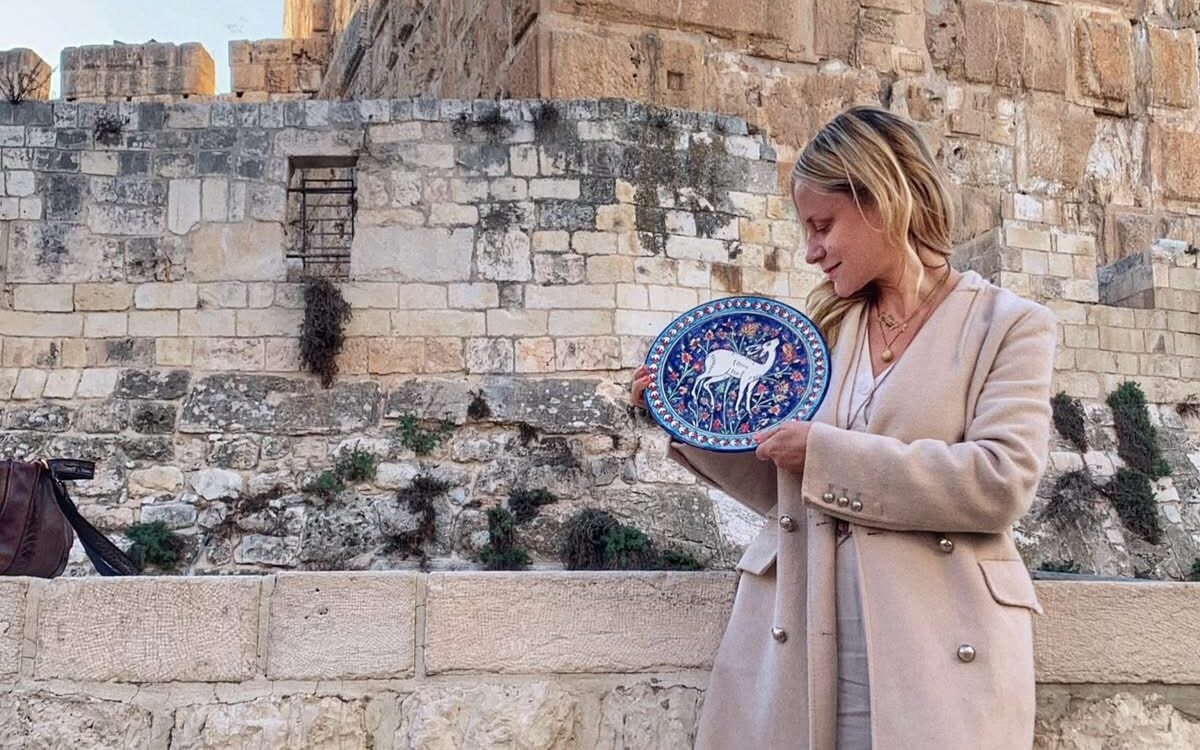 Sarah Tuttle-Singer with one of the pieces she painted with the help of Patil Karakashian, November 2025. (Courtesy)While Karakashian is committed to the family’s artistic tradition, she is also pursuing a different passion. At university, she studies chemistry, a subject that has fascinated her since childhood. The two interests, she says, have more in common than might first appear. Ceramic glazes, pigments and firing processes all depend on chemical reactions, transforming powdered materials into the rich colors that emerge from the kiln.
And despite the demands of university, Karakashian continues to find time for the workshop.
“When I come here and I start to draw and paint, I just get into the world of this art and I forget everything else,” she says.
The workshop itself holds traces of the family’s long history in Jerusalem. In a display cabinet are her great-grandfather’s passports, photographs, original ceramic pieces and documents from different periods of the city’s past.
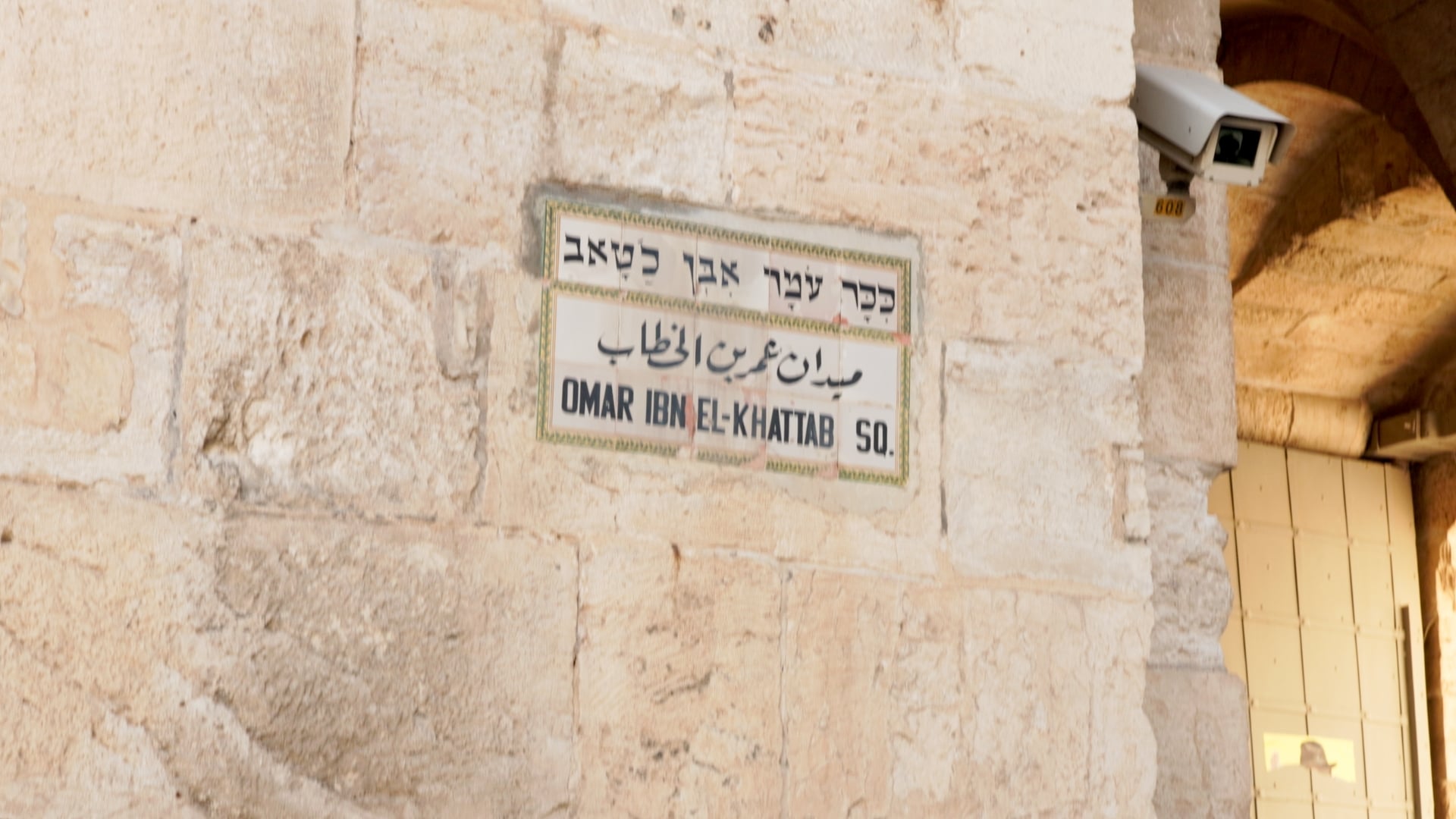 A street sign painted by Stepan Karakashian. The Arabic and English were painted in 1966. The Hebrew was added after 1967, October 2026 (Yitzchak Ledee)Some ceramics bear the word “Palestine,” dating to the British Mandate. Others are marked “Jerusalem, Jordan,” from the years of Jordanian rule. Contemporary pieces bear the Karakashian name and the word “Jerusalem.”
For Karakashian, however, the family’s legacy isn’t confined to photographs and display cabinets.
It’s outside, on the streets she walks every day.
Her great-grandfather brought the craft to Jerusalem in 1919. Her grandfather painted the signs that still guide people through the Old City. Her father kept the workshop going. And now Karakashian is adding her own work to Jerusalem’s walls, continuing a family tradition that has endured for more than a century, one elegant brushstroke at a time.