
First Artsakh, Now the Armenian Genocide: What Will Pashinyan Surrender Next?
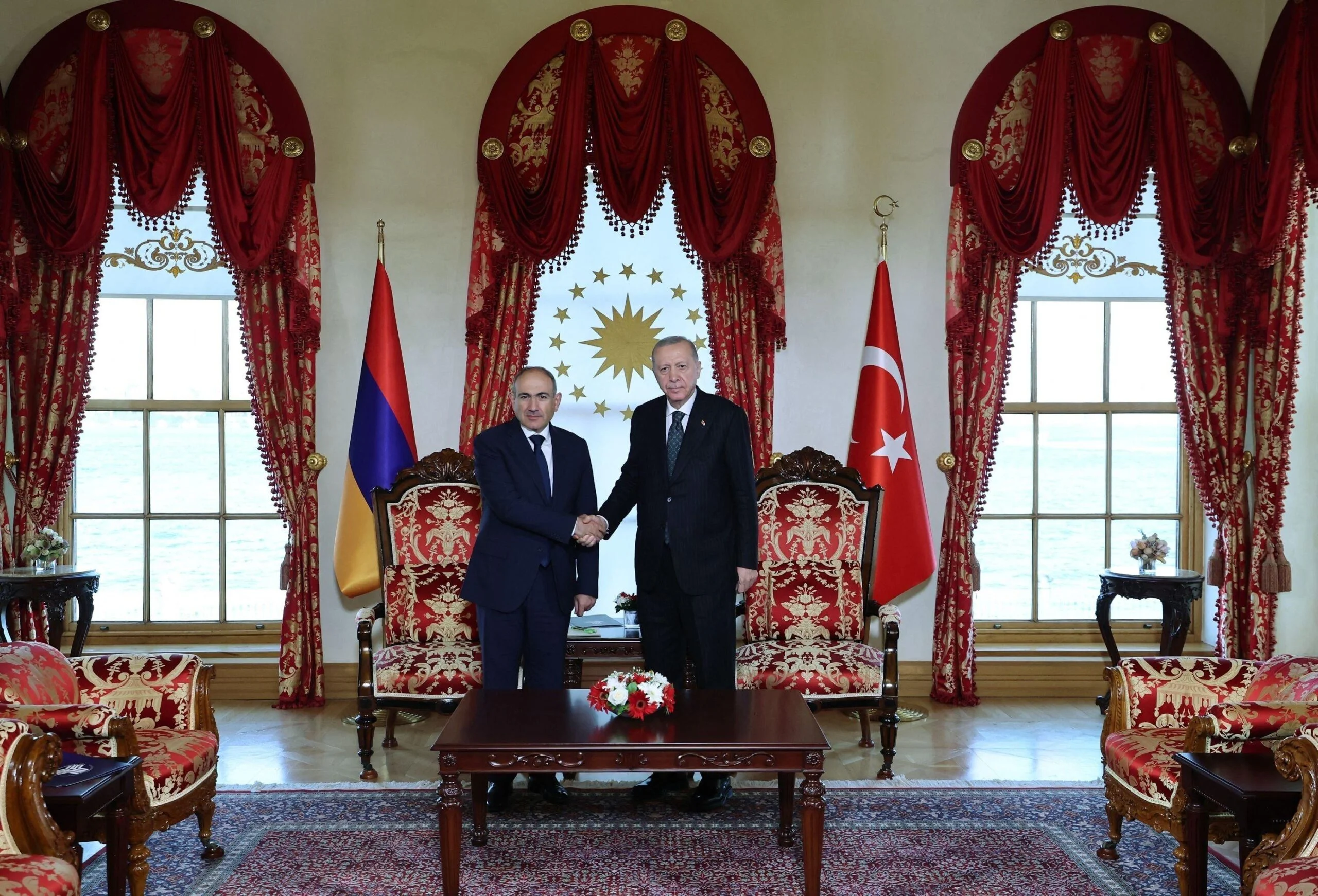
How much more must the Armenian people surrender before Prime Minister Nikol Pashinyan finally declares that enough is enough? First came the devastating loss of Artsakh. Then came the displacement of more than 100,000 Armenians from their ancestral homes. Now comes another deeply troubling development: Armenia’s own prime minister has removed the pursuit of international recognition of the Armenian Genocide from his government’s foreign-policy priorities.
One must ask: Is Pashinyan negotiating peace for Armenia, or gradually dismantling the very principles that generations of Armenians struggled to defend?
This is no ordinary disagreement over diplomatic strategy. It strikes at the heart of Armenian national identity, historical justice, and the moral responsibility of a government to its people. For more than a century, Armenian Genocide survivors and their descendants have fought against Turkey’s systematic denial of the atrocities committed against approximately 1.5 million Armenians in the Ottoman Empire. Their struggle was never simply about political recognition. It was about truth, justice, dignity, and ensuring that the victims would never be forgotten.
Yet Pashinyan has chosen to downgrade that struggle as a matter of state policy. And the most disturbing question is not simply why he has done so. It is what Armenia has received in return.
A Gift to Erdoğan That Turkey Never Had to Earn
In March 2025, speaking to Turkish journalists, Pashinyan explicitly confirmed that international recognition of the Armenian Genocide was no longer among his government’s foreign-policy priorities. He maintained that the genocide itself was an undeniable historical truth. But his distinction between acknowledging that truth and actively pursuing international recognition raises a fundamental question: What message does it send when the leader of Armenia publicly retreats from a diplomatic objective that Turkey has opposed for decades?
Turkish President Recep Tayyip Erdoğan has never needed to persuade the Armenian people to forget the genocide. His government’s longstanding objective has been to resist its international recognition and prevent the issue from obstructing Turkish diplomatic interests. Now Armenia’s own leadership is reducing the issue’s place in its foreign policy. Erdoğan does not have to win the historical argument if Armenia’s government voluntarily withdraws from the diplomatic fight.
Pashinyan may call this realism. His supporters may describe it as necessary pragmatism. But realism must be measured by results, not slogans. Has Turkey recognized the Armenian Genocide? Has Ankara abandoned its denialist policies? Has Armenia secured unconditional normalization of relations with Turkey? And what concrete guarantees has Pashinyan obtained to demonstrate that this retreat will strengthen Armenia’s security?
Until these questions receive convincing answers, Armenians have every reason to question whether their government is making concessions without obtaining sufficient commitments in return.
The Swiss Controversy: Why Question What History Has Already Established?
Pashinyan’s controversial remarks to Armenian community representatives in Zurich in January 2025 further intensified concerns. His questions about how the Armenian Genocide came to occupy its place on the Armenian national agenda provoked widespread criticism. Swiss-Armenian organizations expressed serious concern that his remarks could undermine the campaign for historical recognition.
The prime minister has insisted that he does not deny the genocide. That distinction matters. But it does not resolve the political problem. The Armenian Genocide is not an unresolved historical mystery awaiting validation by Ankara or Yerevan. Its reality has been documented through diplomatic correspondence, survivor testimony, archival records, scholarly research, and the findings of generations of historians.
The United States Congress formally recognized the Armenian Genocide in 2019. President Joe Biden followed with presidential recognition in 2021. These achievements were secured through decades of determined advocacy. Why should Armenians be expected to retreat from a historical truth that the international community has increasingly acknowledged?
First Artsakh. Now Historical Recognition. Where Does It End?
The loss of Artsakh remains an open wound in the Armenian national consciousness. Following Azerbaijan’s military offensive in September 2023, more than 100,000 ethnic Armenians fled Nagorno-Karabakh. Families were uprooted. Homes were abandoned. Communities with centuries of Armenian history were emptied. The political and humanitarian consequences continue to affect Armenians worldwide.
Pashinyan’s recognition of Azerbaijan’s territorial integrity, including Nagorno-Karabakh, was presented as part of a broader effort to establish peace and protect Armenia’s internationally recognized borders. Yet the tragedy of Artsakh raises difficult questions about the effectiveness and human cost of that strategy.
Now Azerbaijan’s President Ilham Aliyev has pressed Armenia over constitutional provisions that Baku considers incompatible with a final peace settlement. These demands deserve careful scrutiny. Constitutional reform is a sovereign matter for the Armenian people. It must never become something dictated by a neighboring government through political pressure.
The danger is not that Armenia negotiates. Negotiation is essential. The danger is that concessions may become an expectation rather than an exchange. If one concession is followed by another demand, where does the process end? What prevents future pressure over Armenia’s national symbols, historical narratives, sovereignty, or security arrangements? And who determines which Armenian principles are negotiable and which must remain beyond political bargaining?
These are questions Pashinyan cannot dismiss as mere emotional objections. They concern the future of the Armenian state.
The Diaspora Is Not Pashinyan’s Political Property
There is another reality that Armenia’s leadership must understand. The Armenian diaspora is not a department of the Armenian government. It is not an extension of Pashinyan’s political party. And it does not require permission from Yerevan to defend the memory of the Armenian Genocide.
For generations, Armenian communities in the United States, France, Lebanon, Canada, Argentina, and throughout the world have preserved the language, culture, faith, and historical identity of a people who survived an attempt at their destruction. Armenian Americans fought for decades to secure recognition of the genocide by the United States. They organized demonstrations, educated lawmakers, supported historical research, established memorials, and refused to surrender to political pressure.
Their work helped transform a once-contested diplomatic issue into an acknowledged historical truth at the highest levels of American government. And now they are expected to accept that international recognition is no longer a priority for Armenia’s government? Absolutely not.
Pashinyan may control his government’s diplomatic agenda. He does not control the conscience of the Armenian people. No prime minister can rewrite the memories of genocide survivors. No government can instruct their descendants to abandon the pursuit of justice. And no diplomatic agreement can erase the moral responsibility to confront genocide denial.
Peace Without Dignity Is Not a Lasting Peace
Let us be absolutely clear: Armenia needs peace. After decades of conflict, devastating human losses, displacement, and regional instability, the Armenian people deserve security, prosperity, and a future free from war. Peace with Azerbaijan and normalized relations with Turkey are legitimate and important objectives.
But genuine peace requires reciprocity. It requires respect for sovereignty, protection of human rights, credible security arrangements, and commitments that both sides are prepared to honor. It cannot rest indefinitely upon the assumption that Armenia must make the next concession.
Pashinyan’s supporters argue that historical grievances should not determine the country’s present-day foreign policy. There is a serious strategic question in that argument: How can Armenia protect its citizens while managing relations with larger and more powerful neighbors? But there is an equally serious answer. A government can pursue peace without surrendering its commitment to historical justice.
Germany’s acknowledgment of the Holocaust did not prevent reconciliation with its neighbors. On the contrary, historical accountability became an essential foundation for rebuilding trust. Turkey’s continued denial of the Armenian Genocide remains an obstacle to that kind of genuine reconciliation. The responsibility for denial lies with those who deny, not with the descendants of victims who demand recognition.
Armenians should not be told that remembering their ancestors threatens peace. The greater threat to reconciliation is the belief that historical truth must be suppressed to make diplomacy more convenient.
The Questions Pashinyan Must Answer
Prime Minister Pashinyan owes the Armenian people clear answers. What exactly has Armenia gained by removing international genocide recognition from its foreign-policy priorities? What assurances has Turkey provided in return? What concrete safeguards will protect Armenia against additional demands from Azerbaijan? What protections exist for the rights and cultural heritage of displaced Artsakh Armenians? And perhaps most importantly, what principles will Pashinyan refuse to compromise, regardless of political pressure?
A government cannot simply announce that difficult concessions are necessary and expect its people to accept them without accountability. Leadership requires more than presenting painful decisions as inevitable. It requires demonstrating that those decisions serve a clear national interest and produce measurable results.
If the price of peace continually increases while the guarantees remain uncertain, the Armenian people have every right to challenge the strategy.
Armenia’s History Is Not a Negotiating Chip
The Armenian Genocide is not a political inconvenience to be set aside when diplomatic circumstances become difficult. It is a historical reality that shaped the lives of millions of Armenians and continues to define the experiences of survivors’ descendants. It belongs not to a political party, an administration, or a prime minister, but to the historical record and the collective memory of a people.
Pashinyan has every right to advocate a different foreign-policy strategy. But Armenians have an equal right to challenge that strategy, especially when it affects matters of profound historical and national significance.
The Armenian people should not have to choose between remembering their ancestors and protecting their children. They should not have to choose between justice and security. And they should never be told that defending historical truth is incompatible with building a peaceful future.
A Final Warning to Pashinyan
Prime Minister Pashinyan must understand that political authority is temporary. Governments change. Prime ministers leave office. Diplomatic priorities evolve. But the Armenian Genocide remains a historical fact. The memory of Artsakh will not disappear. The suffering of displaced Armenians cannot be erased by political declarations. And the Armenian diaspora will not abandon a century-long struggle simply because the government in Yerevan has chosen a different diplomatic course.
The prime minister’s responsibility is to defend Armenia’s sovereignty, protect its citizens, and pursue a secure and prosperous future. But he must not confuse the pursuit of peace with the abandonment of principle. History will judge his leadership not merely by the agreements he negotiates, but by what those agreements achieve and what Armenia is required to sacrifice.
First Artsakh. Now the pursuit of international recognition of the Armenian Genocide. What will Pashinyan surrender next?
And when the next demand arrives from Ankara or Baku, will he once again tell the Armenian people that another concession is the unavoidable price of peace? There comes a moment when a nation must ask whether its leadership is securing its future or steadily weakening its negotiating position. For Armenia, that moment has arrived.
Peace must never become another word for permanent retreat. The Armenian Genocide is not negotiable. Historical truth is not negotiable. And the dignity of the Armenian people must never be the price of normalization.