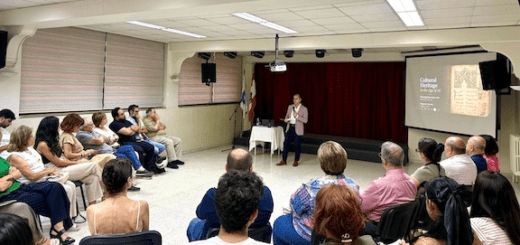
AIR AND OXYGEN ON OUR PLANET
By Dr. Hovhannes Chughuryan Anahit Chughuryan
Air and oxygen are among the essential components for human life and nature.
We cannot exist without air, oxygen, sunlight, and water.
Currently, the composition of our planet’s atmosphere is 21% oxygen, 78% nitrogen, and 1% other gases (argon, carbon dioxide, methane, ozone, helium, neon, etc.).
In most large cities today, oxygen levels are around 19–20%.
Human lungs are capable of absorbing 30–33% oxygen. Approximately 30,000–35,000 years ago, oxygen levels on our planet were at 35%. According to the Old Testament and archaeological evidence, our planet was once home to giant humans, large animals, and enormous plants.
Even looking at the more recent past—just 100–120 years ago—oxygen levels on our planet were at 23%.
What happened to the oxygen? Why is the amount of oxygen steadily decreasing? What problems will we face in the future if oxygen levels continue to decline?
One reason is air pollution; as it has increased, many large-scale industrial facilities—particularly in the chemical sector—have emerged that release substances into the atmosphere without filtering out dangerous elements.
A second reason is the ozone hole in the stratosphere.
A third major issue is our planet’s movement closer to the Sun—a process over which we have no control.
The most significant factor is the position of the Moon. Each year, the Moon moves 0.8–1 cm further away from the Earth. This is one of the drivers of global climate change—specifically, global warming. The climate on our planet has undergone a general shift: regions that were once cold are warming up, while traditionally warm regions—such as those around the Persian Gulf—are experiencing colder conditions. 15–20 years ago, no one would have believed that there would be snow or snowfall in the UAE or Saudi Arabia—as actually happened in Ras Al Khaimah and Oman.
“Global warming or global cooling?”—this is a challenging question facing humanity, politicians, and scientists today. Both pose a threat to humans and nature.
Due to a change in the Moon’s position, sunset now occurs one hour earlier than it did 100 years ago. During this one-hour difference, less water evaporates, meaning more water remains on the planet—and this is the cause of the floods occurring in Europe and across the globe.
The Moon plays a vital role for our planet, Earth.
Within our celestial neighborhood, the Moon, Mars, Jupiter, and Venus help protect our planet from massive asteroids by exerting strong gravitational forces that attract these asteroids toward them.
To combat natural disasters, we must keep our planet clean and plant more trees and greenery. To achieve this, we need to increase the percentage of oxygen in the atmosphere.
The planet and humanity require an oxygen level of 23–25%. This will lead to larger, taller trees and more expansive forests. A million years ago, our planet had much more vegetation, while the amount of water was 50% less.
Today, we utilize a natural resource—derived from what were once colossal trees—that serves as the basis for oil. These trees ranged from 30–40 meters at their smallest to 150–200 meters at their tallest, with bark reaching thicknesses of 10–15 meters or more.
We have been using petroleum in our industries for over a century, and our current reserves could last another 400–500 years. If all the trees, vegetation, forests, and plant stalks existing today were to be converted into oil, it would only be enough to sustain us for 4–5 years.
We need clean air and more oxygen. A lack of oxygen in the human body leads to many diseases, such as diabetes, arthritis, rheumatism, various memory-related issues, gangrene, heart conditions, respiratory problems, skin disorders, neurological issues, and more.
Most people breathe incorrectly and fail to properly utilize the 21% oxygen available in the air.
Proper breathing involves the following: inhale air through the nose for 4–5 seconds, hold it in the lungs for 4–5 seconds, and then exhale through the mouth over 4–5 seconds. Holding the air in the lungs for 4–5 seconds allows for a greater supply of oxygen to reach areas such as the pancreas, the digestive fluids, and the extremities—including the toes and fingers. Globally, the prevalence of diabetes is rising because an insufficient amount of oxygen reaches the pancreas, preventing it from functioning properly. Only newborns breathe correctly, and they continue to do so as they grow. We can observe this in the movement of their chest and abdomen.
As children grow, their breathing patterns shift. Beyond a certain age, we begin to breathe incorrectly.
In 2015, I registered a patent in the UAE for a method to supply air and oxygen to plant roots underground.
For the past two years, I have been conducting research in Armenia. The results have been excellent: a 25–50% increase in crop yields, vegetables and fruits that mature 10–15 days faster, and a 30–40% reduction in water consumption.
Today, scientists must develop technologies that provide humans and animals with clean air containing 25% oxygen. It is essential to supply additional oxygen to hospitals, schools, universities, shopping centers, and other facilities to ensure the air within these spaces remains fresh and oxygen-rich. Oxygen stations equipped with single-use masks should be set up on streets near bus terminals. Anyone feeling unwell can pay 1 dirham to receive 10 minutes of oxygen.
Today, oxygen therapy is considered one of the best medical treatments. Our blood delivers fresh oxygen to all our organs and tissues. If the body is deprived of oxygen for even 5 seconds, a person will die.
Even racehorses are given oxygen—using a special mask, 3–4 times a day for 2–3 days leading up to a race—to help them become stronger and run faster.
There is no need to spend money on building a nuclear power plant; instead, an oxygen plant should be established.
Sunlight is sufficient to provide energy to humans through the use of solar technology. The air contains numerous positive and negative waves that can be collected in a concentrator and used to supply people with wireless energy—much like the talented scientist and futurist Nikola Tesla demonstrated in New York in 1900.
I do not believe that plants and trees produce the oxygen for our environments. In reality, plants and trees produce only 5% of their oxygen in the morning, and then consume that same 5% in the evening.
This notion is akin to Darwinism—the idea that we, as humans, evolved from monkeys.
If we were to achieve an oxygen concentration of 25% in our homes, a gas stove would finish cooking food in 40 minutes rather than 60—making the process much more efficient for us. I possess relevant information regarding air and oxygen, and I could speak on the subject for two to three hours.
Our planet, Earth, is the most beautiful planet in the galaxies.
We must protect our planet as if it were our own child and restore its health, so that we may pass on an ecologically clean Earth to our children—a place where we can grow organic fruits and vegetables.
Human life will be longer, lasting approximately 100–125 years.