
The commitment took the form of a joint statement on the “completion of negotiations for an agreement for peaceful nuclear cooperation” between the two nations signed in Yerevan by Prime Minister Nikol Pashinian and U.S. Vice President JD Vance.
“American technology is going to be coming to this country,” Vance said after the signing ceremony.
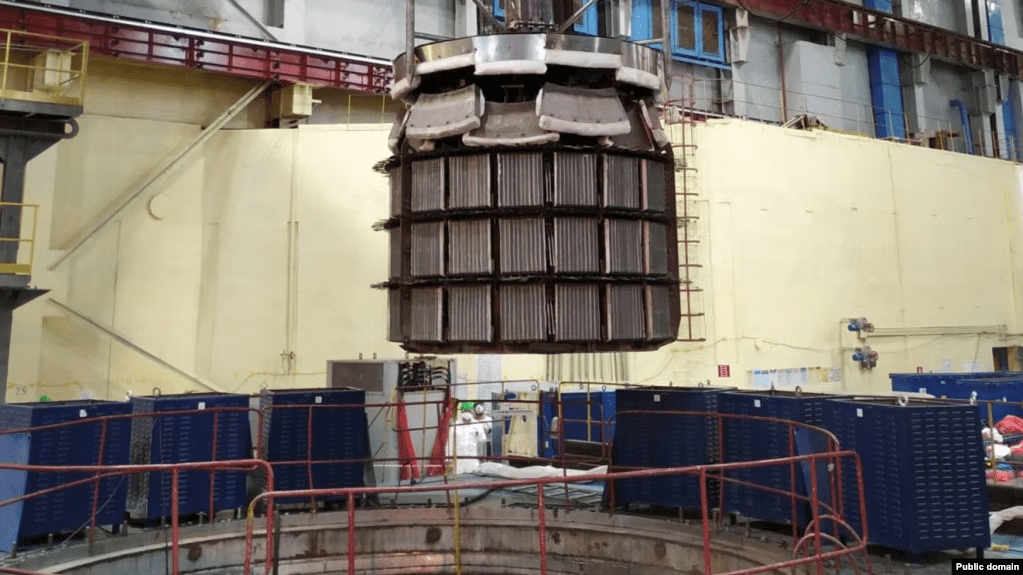
The Metsamor nuclear plant generates around one-third of Armenia’s electricity. The plant is due to be decommissioned in 2036. Pashinian’s government says its Soviet-build reactor must be replaced by a set of small modular reactors (SMRs), a new and relatively untested technology explored worldwide.
Both the U.S. and Russia have shown an interest in the project requiring billions of dollars in investment. The document signed by Pashinian and Vance formalized Yerevan’s preference for the U.S., which highlights its lingering tensions with Moscow. Vance said it “will pave the way for American and Armenian companies to strike deals on civil nuclear projects.”
“That means up to $5 billion in initial U.S. exports, plus an additional $4 billion in long-term support through fuel and maintenance contracts,” he told a joint news conference with Pashinian.
The $9 billion in total required funding cited by Vance nearly matches Armenia’s entire state budget for this year. Some local analysts believe that a U.S.-led nuclear project is therefore too expensive to be ever implemented in Armenia.
The U.S. itself does not yet have an operational SMR plant. The U.S. company NuScale Power Corp had planned to build America’s first facility of this kind in Idaho by 2030. It was due to consist of six reactors with a combined capacity of 462 megawatts slightly exceeding that of Metsamor’s reactor. However, NuScale cancelled the $9.3 billion project for economic reasons in November 2023.