Armenian Apostolic Church Faces Peril
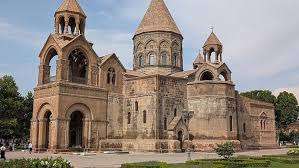
The Armenian Apostolic Church, the oldest national church in the world, adopted Christianity in 301 AD, becoming the first nation to embrace the faith as its own. It celebrates Christmas known as the Holy Nativity on January 6, combining both the birth of Christ with his baptism. This ancient tradition dates back to early Christianity, when all churches observed these events together on January 6 before most shifted the Nativity to December 25 in the 4th century to counter pagan festivals. The Armenian Church preserved the original date, reflecting its independence and fidelity to early practices.
As Armenian Christmas approaches many faithful around the world, including in the diaspora, are turning their thoughts to the precarious status of the Church in Armenia itself. This focus stems from an escalating crisis involving a deepening rift between the Armenian government and the Armenian Apostolic Church, which has long served as a cornerstone of Armenian national identity and spiritual life. This holiday season has become a moment not just for celebration but for prayer and concern for the Church’s future in the homeland, hoping for a resolution that honors its enduring legacy.
The Holy Cross Armenian Apostolic Church was the first Armenian church in Southern California, established in 1922. It is where I was baptized as a child, where my wife and I would return to pledge our eternal love in marriage, and where our three sons first felt the holy waters of our ancient faith when they were baptized in the same church as their father was.
For over 1,700 years, the Armenian Apostolic Church has been our rock, our refuge, our roar against oblivion. Our church has been more than a spiritual institution; it has been the unbreakable thread weaving our identity, culture, and survival through the ages.
Consider the trials we have endured. In the 5th century, at the Battle of Avarayr in 451 AD, our ancestors faced the mighty Persian Empire’s attempts to eradicate our faith and impose Zoroastrianism. Our church emerged victorious in spirit, securing religious freedom and forging a legacy of defiance. Through medieval invasions – Seljuk Turks, Mongols, and others – our monasteries became fortresses of knowledge, preserving ancient manuscripts. Even under Ottoman rule, when our people suffered unspeakable atrocities culminating in the Armenian Genocide, our church stood as a pillar of resistance. During the Soviet era, our faith was suppressed, our clergy persecuted, our holy sites repurposed. Yet, our church endured, a quiet flame in the cold grip of atheism. Through wars, earthquakes, and diaspora, the Armenian Apostolic Church has not just survived – it has thrived as a symbol of unity and hope.
But today, our church faces a peril not from foreign invaders, but from within our own borders. We are witnessing an unprecedented assault on the very church that has safeguarded our nation for millennia. Under the guise of law enforcement, clergy have been targeted who dared to speak truth to power, amid controversies over territorial concessions to Azerbaijan. Last year Archbishop Galstanyan was arrested on charges of coup plotting and terrorism, Archbishop Ajapahyan was tried and sentenced to two years in prison. Bishop Proshyan and twelve priests were arrested on allegations of embezzlement. And just last month, Archbishop Khachatryan was arrested and accused of drug possession.
Human rights advocates, from the Lemkin Institute to Christian Solidarity International, have condemned this as systematic suppression, echoing historical patterns of identity erasure and drawing parallels to authoritarian tactics. This is not mere politics; it is an attack on the soul of Armenia. When half of our archbishops find themselves behind bars, we must ask: What becomes of a nation that turns on its spiritual heart.? Our church will overcome this internal strife. The Armenian Apostolic Church has survived empires and ideologies because it is rooted in the eternal truth of Christ, not the fleeting whims of power.