Dr. Anna Aleksanyan Appointed Professor at Fresno State
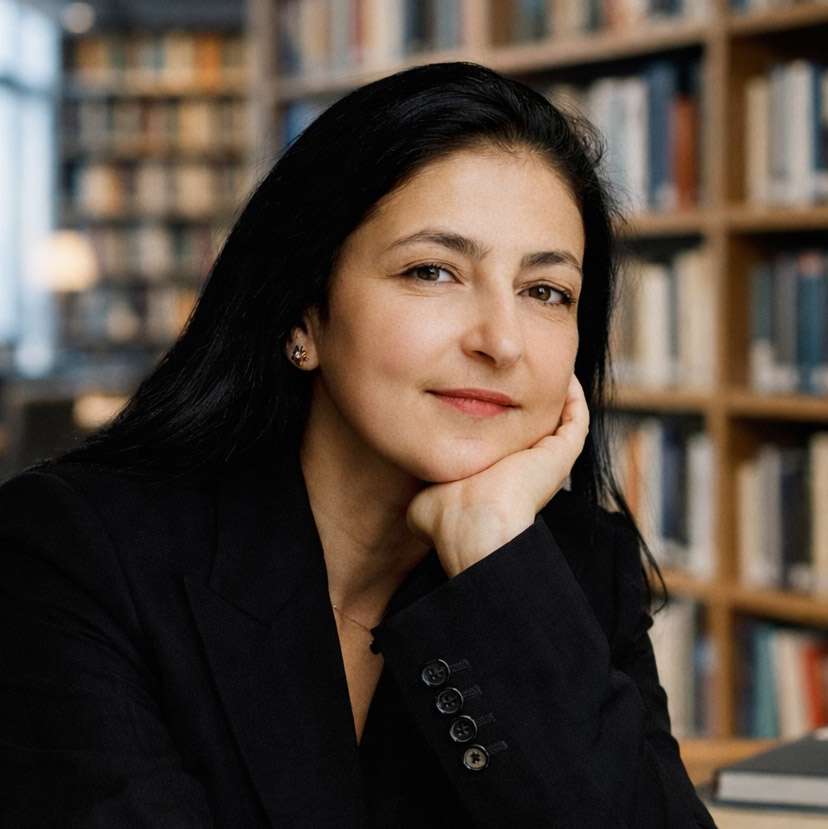
Dr. Anna Aleksanyan has been appointed as the 22nd Kazan Visiting Professor in Armenian Studies at Fresno State for the Spring 2026 semester.
“We are happy to welcome Dr. Aleksanyan for the spring semester,” said Prof. Barlow Der Mugrdechian, Berberian Coordinator of the Armenian Studies Program. “Dr. Aleksanyan will bring a new perspective to the study of the Armenian Genocide.”
“The Kazan Visiting Professorship within the Armenian Studies Program at Fresno State stands as one of the few global initiatives that allow specialists in modern Armenian history, particularly those focused on the Armenian Genocide, to design and teach courses in their areas of expertise,” said Dr. Aleksanyan. “This opportunity is a primary motivation for applying to Fresno State, though my interest has a deeper personal context.”
In March 2016, Dr. Aleksanyan visited Fresno State to participate in the conference “Empire, Politics, and War: The Armenian Genocide Within the Context of the Ottoman Empire,” organized by the Armenian Studies Program, where she presented her research on Zabel Yessayan and her documentation of atrocities. The conference included several activities, such as a visit to the historic Ararat Armenian Cemetery, one of the oldest Armenian cemeteries in the United States.
“As a historian, I was deeply moved by the gravestones of 19th-century Ottoman Armenian emigrants who made significant sacrifices to reach the ‘new world,’ not with the intention to remain permanently, but to work, prosper, and eventually return to restore life in their homeland,” stated Dr. Aleksanyan.
Dr. Aleksanyan’s American journey began in Worcester, Massachusetts, the first home for Armenian emigrants in the United States, from which some Armenians later moved to Fresno to establish a new community. This experience inspired her decision to come to Fresno, teach about the Armenian Genocide, and engage with one of the most significant Armenian communities in the country. The Fresno Armenian community, which learned about the Genocide of their families and friends through letters and the press, became a source of hope and a new home for many survivors.
“As most community members are descendants of genocide survivors, I feel a profound responsibility to teach not only about the painful aspects of their history at Fresno State but also about the remarkable resilience that has preserved their Armenian identity,” stated Dr. Aleksanyan.
Dr. Aleksanyan was born in Armenia to a family with Vanetsi and Mshetsi heritage. Her earliest memories include the first war in Artsakh and the blockade of Armenia, often referred to as the “dark and cold years.” These challenging times prompted many discussions in her household about genocide and survival, through which she learned much about her family’s history. Above all, her Mshetsi grandmother’s mother’s story of survival left a lasting impression on Dr. Aleksanyan.
“Although I initially sought to avoid the difficult subject of the Armenian Genocide, I ultimately spent seven years working at the Armenian Genocide Museum Institute after graduation,” said Dr. Aleksanyan. “During my time in the Institute’s archives, I realized that the experiences of women and girls remain an understudied aspect of the Armenian Genocide. The stories of female survivors in my family, as well as those of other women victims, inspired me to pursue my dissertation on this topic at the Strassler Center for Genocide and Holocaust Studies, where I had the privilege of working with leading genocide scholars.”
According to Dr. Aleksanyan, the experiences of Armenian women are not unique; similar patterns are evident in many genocides. However, certain aspects, such as the widespread and systematic sexual violence, have only recently received scholarly attention in the context of the Armenian Genocide. Dr. Aleksanyan’s dissertation examines the experiences of Armenian women during deportations, in transit, and in concentration camps, and demonstrates how their sacrifices contributed to survival.
Dr. Aleksanyan is teaching a course this Spring, titled “Gender and the Armenian Genocide,” that employs genocide theory and gender analysis to examine the relationship between gender and mass violence. It explores how the Armenian Genocide was gendered and investigates the ways in which masculinities and femininities were constructed and contested during this period.
“I look forward to contributing my expertise to Fresno State, collaborating with local scholars, and engaging with this academic community and the local Armenian community,” concluded Dr. Aleksanyan.