From Bourj Hammoud to Abidjan
The Inspiring Ascent of Hairdresser Garo Hasbanian
Edward Tashjian, Keghart
One of the central streets of Abidjan, the capital of Côte d’Ivoire, was recently named after Garo Hasbanian, a Lebanese-Armenian who built a wide reputation in the world of hairdressing across Africa and Europe. This honour formally recognizes his decades-long contribution to the cultural life of the country.
I met him several times at his parents’ home in Bourj Hammoud to discuss the long path he had travelled, one that feels almost unbelievable. Above all, his life demonstrates how far talent, combined with discipline and a passion for one’s craft, can take a person. From the crowded streets of Bourj Hammoud’s Kilikia district to the salons of Abidjan and the competition halls of Paris, his story reveals a journey shaped by curiosity, devotion, and the desire to evolve. It is the portrait of a craftsman who transformed his trade into international success.
Garo grew up in Bourj Hammoud, a neighborhood defined by its social spirit, Armenian character, and artisanal traditions. Countless craftsmen worked there, creating their trades with precision and patience. Devotion to work and service was part of daily life.
He began school at Mesrobian Armenian Catholic School, then at Saint Grégoire College in Achrafieh, where he excelled in languages. Financial difficulty forced him to interrupt his studies. His brothers were already respected hairdressers in Beirut. Through his eldest brother Simon, he entered the world of women’s hairstyling at a young age, drawn by its artistic charm. He quickly absorbed the culture of the craft and the subtleties of dealing with clients. “From a very young age, I was ‘boiled’ in this craft,” he says.
Garo displayed a natural curiosity toward the stylistic side of hair. He observed closely, experimented constantly, and understood early that hairdressing was not only a trade but also a form of expression. His environment nourished his talent and helped shape his professional identity.
Before leaving Lebanon, he worked in several salons in Beirut. The Beirut of the 1960s was diverse and full of life. From Raouche to Ramlet el-Baida and Zeituneh, he encountered clients of different backgrounds, tastes, and expectations. These encounters helped him mature quickly. He learned to adapt, to understand which style suited each person, and to create a look that reflected their individuality. Salon by salon, he refined his craft and broadened his horizons.
In 1968, he worked at the “Liberyt” hotel in Zeituneh, then one of Beirut’s most glamorous districts, known for nightlife, high class hotels like Phoenicia and Saint-Georges, as well as the legendary “Cave du Roi”. In that atmosphere he saw hairdressing as a form of artistic performance. Then a phone call changed everything. His former employer had bought him a one-way ticket to Abidjan. Not even eighteen, and with a single suitcase, he left for Côte d’Ivoire (Ivory Coast).
During the late 1960s, Abidjan was full of energy, optimism, and cultural diversity. Côte d’Ivoire was developing rapidly, and the capital had become a center of fashion and international exchange. Garo approached this new life with responsibility. He observed local culture and the expectations of clients. He learned new techniques, adapted to new conditions, and created styles that spoke both to his artistic roots and to Ivorian taste.

After two years working in his former employer’s newly opened salon, he decided to take his own path, and opened his own salon. It quickly gained a strong reputation. Clients appreciated not only his skill but the elegant and calm atmosphere he created. His name spread naturally, through word of mouth. Abidjan offered him a stage, and he responded with mastery.
His experience grew, and he soon felt the urge to expand further. He began traveling regularly to Paris for professional training. In academies like L’Oréal and Wella, he refined his craft and discovered trends that he later brought back to Abidjan. France opened the door to international competitions. At one event he attended as a spectator, he met Bernard Emirian, laureate of France’s “Meilleur Ouvrier.” Emirian encouraged him and integrated him into artistic groups that demanded precision, creativity, and confidence.
Over the years he won numerous awards, including:
- 1978 – Lauréat de Paris
- 1980 – Coupe de Paris
- 1981 – Coupe d’Europe, Gold Medal for Côte d’Ivoire
- 1982 – Coupe du Monde, Gold Medal
- 1984 – Oscar de la Réalisation Artistique
- 1988 – Palme d’Or and Oscar de la Paix
- 1990 – IBS International Beauty Show, New York
- 1995 – Médaille Officer de Santé
These achievements placed him among the world’s notable hairdressers. More importantly, they confirmed that his talent resonated far beyond Lebanon and Côte d’Ivoire.
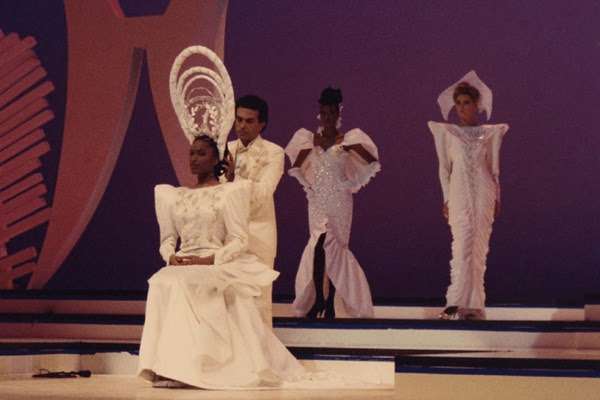
Beyond competitions, Garo became a central cultural figure in Côte d’Ivoire. He participated in national initiatives, including organizing the country’s early Miss Côte d’Ivoire contests and enabling its participation in Miss World and Miss Universe. His reputation led him to become the personal hairdresser of President Félix Houphouët-Boigny, a role requiring discretion and trust. He also styled numerous public and cultural figures.
In 1984, he became an Ivorian citizen, formalizing a relationship built through years of work. Later he expanded into beauty production, founding GARO hair-care products and the G&G skin-care line, manufactured in Côte d’Ivoire and distributed in France, Africa, and several European countries. He also owned two salons in Paris, which became centers of training, blending African style with European technique.
What stands out most in his story is the consistency of his vision. He believed in continuous learning, refined work, and treating his craft with seriousness. From the modest streets of Bourj Hammoud to the international stages of Abidjan and Paris, his path shows what becomes possible when talent joins discipline.
His journey should inspire the new generation, especially in countries that are passing through difficult times. His success reminds us that any craft, when pursued with genuine devotion, can lead to a remarkable story. And now, as a street in Abidjan bears the name of Lebanese-Armenian Garo Hasbanian, his story finds its place not only in memory but on the map of the city he helped shape, and which shaped him in return.
*****
 Edward Tashjian is a historian trained at the American University of Beirut. His work focuses on Middle Eastern and Armenian history and politics. His research engages the public through Badmatidaran, a digital project dedicated to Armenian history.”