
How Armenia is building tech sovereignty through it’s global diaspora
Carter Lawrence
Tech.eu
When you can, it’s always worth taking a look outside of your comfort zone to find the next big thing in tech.
I’ve been interested in Armenia for a number of years, and now it seems the rest of the world is catching up.
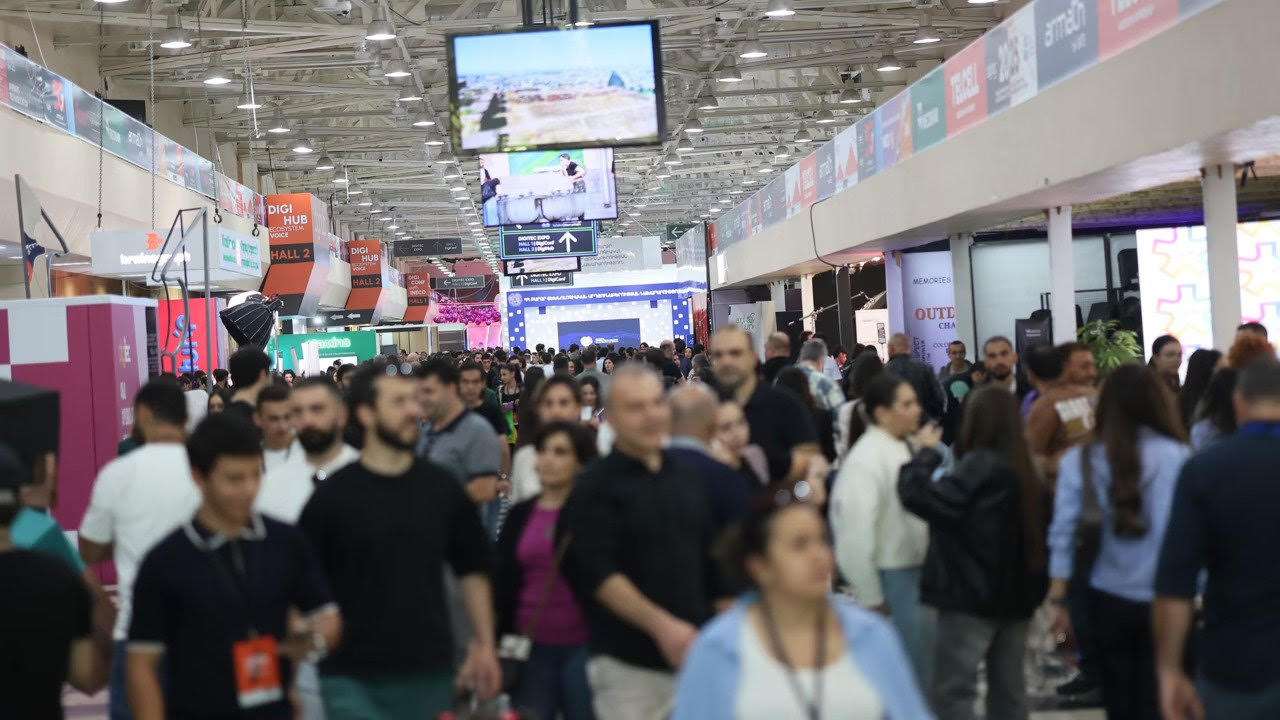
I gained first-hand access by visiting Yerevan for the 20th annual Digitec conference.
Unicorns, diaspora, and a global tech presence
At the crossroads of Eastern Europe and Western Asia, Armenia has a population of around 3.08 million, while an estimated seven million Armenians or more live outside the country — making its global diaspora one of its greatest strategic assets.
The ecosystem is anchored by unicorns Picsart and ServiceTi
This year Gecko Robotics founded by Armenian-American entrepreneur Jake Loosararian, raised a $125 million Series D round at a $1.25 billion valuation.
Armenia is also home to a dense concentration of global technology R&D and engineering operations, including major centres run by NVIDIA, Synopsys, AMD, and the Microsoft Innovation Center Armenia.
Multinational companies such as National Instruments, Oracle, VMware, Cisco, Mentor Graphics, TeamViewer, and D-Link maintain substantial engineering offices in the country.
Since the mid-2010s, Armenia has built one of the most attractive policy environments for tech startups in the region. The government introduced tax exemptions and reduced income tax for IT companies and employees, then reinforced this with the creation of a dedicated Ministry of High-Tech Industry in 2018.
By 2025, this framework had evolved into a comprehensive package of incentives, including preferential tax regimes, grant programmes, and support for hiring both local and foreign technical talent.
Armenia’s race to build sovereign AI infrastructure
Armenia opened its first supercomputer centre in 2024, and also acquired an NVIDIA supercomputer for use at the Yerevan State University (YSU). AI and advanced technologies.
The year opened with a cooperation agreement with France’s Mistral AI to strengthen national AI infrastructure, followed by the launch of the AI Virtual Institute, in partnership with AWS and the Ministry of High-Tech Industry, to train and upskill local practitioners.
In July, AI cloud company Firebird unveiled a vision for a $500 million public-private partnership with the Armenian government, with technical support from NVIDIA, which will fuel the development and growth of AI technologies in the country.
Firebird plans to launch with thousands of NVIDIA Blackwell GPUs in 2026 and will be designed with the ability to scale to over 100 megawatts of capacity. Last year also saw the launch of HyGPT, the first high-quality large language model (LLM) specifically designed for the Armenian language. The model is freely accessible online.
The challenge of building Armenia’s global tech brand
Addressing what Armenia’s global tech brand is today and what it is built on, Adele Tuulas, Director of Business Development at Digital Nation (Estonia), argues that while Armenia has many bright individual success stories, it still lacks a single, unified narrative that the world can immediately recognise.
She sees this as critical in the context of branding as soft diplomacy.
“A clear and credible tech brand becomes a strategic tool: it communicates what a nation stands for, what unique value it offers, and why it matters on the global stage, building trust, visibility, and lasting relevance.”
Catherine Jurovsky, Senior Expert at Business France, believes Armenia possesses the core ingredients of a compelling tech brand, but has yet to achieve the level of international recognition required to turn those assets into a coherent and widely valued identity:
“Today, Armenia has the ingredients of a tech brand, but not yet the international recognition that turns those ingredients into a coherent, valuable identity.”
She offers the example of LeFrench Tech as a way forward: France built “La French Tech” by first creating a community, then empowering it globally. More than 100 hubs worldwide now act as volunteer ambassadors. “The key was not advertising budgets, but mobilising entrepreneurs, investors, and institutions around shared values and visibility. Armenia’s strong diaspora could play a similar ambassadorial role if equipped with a unified narrative.”
From talent supplier to sovereign AI builder
One of the key themes at the conference was the urgency of articulating a coherent national AI strategy.
Yesayan asserts that a national vision backed by serious capital allows Armenia to move from being a supplier of engineers to becoming a creator of platforms, IP, and globally relevant AI systems.
“The $500 million initiative is not about one data centre—it is about anchoring an ecosystem.”
According to Yesayan, it means sovereign-grade compute, open to startups, universities, and industry; it means research funding that allows Armenian teams to train frontier-scale models rather than just consume them.
“It means creating economic gravity so that global AI talent can work from Armenia, not just with Armenia.
The aim is not to replicate Silicon Valley, but to build a model suited to Armenia’s scale, security needs, and regional role. Inherent to this is not only building startups but anchoring “strategic industries whose core IP is developed and retained in Armenia.”
The challenges of doing business in Armenia
While Armenia is known as a place of business, especially for international companies with a local presence, building locally from the get-go is not so easy. Tigran Petrosyan, co-founder of SuperAnnotate, sees commercialisation rather than technology as the primary constraint:
“Selling globally from Armenia requires mastering enterprise sales, long procurement cycles, and relationship-driven business development — capabilities that are more readily acquired in the US or Western Europe.”
The counterbalance, he says, is resilience.
“Armenian founders and engineers tend to be unusually persistent, an asset in an industry where progress depends on years of iteration and infrastructure building.”
Picsart co-founder Artavazd Mehrabyan sees the challenge not in talent but in proximity to global knowledge networks:
“Once you are deeply connected to global research networks, geography becomes secondary.”
Arto Minasyan is the founder and CEO of10Web, co-founder and President at Krisp, and Partner at investment firm Big Story VC. He contends that Seed funding of €500k–€1M is increasingly available locally.
“Given Armenia’s cost structure, that can fund meaningful product development. However, scaling to €20M, €50M, or €100M rounds still requires access to global VC ecosystems. Large checks come from Silicon Valley, London, and increasingly from global growth funds.”
Gender parity persists, but Armenia is building education as infrastructure
Women in Armenia account for nearly 40 per cent of the tech workforce, but their voices were notably absent from the conference as the vast majority of speakers and founders were male. This surprised me, as it is usual to see women founders and investors representing smaller ecosystems such as Lithuania, Latvia, and Moldova.
That said, Aremia is betting on the next generation of tech innovators through initiatives such as TUMO (he TUMO Center for Creative Technologies) a free, extracurricular educational program for teens which offers young people access to areas such as programming, robotics, game development, animation, filmmaking, graphic design, music, and AI through a mix of self-paced digital learning, workshops, and project-based labs, all focused on building real skills and portfolios rather than grades.

What makes TUMO Armenia particularly distinctive is its scale and national ambition. Through large urban hubs and a growing network of “TUMO Boxes” in smaller towns and rural communities, it aims to reach tens of thousands of students every week across the country, positioning creative technology education as a form of national infrastructure. It’s now a global network of learning centers and satellite hubs.
This integration with the wider ecosystem was inherent at the conference with TUMO students showcasing their projects at the front of the venue – a location that would be hot real estate for any commercial conference –, while university students were embedded as volunteers, giving them early, hands-on exposure to founders, engineers, and investors and helping to knit education, talent, and industry into a single pipeline.
Armenia is no longer just a source of strong engineers, but is laying the groundwork to become a creator of platforms, IP, and globally relevant AI systems.
With sovereign compute, a deep diaspora, and a national talent pipeline, the pieces are in place. The remaining challenge is coherence: turning these strengths into a clear, recognisable global tech identity that can carry Armenian innovation onto the world stage.
Armenian startups to watch
AIP Scientific
AIP Scientific focuses on developing orthopaedic implant technologies dedicated to supporting the end-to-end process of customised implant production, including modelling, mechanical reliability evaluation, optimisation, and fabrication of implants with complex shapes.
They utilise digital 3D design, additive manufacturing (metal & resin 3D printing), 5-axis CNC milling, and more. AIP Scientific also pioneers a bio-degradable material called BioCer, which is currently in animal trials. Their services involve the production of custom maxillofacial, cranial, and orthopaedic implants made of titanium and BioCer.
Argus AI
Argus AI is a medtech startup developing AI-powered mixed-reality tools to support surgeons in planning and performing complex operations.
The company turns MRI and CT scans into interactive 3D models that can be explored in virtual or mixed reality, giving clinicians a far more intuitive view of a patient’s anatomy than traditional 2D imaging. Using AI for image segmentation and analysis, Argus AI helps identify critical structures and plan surgical paths, with applications in pre-operative planning, intra-operative guidance, and surgical training.
The platform is designed “by surgeons for surgeons,” with a particular focus on high-precision fields such as neurosurgery, where spatial understanding and accuracy are critical.
BlueQubit
BlueQubit aims to make quantum computing accessible and practical for researchers, developers, and enterprises. It provides a cloud-based Quantum Software-as-a-Service (QSaaS) platform that enables users to design, simulate, test, and run quantum algorithms without their own specialised quantum hardware.
The platform integrates with real quantum processors from industry providers and high-fidelity GPU emulators, enabling customers to experiment, prototype, and deploy quantum computing workflows for applications such as optimisation, machine learning, and complex simulations.
Havnly AI
Havnly AI is building an AI-powered platform that automates the matching of temporary/insurance-related housing placements and property management for insurance carriers and relocation specialists.
Foldink
Foldink is a biotech startup focused on 3D bioprinting and tissue engineering. The company develops and supplies bioinks — specialised biological “inks” used in 3D bioprinting — as well as bioprinters and related materials that biomedical researchers use to fabricate living tissues and biological structures in the lab.
Its products include hydrogel and freeze-dried bioinks designed to simplify and standardise bioprinting processes for scientists working in regenerative medicine, drug discovery, and other advanced life sciences research areas.
Wav.am
Wav.am is an AI audio platform that provides text-to-speech and speech-to-text services.
Users can type or upload Armenian text and generate natural-sounding spoken audio in different voices, or record/upload speech and have it automatically transcribed into text.
The platform is designed to support everyday use cases such as content creation, accessibility, and language learning. It also enables the creation of longer-form audio such as audiobooks, with options to export and download the generated files.