I love Bolis, and I’m tired of explaining why
“Motherlands are castles made of glass. In order to leave them, you have to break something — a wall, a social convention, a cultural norm, a psychological barrier, a heart. What you have broken will haunt you. To be an emigré, therefore, means to forever bear shards of glass in your pockets. It is easy to forget they are there, light and minuscule as they are, and go on with your life, your little ambitions and important plans, but at the slightest contact, the shards will remind you of their presence. They will cut you deep.” — Elif Shafak, How to Stay Sane in an Age of Division
I kept catching myself doing this strange, preemptive thing whenever I told people where we were going: I would announce it, and then immediately start building a case for myself, start explaining myself, as if I were headed into a cross-examination and not a vacation.
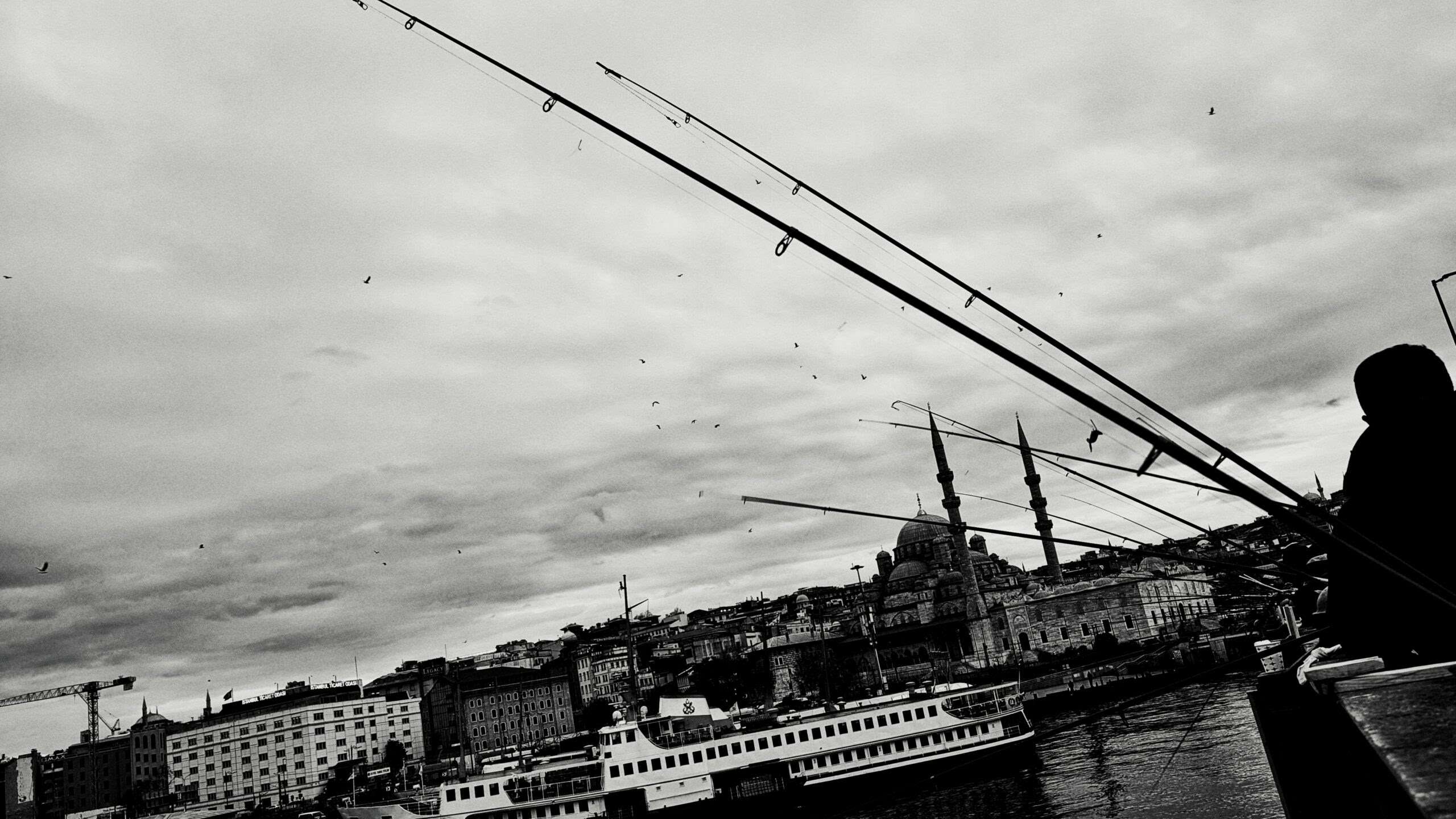
“We’re doing New Year’s and Christmas in Bolis,” I told a friend in Armenia, using the name the way it has always lived in my mouth and in my heart. He looked at me like I was being cute on purpose. “You mean Istanbul,” he said. “Don’t kid yourself.”
I laughed, but it still hit hard. He was not really correcting my geography, but was reminding me that a name does not dilute what a place means.
After that, I noticed how quickly I reached for reasons, even when nobody asked for them. My wife, Araz, had never been. I still have family there, my mother’s cousins and the generations after them. They still live in the same building my mother’s maternal grandfather built; a building that will likely be gone soon, folded into Istanbul’s earthquake-safety transformation — another reminder that even the places that hold us don’t get to stay put. I wanted her to meet them because those connections do not stay intact unless you actively try. I had friends to see too, the ones who move through the city with an ease I envy, who point out an Armenian school or church the way someone else points out a favorite café. I wanted to take her through the Armenian institutions and corners of the city that have always pulled me back, not as a lecture or pilgrimage, but as a kind of introduction to the parts of my life that begin there.
And underneath all of those perfectly reasonable explanations, I could still hear the question I had learned to anticipate, the one people did not always say out loud. Why there, why now and what exactly are you doing, going to Turkey for the holidays?
So I would add one more layer, then another. I would mention Christmas because it sounds cleaner than saying I missed the place. I would say it mattered for her to see it for herself, to understand where certain parts of my family’s story come from, to feel the distance between what you hear about a city and what it is when you are actually inside it. If I were honest, though, the truest reason sat behind all the responsible ones, waiting for me to stop hiding it in sentences.
I love Bolis, and sometimes that is the hardest thing to admit out loud.

***
It was a weeklong holiday: for me, a return after more than a decade to a city that has always felt uncomfortably familiar; for Araz, a first visit. It was also the first time in five years of living in Yerevan that we wouldn’t stay put for Christmas — the way so many ‘former diasporans’ use the break to go back ‘home’ (meaning the place they came from).
We hadn’t left Yerevan once for the holidays; we’d made our own New Year tradition here, gathering at our place with a small crowd of other ‘repats’ (too tidy a label for what is usually a messier, in-between reality). Most of us were holiday ‘orphans,’ not literally, just in the familiar way of being far from our immediate families and trying to build something that resembles family out of whoever is nearby. This year, we were breaking it, not by going to Toronto or Watertown to see our families, but by going to Bolis.
I’m not completely sure why the defensiveness came so naturally. Part of it is straightforward: it’s Turkey, and for Armenians, that word doesn’t sit neutrally on the tongue for obvious reasons (You know the reasons; I’ll spare us the century-long footnote).
Another part is newer: the way the country has changed in the last decade or so, the way the air has thickened since Hrant Dink was assassinated, the way friends who once felt anchored there have scattered elsewhere out of fear, the way speaking freely has become not only difficult but dangerous again, in a very familiar way. And part of it, if I’m being honest, is the thing I didn’t want to admit out loud: I wasn’t going for a conference, or a commemoration, or an exchange or anything officially ‘worthy.’ I was going because I love the city, because I wanted my wife to see it and meet my people there, and because Christmas in Bolis had been sitting in the back of my mind like an itch I couldn’t stop scratching.
When people asked “why,” I could feel my brain reaching for the acceptable answers, the ones that sound like duty. You go to commemorate, you go to bear witness, you go to learn and report and document and mourn. All of that is real, and I’ve done versions of all of that there.
But going simply to be there — to walk, to eat, to sit with family, to attend church services, to let your spouse fall in love with the place you’ve been carrying around inside you — feels suspicious, like you’re smuggling pleasure into a space that demands contempt.

And yet, the moment we landed, the city did what it always does. It reached straight past my politics, and my principled discomfort and my carefully rehearsed explanations, and it went right for the part of me that remembers, with the body. The smell of roasting chestnuts and the damp streets, the sudden rush of familiar sounds, the chaos that somehow organizes itself, the taste of things I can’t quite name correctly in Turkish (even after my years of effort). It’s embarrassing how quickly I soften there. The sights, smells, tastes, whatever that sensory flood is, feels like mine as soon as I enter the city, and I’m left standing in the same old dilemma: What does it mean to feel at home in a place that holds so much of your people’s pain?
I didn’t grow up with Turkey as a warm inheritance; it was more like a sealed room in the house: always present, always shaping the layout, but rarely opened. My mother was born in Bolis and moved to Toronto as a teenager with her family. She hasn’t lived there in more than half a century, and she refuses to go back. I’ve tried persuading her more times than I can count, gently, stubbornly, with every argument from “it might be healing,” to “you’d like the food,” to “you’ll see family you otherwise won’t get to see,” to “it’s part of you, whether you like it or not.” And she has never once budged. Part of me understands that refusal as a clean boundary, a decision she doesn’t owe anyone an explanation for. Another part of me has always felt pulled toward the city anyway, as if the only way to make sense of the inheritance is to stand inside it and let it be complicated.

Even the language, growing up, was wrapped in tension. We never had any real connection to Turkish the way some Armenian families — especially other Bolsahye (Istanbul Armenian) families — do. My grandparents were forbidden to teach me the language; my parents wouldn’t have it, and they’ve regretted that decision ever since. I regret it too, in the way you regret something that isn’t exactly your choice but still becomes your burden. I’ve tried, genuinely. I’ve done two stints in elementary Turkish classes at university. I’ve started and restarted so many times, and I’m currently on a Duolingo streak that’s so ridiculously long, the owl has basically become a household pet. Still, I can’t put a damn sentence together if my life depended on it. It’s funny until it isn’t, because at some point you realize you’ve been staring at that sealed door your whole life and you still don’t have the key.
***
I had been to Bolis three times before this trip, each time with a kind of built-in justification. The first time, back in 2010, four of us went — friends who all had family in the city. We had a little send-off before we left, and a friend brought a cake that read: “Don’t get killed in Turkey, boys!” It was meant to be a joke, and it was a joke, but it also contained a layer of truth we all pretended not to taste: the fear, the misunderstanding, and the awareness that hot-headed, outspoken Armenians have learned to carry. That trip grew into two months — Bolis, Beirut, Anjar, Haleb, Damascus, capped off in Yerevan — one long, messy education in how our map is stitched together by loss and joy, by stubbornness, and by whatever refuses to die.
The second time I went was on a journalist exchange connected to the Hrant Dink Foundation, and I remember feeling the strange tenderness of it, traveling with the knowledge that the program bore the name of a man killed for insisting on truth, as if the city was asking what you would do with that inheritance. The third time was in 2015, for the centennial of the Armenian Genocide, because it mattered to be in the city where the crime began and to see firsthand the small but fearless pockets of civil society willing to speak about what so many would rather bury. Those trips had an obvious weight to them, and that weight protected me from the question people now asked when I said “Bolis”: Why?
This trip’s answer was simpler, and that simplicity was harder to defend. We went because we wanted to, and because I felt it was time. I wanted Araz to see the city for herself, and I wanted her to meet my family there — my mother’s cousins and the generations after them — people who live in a reality that doesn’t fit neatly into our diaspora categories. They’re Armenian, but they aren’t ‘diasporan’ in the way we use that term in places like Toronto or Watertown and, if you call them that, you’ll quickly learn there’s a whole universe of history and identity packed into that disagreement. They live in Turkey, yes, but they also live within a long history of Armenian life in Bolis that refuses to vanish simply because it’s inconvenient to other people’s narratives.
The week revolved around Christmas as it was celebrated there. We attended three Badaraks over the holidays, and each one left me with the same mix of comfort and disbelief.
I’m not especially pious, but the liturgy still steadies me; that familiar cadence makes something in my body unclench. There’s also something astonishing about watching a community carry tradition not as a museum piece, but as a living rhythm.

We also went to a New Year’s service at the Armenian Evangelical Holy Trinity Church of Beyoglu, the first Armenian Evangelical church in the world, where, for the first time in my life, I watched a woman lead a service. The detail stayed with me, partly because it was, in its own unflashy way, genuinely progressive in a corner of the world outsiders are quick to flatten into ‘backward,’ and partly because it reminded me how lazy our assumptions can be. We treat communities like this as symbols — relics, points of proof, evidence for someone else’s argument — when in reality they’re people making choices, adapting, trying to make a life in a place that rarely makes it easy.
The best part of the trip was watching Araz meet everyone, and watching everyone meet her, not in a staged way, but in living rooms, over tea and sweets that reminded me of my Yaya, in conversations that start with polite small talk and then suddenly slip into memories. I introduced her to relatives she hadn’t met before, and what moved me most was watching the connection happen in our tongue — Western Armenian — sometimes smoothly, sometimes clumsily, but always with that sense that the language itself was doing work.
In Armenia, it’s easy to feel our dialects slowly give way to Eastern Armenian in the name of practicality, to feel parts of yourself adjust and shift and, if you’re not careful, quietly disappear; in Bolis, hearing Western Armenian spoken in its own habitat, in a place where maintaining it comes with its own pressures and compromises, made the whole question of ‘keeping’ feel less like an abstract guilt and more like something tactile.
That stubbornness is not romantic; it requires substantial work. And seeing Araz step into it with curiosity and respect made me grateful in a very specific way, grateful not for some vague ‘support,’ but for the fact that she understands this part of my identity isn’t an accessory.
Friends showed us around too, and that’s when the city’s Armenian life became visible in a different way: schools, churches, institutions, the Şişli Armenian Cemetery, where so many giants rest. Walking through those spaces, I felt proud and sad at the same time, because that’s often the honest emotion in Bolis. It’s not easy being Armenian in Turkey for a hundred reasons, many of which people don’t say out loud because saying them doesn’t change them, and you still have to go to work the next day.
But the fact remains: They are there; they’re living, they’re building, teaching, praying, publishing, maintaining a community in a place where their very presence has been treated as a problem for more than a century. It’s beautiful, not in a sentimental way, but in the plain, factual way. Endurance is beautiful.

We went to Hidivyal Palas, and that stop landed on me more heavily than I expected. The last time I was there, Tomo was alive. Now his chair is empty, but the legacy is tangible. Aras Publishing is still there, now in a more beautiful space within the building, with shelves that made me think, again, about how much Western Armenian is sustained by people doing quiet, thankless work (Save for, probably, the Jehovah’s Witnesses, Aras might be printing more texts in Western Armenian than any other publisher). Alongside it is the Yesayan Culture and Literature Association, an organization that has grown out of that same ecosystem, trying to do the unglamorous, necessary work of building an archive and a research center, making sure people can study, find and touch what so easily gets lost when a community is always being pushed to the margins.
Even the name ‘Aras’ hit me differently this time, because Araz was walking with me, her name and the publishing house’s name and the river’s name all echoing each other in my head. Aras, Araks, Araz: one word moving between spellings and references.
The river is part of our geography and part of our memory. On a modern map, it becomes a line, too: a border that separates us, one that has stayed shut long enough to start feeling permanent, even when it isn’t. Seeing and hearing that name everywhere, with my partner carrying it so naturally, made the history feel less like a chapter in a book and more like something still alive in the air: between places, between languages, between what was and what is.

And then there was the stop I knew would undo me, as it had three times before. We went to the spot where Hrant Dink was assassinated. The last time I stood in front of that building, more than a decade ago, Agos Weekly’s offices were still there. Now, it’s a museum: the 23.5 Hrant Dink Site of Memory. A place that, without exaggeration, is one of the most impressive, best-curated spaces I’ve encountered in the Armenian world. What struck me was the refusal to turn tragedy into performance, and the insistence on precision. It doesn’t let you hide behind abstraction, doesn’t let you treat truth as a slogan and it doesn’t ask you to perform grief. It asks you to see clearly what it costs to speak honestly in Turkey, and to sit with the discomfort of the fact that the cost has not disappeared.
Dink had been one of the first people who made Turkey feel like a place you could speak to rather than only about, someone who insisted that honesty did not have to mean hatred. His writing shaped how I learned to think about dialogue and dignity, about what it means to stay human inside history. His murder, more than I like admitting, is part of why I became a journalist and editor at all, why writing stopped feeling optional. I wanted Araz to stand at that spot, not for a history lesson, but because his voice had quietly helped form mine, and some inheritances only make sense when you stand where they were interrupted.
I watched Araz inside that space where the Agos headquarters once were, reading slowly, standing still, taking her time and I felt something shift in me that I’ve struggled to name. There are moments when you realize you didn’t bring someone to a place to explain yourself, but to share the weight of seeing. Not so they carry it for you, but so you aren’t alone in it.
Walking back out onto the street afterward felt surreal because outside, life continued, traffic moved, people laughed and the city refused to pause out of respect. That can feel cruel, but it’s also just the truth of cities. They hold everything at once, whether you approve or not.
***

By the end of the week, the guilt I’d brought with me didn’t disappear, but it stopped running the show. It became less dramatic, less like a moral verdict and more like what it probably is: a bruise. A reminder that love and anger can coexist, that you can resent a state and still feel tenderness for a street, that you can walk into a church in Bolis and feel at home without endorsing everything outside its walls. I understand why Armenians are reluctant to go there. I understand why my mother won’t return to the place she was born. I understand the instinct to protect yourself from contradictions by refusing to enter them.
But I also think it matters, sometimes, to go and see firsthand. To sit with family who are still there and hear the language across the table. To attend Badarak and remember that our rituals didn’t only survive in the places we consider safe. To visit the graves of people whose names you learned in Armenian school and whose words you later read for yourself. To walk into a publishing house and feel, in a very concrete way, that books are still being made and bridges are still being attempted. To stand at the site where a man was killed for insisting on truth, and then to step into a space built to protect that truth from being diluted.

Somewhere between New Year’s Eve and Merelots, I realized the trip wasn’t about resolving anything.
Bolis isn’t where I go to resolve. It’s where I go to remember, and to be reminded that our history isn’t only a wound, and it isn’t only a story we tell on one date in April.
It’s also a stubborn, ongoing life that continues in places we’ve been taught to treat as inaccessible, complicated or off-limits. And if that makes my relationship to the city messy, then fine; I’m tired of pretending that neatness is a virtue in a history like ours.
Maybe next time someone asks where we’re spending the holidays, I’ll try not to explain so much. I’ll try to let the sentence stand without a defense attached to it, even if it makes people uncomfortable — even if it makes me uncomfortable, too.
All photos are courtesy of Rupen Janbazian unless otherwise noted.Share via Email