Viewer in Lebanon Comments on Anti-Ruben Vardanyan Falsified Documentary Shown on Azeri TV
By Nayiri Kantarjian
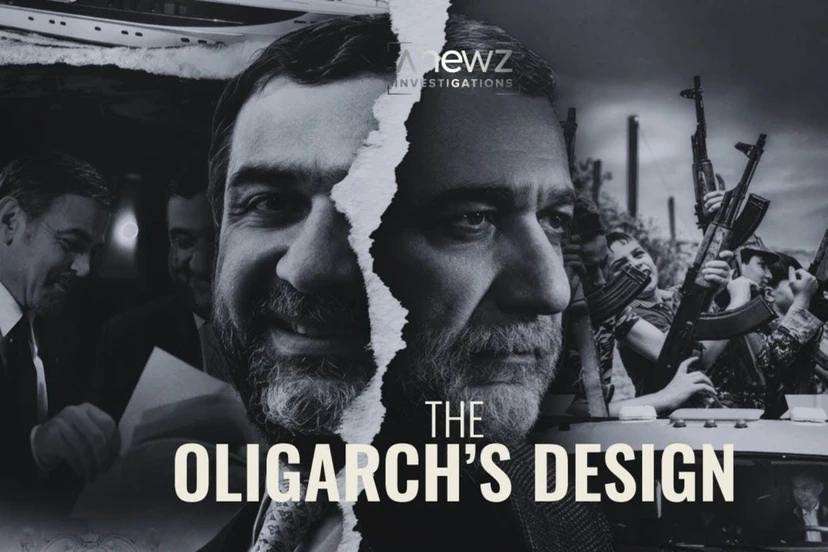
Yesterday, while watching television in Lebanon, I came across an Azerbaijani documentary about Ruben Vardanyan. What I saw was not journalism, but a carefully constructed propaganda piece aimed at criminalizing an Armenian figure by rewriting history and distorting facts.
Ruben Vardanyan is portrayed as a “mafia member,” a “terrorist,” and a criminal involved in money laundering. His humanitarian and political support for the Armenians of Artsakh is deliberately reframed as extremism. Actions taken to preserve Armenian infrastructure and resources are falsely presented as “theft from Azerbaijani lands,” as if Artsakh had not been historically inhabited, administered, and defended by Armenians long before recent events.
This documentary follows a familiar pattern: humanitarian support is labeled terrorism, Armenian self-defense is labeled aggression, and Armenian presence is erased retroactively. This is not accidental — it is information warfare.
Ruben Vardanyan’s real “crime” is not violence or corruption. His real crime is that he stood openly with the people of Artsakh at a time when silence was safer, and neutrality was more convenient. He chose responsibility over comfort.
The inclusion of selectively chosen voices — including Armenians — is not proof of objectivity. It is a known propaganda technique meant to create the illusion of internal consensus and legitimacy. Division is manufactured because unity is dangerous to those who wish to erase Armenian claims, history, and rights.
Factually:
• Ruben Vardanyan is a philanthropist and public figure, known internationally long before Artsakh for his work in education, culture, and humanitarian initiatives.
• He did not take up arms, lead military operations, or commit acts that meet any internationally accepted definition of terrorism.
• His detention is political, not judicial — occurring in a context where Armenians from Artsakh have been forcibly displaced and silenced.
• The accusations against him rely on reframing Armenian presence in Artsakh as illegitimate, which is itself a political claim, not a legal fact.
What is most alarming is not the existence of such a documentary, but the silence that allows it to circulate unchallenged. When propaganda is left unanswered, it slowly becomes “truth” in the eyes of the international audience.
This documentary should be a wake-up call. Not to react with anger, but to respond with clarity, facts, and coordinated action.
Ruben Vardanyan is not just one man. His case represents:
• The criminalization of Armenian advocacy
• The attempt to redefine Armenian humanitarian action as extremism
• The broader effort to erase Artsakh Armenians not only physically, but morally and historically
Saving Ruben Vardanyan means defending the principle that standing with your people is not a crime.
Silence will not protect us.
Disorganization will not protect us.
But truth, persistence, and unity still can.