Not One Armenian-American Should Vote For Vance in 2028 Presidential Election — By Harut Sassounian
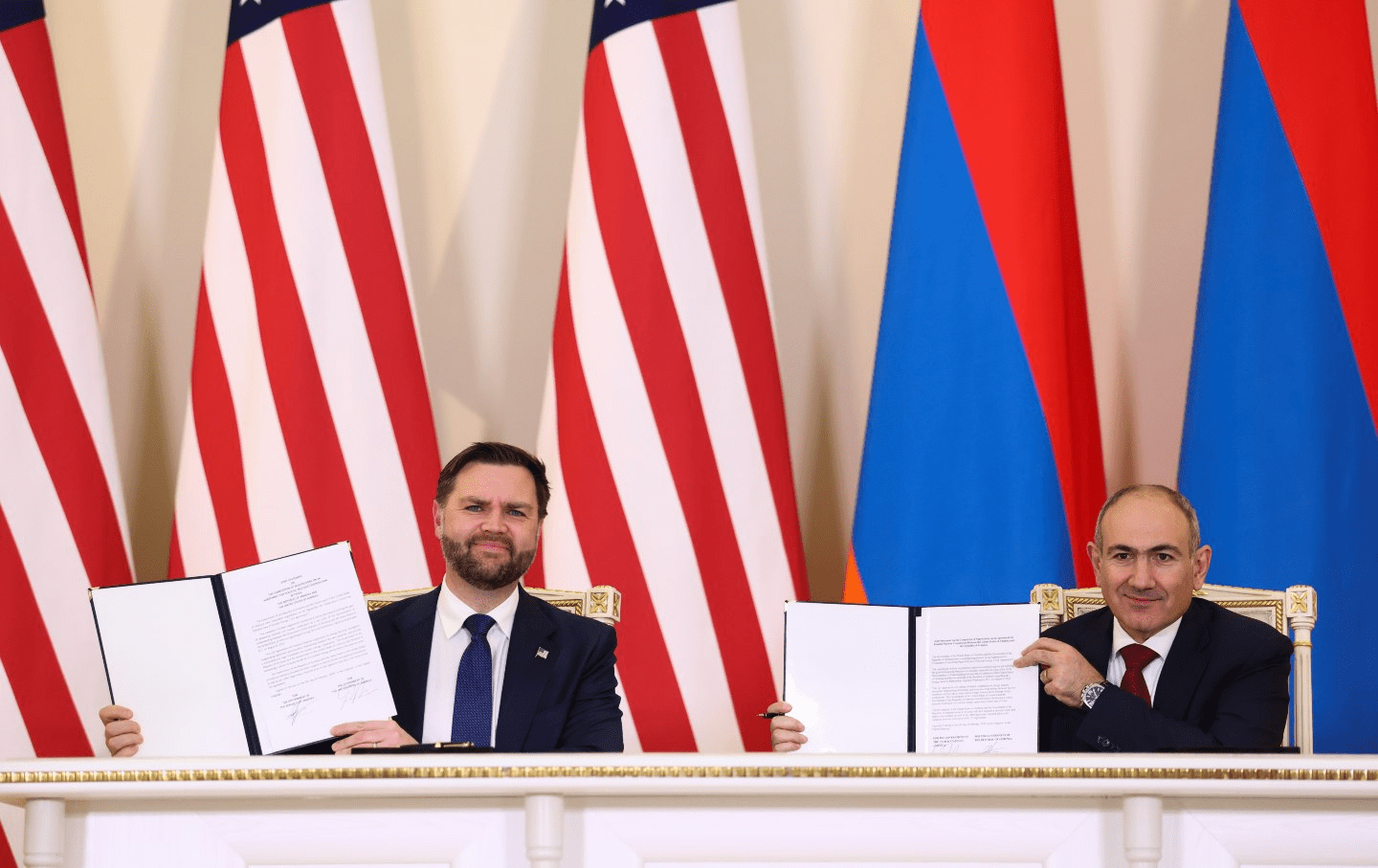
U.S. Vice President JD Vance visited Armenia and Azerbaijan last week. It was a PR stunt for the benefit of Pashinyan, Aliyev, and Trump, accompanied by several blunders and scandalous incidents.
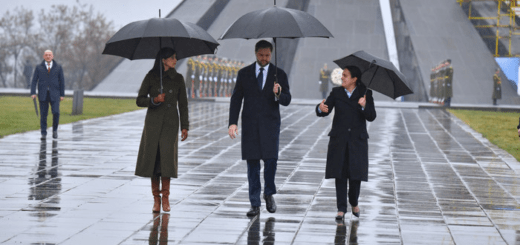
To begin with, Vance and his wife made an unexpected stop at the Armenian Genocide Monument in Yerevan and laid a wreath to honor the memory of the 1.5 million Armenian Genocide victims. Right afterward, Vance posted on his Twitter (X) account: “Today, Vice President Vance and Second Lady Usha Vance attended a wreath laying ceremony at the Armenian Genocide memorial to honor the victims of the 1915 Armenian Genocide.” The Vice President wrote in the Genocide Museum’s guest book: “In solemn remembrance to the lives lost, we honor the resilience and enduring spirit of the Armenian people. May America and Armenia strive for a future of peace and understanding together.”
However, this solemn gesture was marred by a serious controversy shortly thereafter when Vance’s post was deleted and replaced with a message without referencing the Armenian Genocide: “VP and SLOTUS [Second Lady of the U.S.] lay flowers at the eternal flame and sign the guest book on the final day of their visit to Armenia.” The altered text was posted by Taylor Van Kirk, Vance’s Press Secretary. It is obvious that the Press Secretary did not replace the post on his own. He was most probably told to do so by the White House after receiving a harsh complaint from Turkey’s denialist regime.
The reason for revising Vance’s initial post is that Pres. Trump did not use the term Armenian Genocide in his April 24, 2025 statement, even though Pres. Joe Biden had acknowledged it for four consecutive years. This is the result when some members of the Armenian community vote for a genocide denier. The deletion of the reference to the Armenian Genocide is such an insulting act that Armenian-Americans should refuse to vote for Vance in the 2028 U.S. Presidential election.
When the White House Press Secretary Karoline Leavitt was asked to comment on the scandalous deletion of Vance’s post, she avoided the issue without once using the term Armenian Genocide. Leavitt cynically stated, “No change in policy at this time,” meaning no acknowledgment of the Armenian Genocide.
Before leaving Yerevan, when Vance was asked about the deletion of the words Armenian Genocide from his post, he gave an evasive answer: “They said this is a very important site for us, and obviously I’m the first [U.S.] vice president to ever visit Armenia. They asked us to visit the site. Obviously, it’s a very terrible thing that happened a little over a hundred years ago and something that’s very, very important to them culturally.”
So Vance reduced the mass murder of 1.5 million Armenians to “a very terrible thing” and “very important to them culturally.” Ironically, Vance’s deletion of the reference to the Armenian Genocide was covered extensively by the U.S. and international media, including CNN, Reuters, The Wall Street Journal, and The New York Times. By deleting that reference, the White House helped further attract attention to the issue.
Vance’s visit to the Armenian Genocide Monument in Yerevan was probably intended to balance his later visit in Baku to the “Martyrs’ Alley,” a national cemetery and memorial for soldiers killed in Azerbaijan’s wars.
Vance also committed the faux pas of sticking his nose in Armenia’s domestic politics by endorsing Pashinyan in next June’s parliamentary elections. No self-respecting political leader would interfere in another country’s elections with such audacity. Vance said during a press conference in Yerevan: “I know there is an election coming up. I won’t talk about that, but to the extent my endorsement means anything, he [Pashinyan] certainly has it because this is a guy who can build the long-term partnership to make this kind of a thing stick.”
Vance also made the error of referring to Armenia as “one of the oldest Christian countries in the world,” instead of “the oldest” or “first Christian state.”
Another one of Vance’s statements stirred a lot of controversy in Armenia. In reality, it was the fault of the translator who was chosen by the American side. When Vance spoke about the U.S. exporting to Armenia $9 billion worth of modular nuclear reactors and parts, the word “export” was mistranslated as “investment.” So rather than the U.S. investing in Armenia, it is Armenia that would be investing in the U.S. The hefty sum of $9 billion equals Armenia’s entire annual budget. While Vance presented the U.S. sale of the modular reactors as a done deal, Pashinyan said that Armenia is shopping around with several other countries to get competitive bids.
While Pashinyan keeps talking about peace day and night, Pres. Aliyev is demanding further concessions from Armenia and refuses to sign the so-called “Peace Treaty.” Azerbaijan is also holding in a Baku jail the former leaders of Artsakh on trumped-up charges, saying that the Armenian hostages committed worse crimes than the Nazis.
Surprisingly, Pashinyan announced that he spoke to Vance about the Armenian prisoners. Vance added that he will raise this issue with Aliyev, who confirmed that Vance did speak to him about the prisoners. But the fact remains that Vance left Baku without being able to free a single Armenian hostage.
Furthermore, Vance neither met with Catholicos Karekin II nor visited the Armenian Bishops jailed in Armenia. According to reliable sources, Vance was asked by the Armenian government not to meet with the Catholicos during his visit to Armenia.
In Armenia and Azerbaijan, Vance did not utter a single word of criticism for the anti-democratic policies of both Pashinyan and Aliyev. He made a reference to Aliyev’s wife, Mehriban, who is Azerbaijan’s vice president, by saying: “hopefully that doesn’t give the US Second Lady any ideas.” Vance’s Azeri hosts did not appreciate his remark. It was censored by Azerbaijan’s state television.