
Right after the outbreak of the conflict on Saturday morning, Pashinian and senior members of his Civil Contract party toured the southern Armavir and Ararat provinces in a clear effort to woo local voters ahead of parliamentary elections slated for June 7. Pashinian aired on Facebook a live video of them happily chatting and eating pies on a bus carrying them. The premier also played cards and backgammon with some local residents.
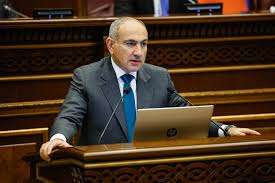
The relaxed scenes prompted strong criticism from Armenian opposition figures who accused Pashinian of neglecting the war’s potentially severe ramifications for the country. The premier reacted furiously to an opposition lawmaker, Agnesa Khamoyan, who repeated the criticism during the government’s question-and-answer session in the Armenian parliament. He called for Khamoyan’s self-immolation and said her Hayastan alliance will have no seats in the next National Assembly.
Pashinian told reporters the next day that “this situation” around Iran is “not new” and that the Armenian government had made contingency plans to deal with it.
“We have a working group regarding this situation, it was formed a year or a year and a half ago. When I say that’s why I [calmly] eat pies I don’t joke, because we took measures that need to be taken regarding this situation a long time ago,” he said without revealing those measures.
Pashinian held an emergency meeting of Armenia’s Security Council more than 24 hours after the first U.S. and Israeli strikes on Iranian targets. According to Justice Minister Srbuhi Galian, the council believes the war poses no security threats to the South Caucasus country.
Iran has for decades been one of landlocked Armenia’s two conduits to the outside world, serving as a transit route for part of its foreign trade. Armenian opposition leaders and analysts say chaos in the Islamic Republic would not only cut off that route but also put Armenia in an even weaker position to deal with what they see as threats to its territorial integrity emanating from Azerbaijan.
Baku has been pressuring Yerevan to open an extraterritorial corridor that would connect Azerbaijan to its Nakhichevan exclave and Turkey through Syunik, the only Armenian region bordering Iran. Tehran is strongly opposed to such a “geopolitical change” in the South Caucasus. The Iranian ambassador in Yerevan, Khalil Shirgholami, said on Monday that this remains a “red line” for his country.