Statement by the 4 Scholars Who Resigned from the Board of Trustees of the Armenian Genocide Museum-Institute between March 3-10, 2026
We, the undersigned, have resigned from the Board of Trustees of the Armenian Genocide Museum-Institute (AGMI) due to the forced resignation of its Director, Dr. Edita Gzoyan. Given the significant controversy and public outcry this event has caused, we find it appropriate to explain why we individually resigned at various times after the Minister of Education, Science, Culture, and Sports of the Republic of Armenia, on March 2, 2026 (one day before our Board meeting held on March 3), informed the Chairman of the AGMI Board of Trustees, Harutyun Raymond Kévorkian, for the first time that, in the Ministry’s opinion, AGMI Director E. Gzoyan has shortcomings in the management of the Museum-Institute and there is a need to replace her with another director.
First, we declare that this came as a surprise to us. Over the past years, we have heard no complaints regarding Dr. Gzoyan’s work from either the Ministry, any Board member, or the AGMI staff. On the contrary, the Board evaluated Dr. Gzoyan’s work as excellent.
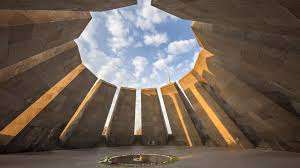
Second, the reasoning presented to the Chairman of the Board of Trustees on March 2, and to the Board members during the meeting the following day, March 3, alleging that Dr. Gzoyan did not properly oversee the renovation works of the Tsitsernakaberd memorial complex, is unfounded. During the penultimate Board meeting, it was clarified that the supervision and management of the renovation works were the responsibility of the Ministry.
Third, the AGMI charter clearly states that dismissing the AGMI Director is the exclusive authority of the Board of Trustees. Our Board had neither the reason nor the intention to dismiss Dr. Gzoyan. “Asking” Dr. Gzoyan to write a resignation letter was neither within the scope of the Minister’s nor, moreover, the Prime Minister’s authority. It is noteworthy that the agenda for convening the Board of Trustees meeting on March 3 contained only one issue: “Presentation and discussion of the landscaping and improvement project of the ‘Tsitsernakaberd’ park.” The issue of the AGMI Director’s resignation was presented to the Board of Trustees completely unexpectedly, after the discussion of the agenda item.
On March 5, information regarding the forced resignation of the AGMI Director became known to the media, which was followed by various explanations and contradictory public discussions. Shortly thereafter, on March 12, the Prime Minister of the Republic of Armenia revealed that he himself had “asked” Dr. Gzoyan’s resignation. The reason was connected to the private visit of US Vice President J. D. Vance to the Armenian Genocide memorial complex. Dr. Gzoyan had conversed with him about the massacres of Armenians that took place in the South Caucasus and later in Azerbaijan at the beginning and end of the twentieth century, the ethnic cleansing of the Armenians of Karabakh/Artsakh, and the Armenian Genocide. She also gifted J. D. Vance five books, one of which was a collection of American newspaper articles regarding the massacres that occurred between 1905 and 1921. This was within the framework of the traditional ceremony for receiving official delegations visiting the AGMI, which, however, the Prime Minister characterized as a “provocative” action contradicting the foreign policy of the government he heads. State officials must align with Armenia’s foreign policy, the Prime Minister stated, and since he had decided that the “Karabakh movement” does not exist, gifting a book concerning the Artsakh issue was unacceptable. Below is the Prime Minister’s full interview with journalists:
https://armenpress.am/en/
Following the Prime Minister’s statement, the real reason for Dr. Gzoyan’s forced resignation became clear. Prime Minister Pashinyan’s statements also revealed that the initial justification for the forced resignation was merely a cover-up for that real reason.
The immediate reactions following the Prime Minister’s comments were far from positive. Therefore, a new “explanation” for the forced resignation was put forward by MPs of the ruling party in the National Assembly (for example, Lusine Badalyan and Maria Karapetyan) during television interviews, and subsequently by the Deputy Speaker of the National Assembly of the Republic of Armenia, Mr. Ruben Rubinyan. Lusine Badalyan’s interview seemed to be the first in this series, given on the night of the day the Prime Minister made his comments to the press. According to her, the reason for the forced resignation is not Artsakh or the content of the book gifted to the US Vice President, but rather “protocol.” Here is the thought she expresses in her interview with Factor.TV:
Badalyan insisted that the problem is not the content of the book, but the protocol violation itself. “It is not about the book here, it is not about the topic. This is a deviation from protocol.” https://factor.am/994530.html
If the issue was protocol, then the protocol officials of the Ministry of Foreign Affairs or perhaps the Prime Minister’s staff should bear the responsibility for what Ms. Badalyan considers a violation of protocol. If the initial justification for the forced resignation was a cover-up, then this was already a red herring aimed at weakening the criticisms directed against the Prime Minister’s comments and diverting attention away from the Artsakh issue.
However, the chain of “explanations” did not end here. Considering the situation that had turned into a public scandal, the Minister of Education, Science, Culture, and Sport, Zhanna Andreasyan, came forward with a fourth explanation for the forced resignation, five days after the Prime Minister’s comments. Denying that she had ever told the AGMI staff that Dr. Gzoyan’s dismissal was related to the memorial complex’s renovation works, she pointed to “management” as the reason for the resignation dictated from “above.” Here is an excerpt from her interview with Radio “Azatutyun” (Radio Free Europe/Radio Liberty):
The Minister of Education insists she did not tell the staff of the Genocide Museum-Institute that the director is being dismissed for not organizing the memorial’s construction works well.
“I did not say such a thing,” she emphasized.
In a formal sense, the Minister was right: she had presented the “shortcoming” in works related to the construction as the compulsion for resignation not to the Museum-Institute employees, but to the Board of Trustees members during the extraordinary meeting on March 3. In response to a question from “Azatutyun,” the Minister said that there was one meeting with the employees, which took place yesterday.
“We discussed all the issues in very fine detail, and I conveyed that information to the employees, and I addressed the issues raised that they had. I raised the issue regarding management from the very beginning and I continue from exactly this perspective,” she noted.
The Board of Trustees not only never noticed such management problems, but it was also never informed of their alleged existence. Furthermore, some members of the Board of Trustees objected to the Minister’s arguments during the meeting. As for the AGMI staff, every one of them has signed a letter supporting Dr. Gzoyan. It can be assumed that they too did not notice any management issues.
Conclusion
From our perspective, what transpired at the AGMI raises a number of concerning questions:
* The actual decision to get rid of Dr. Gzoyan was made by one individual, Prime Minister Pashinyan, without any consultation with the Board of Trustees. Mr. Pashinyan chose to publicly make it understood to the relevant world leaders interested in Armenian issues, or at least to regional leaders, that he alone makes political decisions.
* Since the exclusive right to dismiss the AGMI Director belongs to the Board of Trustees, institutional regulations were bypassed, and the decision was imposed on that body.
* The Prime Minister’s public reaction and the dismissal of the Director of the Armenian Genocide Museum-Institute for sharing historical facts with the US Vice President appear to us as part of a chain aimed at “reshaping” or “repackaging” historical facts, subordinating them to political expediency and the reproduction of his own power. However, this is not the place to list, for example, some of the superficial and careless interpretations regarding the origins of the Armenian Genocide or historical Armenian-Azerbaijani interactions that have recently been voiced by the Prime Minister or members of his ruling party.
* What happened to Dr. Gzoyan, and the way in which it occurred, raise serious questions regarding academic freedom. If the government has put an end to the Karabakh movement and the Artsakh issue, does that mean that scientific studies of their history undermine foreign policy? After all, most of Armenia’s academic research centers are SNCOs (State Non-Commercial Organizations), most universities are state-run, and therefore are their employed researchers state officials? If so, does this mean, then, that the results of their research must conform to the foreign policy of the Prime Minister of the Republic of Armenia, and by what criteria and where will their conformity be determined? Finally, in what sense was Dr. Gzoyan promoting an alternative foreign policy? Where is the evidence?
* What happened to Dr. Gzoyan, and the manner of its execution, also raise concerns regarding at the very least authoritarian tendencies. In no European country would it be acceptable to demand that all state funded epmloyees align with and support the government’s foreign policy. Such demands are reminiscent of Soviet practices.
* What happened to Dr. Gzoyan, and the manner of its execution, have damaged the AGMI’s international reputation at a time when under Dr. Gzoyan’s leadership it was gaining growing international recognition.
As former members of the Board of Trustees and scholars, we wish to draw attention to a few points:
* Even the most enduring, state-sponsored attempts to rewrite or erase history, such as the Turkish denial of the Armenian Genocide, fail.
* National memory and identity are strategic assets, especially for small nations; a blurred national memory and identity is a vulnerability that no weapon can compensate for.
* Finally, such abrupt and unjust decisions are unlikely to contribute to the prospects of establishing genuine and lasting peace.
The signatories of this statement are acting exclusively on their own behalf as former members of the AGMI Board of Trustees; their places of employment bear no relation to the content of the text.
—————————–
Astourian, Stephan H., Ph.D., Professor, College of Humanities and Social Sciences, Director of the Turpanjian Center for Policy Analysis at the American University of Armenia,
Kévorkian, Raymond Harutyun, Ph.D., Professor Emeritus of the University of Paris VIII Saint-Denis, Foreign Member of the National Academy of Sciences of Armenia,
Kharatyan, Hranush S., Ph.D., Head of the Applied Anthropology Research Group at the Institute of Archaeology and Ethnography of the National Academy of Sciences of Armenia,
Marutyan, Harutyun T., Ph.D., Social/Cultural Anthropologist, Head Researcher at the Institute of Archaeology and Ethnography of the National Academy of Sciences of Armenia, Head of Department at the Armenian Genocide Museum-Institute.