Strategic Ambiguity: Erdoğan’s Turkey in a Multipolar World
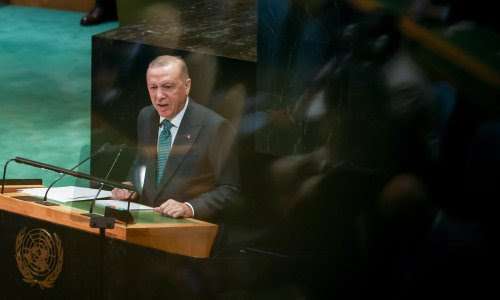
Photo: Michael Nagle/Bloomberg/Getty Images
Brief by Jeffrey Mankoff and Max Bergmann
.CSIS
This brief is part of a larger project on the Global South, led by the Brzezinski Chair in Global Security and Geostrategy. It includes an edited volume entitled Fulcrums of Order: Rising States and the Struggle for the Future. You can find more about the project here.
Introduction
Following Russia’s invasion of Ukraine in 2022, Finland and Sweden made the historic decision to seek membership in the North Atlantic Treaty Organization (NATO). While Washington greeted this decision as an opportunity to strengthen the alliance and reinforce Russia’s strategic miscalculation in starting the war, Turkish President Recep Tayyip Erdoğan saw Finland’s and Sweden’s membership aspirations as an opportunity to seek concessions over arms sales, Turkey’s pursuit of membership in the European Union, and Stockholm’s perceived sympathy for Kurdish militants. After signing off on Finland’s membership in March 2023, Turkey only approved Swedish membership in January 2024 after Sweden approved new counterterrorism legislation—and after the administration of U.S. President Joe Biden agreed to sell Turkey modernized F-16 fighter jets.
The saga over Finland and Sweden joining NATO demonstrates how Turkey straddles multiple worlds. It is at once part of the West—a NATO member and an EU candidate country—and part of the Middle East, an integral player across the region stretching from Libya to Afghanistan. It is also a member of the Global South that practices familiar hedging strategies toward the West, engages constructively with Russia and China, and does not hesitate to pursue foreign policy goals counter to the interests of its most important treaty ally, the United States.
Erdoğan’s ruling Justice and Development Party (AK Party) aspires to establish Turkey’s “strategic autonomy” while taking advantage of its NATO membership and strategic geography to achieve a level of global influence exceeding expectations.1 According to its Ministry of Foreign Affairs, Turkey pursues an “independent and national foreign policy” that aims to “strengthen regional peace and security, expand the institutional basis of [Turkey’s] foreign relations, promote economic development and prosperity in [Turkey’s] region and influence the transformation of the global system.”2
The AK Party rejects the Kemalist vision of Turkey as a secular state modeled on European antecedents. Instead, it looks to the country’s Ottoman past as a model of religiously legitimated power. It also has adopted an Ottoman-inflected geographic imagination. Former AK Party Foreign Minister Ahmet Davutoğlu describes Turkey in his academic writings as a “central state (merkez ülke)” linked by historical and cultural bonds to its former hinterlands in the Balkans, the Caucasus, and especially the Middle East.3 This outlook, sometimes derided by critics as “neo-Ottomanism,” encourages Turkey to supplement its long-standing role as NATO’s pillar in the Mediterranean with a renewed focus on areas sharing a post-Ottoman heritage, particularly in the Middle East and North Africa.4 In recent years, Erdoğan has supplemented this emphasis on the “post-Ottoman space” with a new focus on the “Turkic World” of Azerbaijan and Central Asia, as well as concerted outreach to Africa and other parts of the Global South.5 Turkey, meanwhile, remains an important player in the Black Sea and Eastern Mediterranean, with the second-largest military of any NATO ally (after the United States) and an increasingly potent defense industry.
Over the past decade, Turkey has improved relations with China and especially Russia. Pragmatic relations with Russia have allowed Turkey to pursue a more expansive agenda in North Africa, the Middle East, the Balkans, and the Caucasus. China, meanwhile, has become a larger economic partner, as Turkey is potentially a key node in Beijing’s Belt and Road Initiative (BRI).6 Turkey’s NATO membership and economic connection to Europe allow Ankara to engage these Eurasian rivals from a position of strength, even as Erdoğan uses the specter of closer alignment with Russia and China to enhance his leverage with Western powers. Turkey also maintains a vision of global order that aligns with Beijing’s and Moscow’s (not to mention Tehran’s) pursuit of multipolarity. Even as Turkey maintains its status as a NATO member, a nominal EU aspirant, and a member of legacy institutions like the Council of Europe and the International Monetary Fund (IMF), it has shown increased interest in Sino-Russian initiatives like the Shanghai Cooperation Organization (SCO) and BRICS (Brazil, Russia, India, China, South Africa), which embody a nonliberal model of global and regional governance—while Moscow and Beijing both see Turkey as too aligned with the West to grant membership in these organizations.7
Erdoğan’s Turkey also has global ambitions. Turkish forces are deployed in Qatar, Libya, and Somalia, while Ankara has bilateral defense agreements with dozens of states.8 The AK Party, with its Islamist outlook, has been particularly ambitious in the Middle East, albeit with mixed results. Support for the Arab Spring and the Muslim Brotherhood alienated key Middle Eastern governments like those in Saudi Arabia and the United Arab Emirates while damaging Turkey’s traditional alliance with Israel. Intervention in the Syrian Civil War, meanwhile, nearly brought Turkey into conflict with Russia.9 Turkish forces have long battled Kurdistan Workers’ Party (PKK) militants in Iraq and Syria.10 With the fall of the Assad government to rebels from the Turkish-backed Hayat Tahrir al-Sham (HTS), Turkey has been locked in an escalating struggle with Israel over the future direction of Syria.11
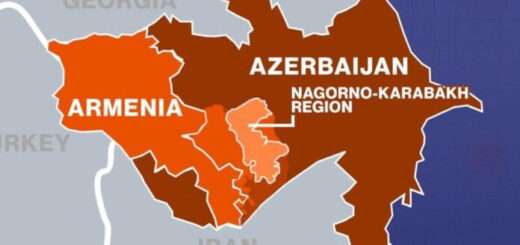
Beyond the Middle East, Turkish soft power—including development assistance, trade, education, and culture—has made significant inroads in the Balkans, the Caucasus, and Central Asia. Many states are now looking to Turkey for military support following the victory of Turkish-backed Azerbaijan over Armenia in the Second Nagorno-Karabakh War (2020). Africa is also a primary focus for Turkish development assistance and a major customer for Turkey’s defense industry. Turkey’s strategic ambiguity and political hybridity give Ankara an advantage with countries seeking to remain on the sidelines amid mounting competition among the West, Russia, and China.
History, Grievances, and Aspirations
From the 1950s to the 1990s, Ankara maintained a pro-Western alignment that developed in response to Soviet efforts to project power at Turkey’s expense. Along with Greece, Turkey was a focal point of the Truman Doctrine, according to which the United States would provide economic and military assistance to countries resisting attempted communist takeovers. Turkey joined NATO in 1952 in response to Soviet leader Joseph Stalin’s efforts to station Soviet troops in Turkey and contest Ankara’s control of the Bosporus and Dardanelles Straits. Turkey also signed an association agreement with the European Community in 1963, leading to the formation of a customs union that anchored Turkey’s economy to Europe and fed hopes, at least among a subset of the ruling elite, that Turkey could eventually join what became the European Union. Turkey was also one of the few Muslim-majority states to recognize Israel, and it remained neutral during the 1967 and 1973 Arab-Israeli wars, to the intense anger of many Arab governments.
This alignment with the West was never without controversy. Ruling elites from the military and security services developed a strongly anticommunist political culture, even as disaffected students, Kurds, Alevis, and other marginalized groups adopted a leftist ideology that at times saw them align with Moscow. Meanwhile, religious groups marginalized by Mustafa Kemal Atatürk’s reforms remained strongly anticommunist even as they critiqued Kemalist secularism. The 1960s saw the consolidation of a so-called “Turkish-Islamic synthesis” uniting religious and nationalist opposition to the Kemalist state.12 (Turkey’s ruling AK Party is a product of this synthesis.)
While the Kemalist elite, concentrated in the military and internal security services, maintained a pro-Western outlook throughout the Cold War, their commitment to democratic rule was limited. In 1960, the military overthrew the government of Prime Minister Adnan Menderes—Turkey’s first freely elected leader—in part over his perceived accommodation of Moscow. While the military soon returned power to civilian leaders, the ouster (and execution) of Menderes set a precedent for military intervention that continues to haunt Turkish politics. After periods of economic crisis and worsening instability and violence between leftist and nationalist groups, the military launched further coups in 1971 and 1980, each followed by large-scale repression targeting civil society. Following the return to civilian rule in 1983, the governments of Turgut Özal and Yıldırım Akbulut liberalized the economy and opened Turkey up to trade and investment from the United States and Europe.
These reforms also set the stage for Turkey’s political and economic transformation. A conservative Muslim with links to the Sufi lodges closed under Atatürk’s reforms, Özal’s economic liberalization challenged the dominance of large industrialists aligned with the Kemalist establishment. Economic growth in the 1980s and 1990s catalyzed the emergence of new industries in Turkey’s more conservative heartland. These “Anatolian Tigers” would provide much of the financial and political capital for the economically liberal, mildly Islamist AK Party, founded in the late 1990s following a split in the Islamist movement prompted by a “soft coup” in 1997.13
For the better part of a decade, the AK Party government appeared to balance Turkey’s commitment to partnership with the West and an emerging interest in acting as a regional power. Turkey played an important role in the U.S.-led mission in Afghanistan, where its forces commanded two provincial reconstruction teams from 2006 to 2014 and secured Kabul’s airport. Although Ankara refused U.S. requests to use its territory to carry out the 2003 invasion of Iraq, the George W. Bush administration held up the AK Party’s Islamically infused democracy as a model for reconciling Islam and democracy across the Muslim world. Under then–Prime Minister Erdoğan, Turkey dramatically accelerated political and economic reforms in line with its aspirations to join the European Union. Erdoğan’s government strengthened civilian control of the military, deregulated the economy, and opened Turkey to foreign investment. Responding, in part, to this apparent democratic breakthrough, Brussels opened accession negotiations with Turkey in 2005.
This democratic opening did not last, however. Over time, the AK Party shunted aside opposition parties and much of the old infrastructure of the Kemalist state. Much of this shift took place under a veneer of democratic legitimacy, as the AK Party continued winning elections while chipping away at the checks and balances necessary for real pluralism. Established business groups lost out on state contracts to firms and individuals close to the AK Party—notably the Anatolian Tigers. Religious schools received new infusions of state funding, with their graduates encouraged to enter government service.
Aiding this transformation was the AK Party’s alliance with the religious movement directed by exiled cleric Fethullah Gülen, sometimes referred to as Hizmet (“Service”). Although Gülenists provided ideological, financial, and political backing for the AK Party, they maintained their own political aspirations while establishing a strong foothold in the intelligence services, the military, and law enforcement. After a series of scandals and Erdoğan’s efforts to marginalize them, Gülenists in the military launched an abortive coup in the summer of 2016. After the coup failed, Erdoğan and his allies conducted a massive purge of the military, judiciary, and civil service that saw thousands jailed. Erdoğan blamed the United States for being slow to criticize the coup and for providing refuge for Gülen in Pennsylvania.14 Ankara would subsequently classify what it called the Fethullah Terrorist Organization (FETÖ) as a terrorist group on par with the PKK and the so-called Islamic State of Iraq and Syria (ISIS).
Another major source of grievance with the United States grew out of the war in Syria. Turkey had strongly supported the Arab Spring, hoping it would bring to power new governments whose democratic legitimacy would be based on an embrace of Islamic values. With the outbreak of civil war in Syria, Turkey called for the ouster of President Bashar al-Assad and threw its support behind a range of rebel groups, including some hardline Islamists aligned with al Qaeda. Above all, Ankara was interested in using the Syrian conflict to stamp out offshoots of the PKK in northern Syria. While ISIS carried out attacks against Turkey, the United States accused Ankara of downplaying the ISIS threat while prioritizing strikes on Kurdish forces. When ISIS began a genocidal campaign against Kurdish-speaking Yazidis in northern Syria, the United States turned to the Syrian Democratic Forces (SDF), whose largest component comprised the PKK-linked People’s Protection Units, to stem the tide. Even with the fall of the Basar al-Assad regime in late 2024, the status of the SDF and their relationship to the United States remains a source of contention.15
The Syrian war also facilitated Turkey’s rapprochement with Russia. Turkish backing for the Syrian rebels put Ankara at odds with Moscow, which had intervened militarily in 2015 to support Assad, leading to sporadic clashes between Russian and Turkish forces, including the November 2015 downing of a Russian jet that had crossed into Turkish airspace. Moscow imposed an economic blockade in response, while Turkey asserted that its Western partners provided insufficient backing for its efforts to defend its airspace. Amid the crisis over U.S. support for the SDF and the general failure of Turkey’s support for Middle Eastern democratization, Erdoğan formally apologized for the downing of the Russian jet. This step set the stage for an end to the blockade and a more general Turko-Russian reconciliation, which was accelerated despite the assassination of Russia’s ambassador to Turkey in an Ankara art gallery in December 2016.
National Debate
Political parties in Turkey are deeply entrenched in political identities according to two primary divisions.16 One significant fault line is rooted in a conservative-secular divide, where the ruling AK Party embodies the conservative (Islamic and center-right) factions of the population while the opposition Republican People’s Party (CHP) predominantly champions secular values. The other divide revolves around national identity, with various Turkish nationalist parties on one side and the parties aligned with Turkey’s Kurdish movement on the other. Since 2018, the ultranationalist National Movement Party (MHP) has been a coalition partner of the AK Party, pushing the government to adopt a harder line on issues related to Kurds, Cyprus, migration, and other topics. Selahattin Demirtaş, leader of the secular pro-Kurdish Peoples’ Democratic Party (HDP), has been imprisoned since 2016, while the government seeks to ban the HDP over alleged support for terrorism and ties to the PKK.17
Despite the AK Party’s two-plus decades in power and its success at consolidating an electoral autocracy, Turkey’s opposition has recently seen its popularity increase. Candidates from the CHP won mayoral elections in both Istanbul and Ankara in 2019. Although the AK Party triumphed in the May 2023 parliamentary elections, the CHP again won multiple local elections in May 2024, including Istanbul and Ankara.18 These results underscore Erdoğan’s weakening grip on autocratic power and the continued vitality of Turkey’s democratic traditions. They also sparked the crackdown that led to the arrest of Istanbul’s mayor, Ekrem İmamoğlu, in March 2025 and attempts to ban him from running as the CHP candidate in the 2028 presidential election.
Opposition parties skillfully capitalized on votes from diverse sectors, including business leaders and former foreign policy elites, by adopting an anti-regime stance, critiquing Erdoğan’s autocratic moves, distancing from Western institutions and values, and emphasizing the erosion of the rule of law.19 The AK Party’s diminishing capacity to mediate between state and citizens and its sustained clientelist practices, as well as the prevailing discontent with its economic and political governance, catalyzed support for the CHP, regardless of the heterogeneous composition of its electorate. The main drivers of Erdoğan’s decaying support are widespread and multifaceted economic and political grievances, such as the erosion of meritocracy and worsening economic indicators, including unemployment, foreign exchange rates, and inflation.20
Additionally, the 2024 local election results in Turkey have shown a civil society that stood up against the AKP’s cultural project. Opposed to Erdoğan’s ultra-nationalistic, ultra-religious, illiberal, authoritarian, and inward-looking project, a major section of Turkish society advocates a modern, secular, democratic, pluralistic, and inclusive Turkey. The AK Party’s monopoly over Islamist votes was also contested in the 2024 local elections by the success of the Islamist New Welfare Party, which calls for freezing trade with Israel, denying NATO troops access to Turkey (including shutting down NATO’s radar station), lowering interest rates, prohibiting adultery, and removing gender equality laws.21
However, while the major victory of the opposition in the 2024 local elections showcases the winds of change in Turkey, the CHP must secure its popular support by governing through the institutions it controls and resisting the government’s attempt to undermine it. This will not be an easy task, as the Turkish presidential system grants the executive power a wide array of competences. Yet the AK Party will also face difficulties governing with pressure and resistance from Islamists and nationalists, making its leadership increasingly unstable.
Economics
Turkey has experienced significant economic growth over the last two decades. Real gross domestic product (GDP) growth has averaged more than 5 percent per year, and poverty has been reduced significantly. Yet following the failed coup attempt in 2016 and Erdoğan’s authoritarian turn, Turkey saw a decline in foreign investment. Its foreign debt levels exploded, and the lira declined in value. Erdoğan, meanwhile, sidelined economic technocrats and eroded the independence of the Central Bank.22 In the early 2020s, Turkey pursued a highly unorthodox loose monetary policy under the notion that higher interest rates contribute to inflation rather than decrease it. Turkey thus pursued a loose, if not reckless, monetary policy that caused inflation to skyrocket from roughly 10 percent in 2020 to as high as 80 percent in 2022.23 Erdoğan also raised public sector salaries by 45 percent in the run-up to the 2023 presidential election.24 Since securing re-election, however, Erdoğan has again allowed interest rates to rise and has reappointed technocratic economic officials, including Governor of the Central Bank Fatih Karahan and Minister of the Economy Mehmet Şimşek.25 Despite generally higher interest rates, Turkey’s central bank predicted annual inflation would remain around 24 percent in 2025.26
Under the AK Party, Turkey’s economic interests are closely integrated with its foreign policy.27 This approach marks a shift from the security-focused foreign policies of the 1990s to a more economy-driven strategy. The ruling elites emphasize economic relations as a key element of foreign policy, reflecting the belief that economic liberalization fosters security, stability, and democracy.
The state plays a central role in shaping economic policies, particularly through its influence on foreign policy. This state-driven approach aims to leverage Turkey’s geographical and cultural ties to enhance its economic position regionally and globally. Economic factors are deeply intertwined with Turkey’s geopolitical outlook. The AK Party’s focus on economic ties aims to capitalize on Turkey’s unique position at the crossroads of multiple regions, promoting a “civilizational outlook” that seeks to bridge traditional East–West and Europe–Middle East divides.28 Its economic diplomacy is intended to reinforce Turkey’s role in regional peace and stability and to position it as a key player in both the Islamic world and the West.
Turkey has been actively promoting the development of the Trans-Caspian East–West Corridor, also known as the Middle Corridor, which links Europe and China via a network of railways and roads passing through Turkey, Georgia, Azerbaijan, the Caspian Sea, and Central Asia.29 This initiative reflects Turkey’s strategic geoeconomic vision to position itself as a vital hub in the global supply chain, enhancing its economic and geopolitical influence.
Turkey’s pursuit of middle-power status through the Middle Corridor could align well with the European Union’s quest for strategic interdependence.30 If this initiative progresses in the coming years, it could become a mutually beneficial strategy where both the European Union and Turkey enhance their economic cooperation while safeguarding their respective interests. This partnership would not only bolster economic ties but also promote regional stability and integration, reinforcing Turkey’s pivotal role in connecting the East and the West.
Moreover, Turkey has been expanding its military capacities and developing an innovation ecosystem within its military-industrial complex to position itself as a “tekno-nation.”31 This effort is part of a broader defense and security policy aimed at achieving autonomy through three main strategies: reducing dependence on international providers; systematically promoting technological innovation through partnerships with techno-parks, startups, and universities; and increasing the capacity to export various weapon systems.
The state-owned Defense Industry Agency (SSB) oversees the development and manufacture of armament projects. Indicators of Turkey’s increased defense spending include significant growth in sector employment, rapid increases in annual defense expenditure, a rising share of domestic manufacturing capacity, and the recruitment of specialized engineers, software developers, and marketing experts from Turkish and international universities. This comprehensive approach is supported by numerous universities, six innovation clusters in key cities, and various techno-parks, reinforcing Turkey’s ambition to become a leading nation in defense technology and innovation.
The defense industry is a major source of Turkey’s growing international influence. Overall defense and aerospace sales have increased tenfold since the start of the twenty-first century.32 The Second Nagorno-Karabakh War provided an important advertisement for Turkish Bayraktar TB2 drones and other capabilities. Since then, Bayraktar manufacturer Baykar and other Turkish defense companies have signed deals to provide drones to countries including Kazakhstan, Kyrgyzstan, Ethiopia, Niger, Morocco, Tunisia, and Togo. Turkish firms have carved out a particular niche in Africa, offering capable, relatively low-cost systems with minimal political strings attached. Along with Baykar, firms such as Aselsan, Turkish Aerospace Industries (TAI), and others have become global players in recent years. The war in Ukraine has also been a boon for Turkey’s defense industry. Amid a worldwide scramble for artillery shells to allow Ukraine to match the volume of Russian fire, the United States is working with Turkey’s MKE Corporation to source 155 mm shells for Ukraine and potentially invest in additional production.33
Great Power Competition
Like many middle powers, Turkey tries to largely remain on the sidelines of great power competition while maximizing its leverage and room for maneuver. But unlike other middle powers, Turkey is a member of NATO and participates in a customs union with the European Union. Ankara continues leaning into NATO to ensure its security, and it values its bilateral relationship with Washington, which has recently improved after a long period of tension. This close association with the West is a strategic asset for Turkey—one that allows Ankara to engage regionally and globally from a position of strength. It also limits Turkey’s ability to act as a revisionist power, even though Ankara’s calls for a more equitable distribution of power and influence, at times, leave it aligned de facto with the revisionist powers Russia and China.
Some of this alignment stems from the AK Party’s retreat from liberalism and democracy; some, however, is a product of the altered strategic geography created by the end of the Cold War and Turkey’s growing geopolitical aspirations. If Turkey’s strategic focus during the Cold War was the Mediterranean and southeastern Europe, the end of the war provided an increased margin of security and opened up new opportunities for power projection in the Balkans, the Caucasus, the Black Sea, the Middle East, and even Central Asia thanks to the retreat of Russian/Soviet power from Turkey’s borders. However, the Soviet collapse also removed some of the strategic rationale for Ankara’s Western orientation, dating back to the 1952 decision to join NATO. Even before the AK Party came to power in 2002, thinkers and analysts were promoting a more expansive vision of Turkey’s role in the world.
This shift often came at the expense of Turkey’s inherited alliance with the United States. The divergence between U.S. and Turkish interests was starkly visible in the 2003 invasion of Iraq, when the Turkish parliament refused to let U.S. forces use Turkish territory to carry out the attack. Similarly, the backlash to U.S. support for the PKK-linked SDF during the Syrian Civil War still complicates relations, as does Turkey’s retreat from the democratic opening of the early 2000s, when the AK Party was actively pursuing EU membership. Erdoğan’s turn to illiberal democracy and the ascent of Islamism at home have undermined the moral foundations of the relationship. While Turkey has never threatened to abandon NATO and remains nominally committed to EU membership, these crises have damaged trust on both sides and have made U.S.-Turkey and EU-Turkey relationships more transactional. They have also created incentives for Ankara to deepen ties with Moscow and Beijing.
Following the Cold War, Turkey prioritized deepening trade, economic, cultural, and political ties with the newly independent states of Eurasia, including Russia, despite a long strategic rivalry between the two states. Trade quickly boomed, and Russian tourists came in large numbers to Turkey, lured by beaches, warm weather, low prices, and the lack of visa requirements. Turkish companies became important players in the markets of Russia and neighboring states. Pipelines from the South Caucasus and Russia supported Turkish economic growth and fed Turkish ambitions to become an energy hub for Europe. As Turkey drifted further into authoritarianism through the early 2010s, ties with Moscow provided ballast against the deterioration of relations with the United States and Europe. More broadly, Erdoğan’s populist turn, invocation of Turkish civilizational greatness, and aspiration to turn Turkey into an autonomous regional power created a common purpose with Vladimir Putin’s Russia.
In 2010, Erdoğan and Putin created a High-Level Cooperation Council bringing together senior officials for regular meetings. Turkey’s need for imported energy gave Russia a strong card to play. When the European Union blocked Russian efforts to construct the South Stream subsea gas pipeline to southern Europe, Moscow instead built the Turkish Stream pipeline under the Black Sea, deepening Turkey’s dependence on Russian gas and allowing Turkey to profit from the resale of gas to the European Union. Russia’s Rosatom also signed a contract to build Turkey’s first nuclear power plant. Dependence on Russian energy is a key factor in Turkey’s reluctance to impose sanctions over Russia’s war in Ukraine.
Nevertheless, Turkey’s strategic ambitions produced frequent clashes with Russia. The most serious took place over Syria, where Ankara had been one of the principal backers of rebels seeking the ouster of Assad. Despite these tensions, Putin was quick to condemn the July 2016 Gülenist coup attempt (and may have warned Erdoğan in advance). Erdoğan claimed, conversely, that the United States waited until it was clear the coup would fail before denouncing it. Subsequent purges of the armed forces and the security services saw the removal and jailing of many officials with ties to the West, including NATO. The rise of ISIS created further problems, as Washington accused Ankara of turning a blind eye to the influx of foreign fighters while prioritizing attacks on Kurdish forces. The coup attempt, coupled with the impact of the Russian blockade on Turkey’s economy, paved the way for Erdoğan’s decision to apologize for the November 2015 downing of the Russian warplane and ensuing rapprochement between Ankara and Moscow.
In December 2017, Turkey agreed to purchase the Russian S-400 air defense system. The United States and NATO regarded this system, which may have been intended to guard Erdoğan against a repeat of the 2016 coup attempt led by the Turkish air force, as an intelligence threat and contrary to Turkey’s alliance obligations. With Ankara unwilling to walk away from the deal, the United States formally excluded Turkey from the F-35 fighter program. Meanwhile, Moscow and Ankara increasingly worked together to address their regional disputes. Along with Iran, they established the Astana Format for managing their respective interests in Syria (with Turkey effectively acknowledging that Assad would remain in power for the time being). They engaged in a kind of coercive bargaining over Libya and the South Caucasus, where Turkey’s deepening strategic alignment with Azerbaijan challenged Russia’s inherited role as regional security broker. With Russia’s February 2022 invasion of Ukraine, Ankara has supported Kyiv militarily while leveraging its ability to mediate among all sides.
Turkey’s relationship with China walks a similar line. China is an increasingly important economic partner and source of investment for Turkey. Since 2010, the two sides have described their relationship as a “strategic partnership,” and China has been instrumental in projects like the construction of a high-speed rail line between Istanbul and Ankara.34 China is now Turkey’s second-largest individual trade partner, with trade turnover rising from around $25 billion in 2020 to more than $40 billion in 2023.35 Beijing has invested around $1.4 billion in Turkey in the context of the BRI, while Turkey is the second-largest recipient of funds from the Chinese-sponsored Asian Infrastructure Investment Bank (AIIB).36 In part because of opposition from construction firms closely linked to the AK Party, however, Chinese infrastructure investment in Turkey has been sharply limited. Turkey nevertheless stands to be a major beneficiary of efforts to construct a Middle Corridor connecting China to Europe while bypassing Russia. Economic relations have encouraged Erdoğan and other Turkish leaders to temper their criticism of China, including its repression of Turkic Muslim Uyghurs in Xinjiang. Uyghur groups have accused Turkey of cooperating with Chinese security services to illegally detain and deport Uyghur activists in Turkey.37
Despite their sectarian divide, diverging political models, and competing geopolitical ambitions, Turkey and Iran have also maintained a largely pragmatic relationship. Ankara opposes Iran’s nuclear ambitions and has fought a long proxy war with Tehran in Syria and (to a lesser degree) Iraq. The Kurdish issue has also been an enduring source of tension, with Ankara charging that Tehran was turning a blind eye to the activities of PKK-linked militants.38 At the same time, Turkey and Iran have a common interest in containing Kurdish nationalism—one they also share with both Iraq and Syria. Turkey also views Iran as a useful counterweight to Israel in the Middle East.39 With the fall of the Assad regime, neither Ankara nor Tehran wants to see an Israeli presence on the ground in Syria or a Syrian regime that is too close to Jerusalem. Though Turkey is a close ally of Azerbaijan and Iran generally supports Armenia, Ankara and Tehran also favor a kind of regional condominium in the South Caucasus and oppose the expansion of Western influence in the region.40 Along with Russia, Iran remains a potential obstacle to Turkish-Azerbaijani ambitions of expanding east-west connectivity through the Caucasus.
Visions of Global Order
Turkey maintains an ambivalent position with respect to the global order. It remains committed to the legacy institutions it is a member of—including NATO, the Council of Europe, and the IMF. Its closer alignment with Russia and China, however, has encouraged the nation to seek admission to a host of new non-Western forums like the G20, BRICS, and the SCO. Erdoğan argues that legacy institutions fail to provide countries from the Global South adequate representation and that “the world is bigger than five” (the five permanent members of the UN Security Council).41 It prioritizes regional ownership of disputes in ways that require working with powers like Russia and Iran while marginalizing allies. Turkey uses the 1936 Montreux Convention to limit the presence of allied naval forces in the Black Sea and promoted Russia-Turkey-Iran regional mechanisms for Syria (the Astana Format) and the South Caucasus (the so-called 3+3).
Like Russia and China, Turkey challenges its neighbors’ territorial integrity. Turkish forces have occupied the northern third of Cyprus since 1974, with some Turkish Cypriot politicians suggesting Ankara could annex the de facto Turkish Republic of Northern Cyprus.42 Turkish troops also remain entrenched in pockets of northern Syria and frequently carry out incursions into northern Iraq against PKK militants. Turkey has also sporadically contested Greek control of several islands in the Aegean Sea and adopted a 2019 maritime delimitation agreement with the Libyan Government of National Accord that challenges claims by Greece, the Republic of Cyprus, and Egypt.
This support for revisionism also has an ideological component. After the start of the war in Ukraine, Turkey has accentuated its revisionism and anti-Western narratives.43 Like Putin’s Russia, Erdoğan’s Turkey promotes a “traditional values” narrative that emphasizes patriarchal gender roles, opposition to same-sex marriage, and deference to religious establishments. Erdoğan has announced on various occasions that Western democracies and liberal democratic systems are in decline and obsolete. Yet Turkey’s revisionism has its limitations. The country has profound economic dependencies that limit its fully independent course in foreign policy, and efforts to gain independence from its Western allies have not been accompanied by building sustainable alliances elsewhere, despite its “flexible alliances in defense policy.”44
Moreover, Turkey maintains a degree of geostrategic ambiguity.45 In recent years, Turkey has become a dialogue partner of the SCO and has announced its intention to seek membership in the BRICS coalition. Yet it also remains tied historically and institutionally to the West, above all through its membership in NATO and its customs union with the European Union. These affiliations have limited the willingness of both Moscow and Beijing to support admitting Ankara as a full partner to either the BRICS or the SCO. Although Ankara’s relationship with Washington has become increasingly transactional, NATO remains the linchpin for Turkish security. Turkey has long met NATO’s target of spending more than 2 percent of GDP on defense. Along with Turkey’s ability to leverage the Finnish and Swedish accession requests for its own ends, the 2024 Washington NATO Summit Declaration in particular reflected several Turkish priorities, notably the focus on counterterrorism as an alliance priority, the emphasis on defense industrial cooperation, and the language on the Black Sea and Western Balkans (including reference to the Montreux Convention, which allows Turkey to limit egress and ingress of warships through the Turkish Straits).46
As much as Ankara attempts to position itself as a global pivot, it will eventually have to make some difficult choices. The leadership’s foreign policy ambitions contradict its international commitments: Expanding its relationship with Russia conflicts with its NATO membership commitments, restoring relations with Israel is at odds with its support of Hamas, and Turkey’s desired EU membership is severely contravened by Erdoğan’s autocratic governance and eroded rule of law.47
Recent Actions
Turkey’s position on the war in Ukraine reflects Ankara’s complex balancing act between the West and Russia. On the one hand, Turkey has been a vital contributor to Ukraine’s war effort. Ankara has long emphasized its support for Ukrainian territorial integrity, including control of Crimea. Among other weapons and supplies, Ankara provided armed Bayraktar TB2 drones, which were important in Kyiv’s early success against Russian armor, and even signed a deal to coproduce the drones inside Ukraine. Turkey has also provided precision-guided rockets, machine guns, and other weapons systems. In response to requests from Ukrainian authorities, Ankara invoked the Montreux Convention to close the straits to warships not permanently stationed in the Black Sea. This decision has prevented Moscow from reinforcing its Black Sea Fleet with ships from the Mediterranean and has aided Ukraine’s naval attrition strategy. Turkey has also played an important mediation role: It hosted talks in the first months of the conflict on a potential ceasefire and helped broker agreements securing a corridor for the export of Ukrainian grain and for exchanges of prisoners of war. Turkish officials participated in the June 2024 Ukrainian peace summit in Switzerland and signed onto the joint communiqué endorsing President Volodymyr Zelensky’s peace formula. Turkey also hosted ceasefire negotiations initiated by the Trump administration in early 2025.
At the same time, Turkish officials and analysts suggest that Ankara does not want to see Russia decisively defeated in a way that could spread instability across a wider region. Ankara has resisted Western pressure to impose personal or sectoral sanctions on Russia. Large numbers of Russians sought sanctuary in Turkey. Meanwhile, Turkish exports to Russia more than quadrupled in the year following February 2022 before dropping under sustained U.S. and European pressure, including the threat of secondary sanctions.48 U.S. officials have cited the role of several Turkish companies in facilitating sanctions evasion. To Western frustration, Ankara’s interpretation of the Montreux Convention also restricts the ability of NATO warships to enter the Black Sea, even though NATO is not a belligerent in Ukraine. As the stakes in Ukraine rise for all sides, Turkey faces mounting pressure to abandon its ambivalence and fully align with its NATO allies in supporting Ukraine and deterring further Russian aggression.
Jeffrey Mankoff is a senior associate (non-resident) with the Europe, Russia, and Eurasia Program at the Center for Strategic and International Studies (CSIS) in Washington, D.C. Max Bergmann is the director of CSIS’s Europe, Russia, and Eurasia Program and Stuart Center in Euro-Atlantic and Northern European Studies.