The most complicated question in the world — ‘Where are you from?’
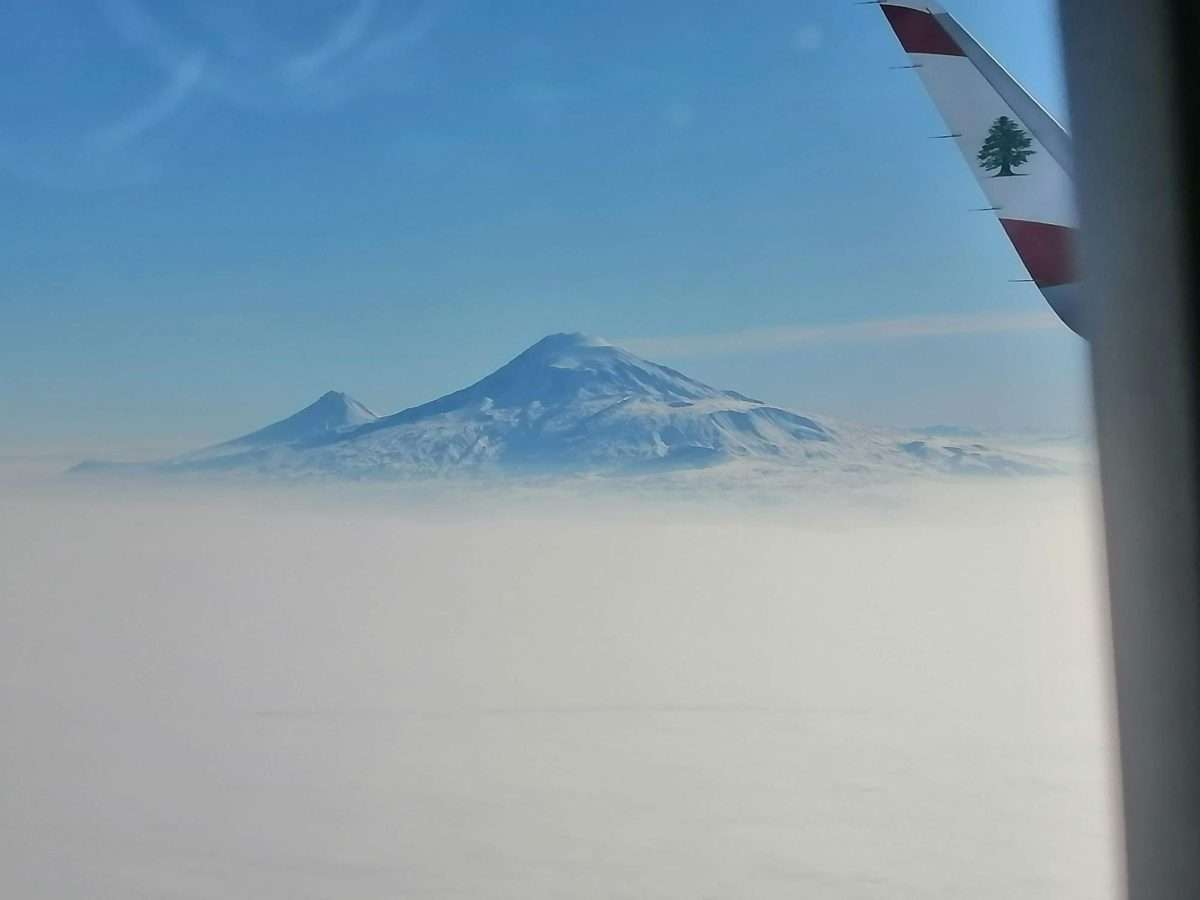
The stories of our ancestors define where we come from, so it is important to remember them and honor their legacy. Who we are and how we live is a completely different story, especially for the Armenian diaspora. Our historical consciousness and memory come from practicing our identity in our everyday lives, despite living away from our homeland.
Opportunities to talk about my family history come up in every introduction after the simple question:
“Where are you from?”
“I’m from Lebanon, but I’m originally Armenian.”
“Oh, so you were born there but moved later?”
“No, I was born and raised in Lebanon, but I’m ethnically Armenian.”
“How come?”
Cue the 10-minute spiel. What follows is usually a long conversation, history lesson and opportunity for cultural exchange.
Since you decided to read this article, you’re doomed to get the spiel yourself. As socially conscious students, it is important for us to acknowledge the history of our peers in addition to our own.
Between 1914 and 1918, the Ottoman authorities killed and forcibly displaced over 1.5 million Armenians in an attempt to systematically destroy the Armenian people and identity. During the Armenian Genocide, hundreds of thousands of Armenians were forced to walk through the scorching desert of Deir ez-Zor toward Syria, Lebanon and other countries in the Middle East.
Of the few who survived the massacres and death marches, many left for Europe, Australia and the United States soon after, creating one of the largest diasporas in the world. In fact, Massachusetts was one of the first places immigrants settled in the US, and the Armenian population here is currently estimated at 30,000 people.
Others, including my own great grandparents, stayed in Lebanon, a country that welcomed them, and later me, with open arms.
Yet for me, the genocide is not just another page in history to be used in conversation. It is a memory the Armenian people have lived for generations, integrating into Lebanese society while creating a microcosm of Western Armenia. Armenian refugees, who soon became full-fledged Lebanese citizens, named Lebanese neighborhoods New Marash, New Hadjen and New Sis after the villages they were exiled from in Cilicia, which is now Eastern Turkey.
As Lebanese-Armenians, we practice historical consciousness by living in a “Little Armenia”— speaking Armenian, going to Armenian schools and volunteering with Armenian non-profits. With that comes a set of contradictions, questions and puzzles that summarize years of dark history but manifest in our everyday lives.
The contradictions are perhaps most obvious within Lebanon itself. While walking and talking with my family in Byblos, a historical Lebanese town, I once heard a local shopkeeper tell her friend in Arabic, “Oh look, they must be Ukrainian refugees.” Mistaking our Armenian speech for Ukrainian (the Russia-Ukraine war had just erupted), she essentially thought we were tourists in our own country. My uncle responded in Arabic, “No, habibti, we are Lebanese.”
Even after moving to Boston for my doctoral degree, the contradictions remain. Every Sunday, I go to Armenian dance practice at the Sayat Nova Dance Company of Boston, an Armenian dance group aimed at preserving and promoting Armenian culture. At the group’s Watertown studio, I learn to perform traditional Armenian steps and choreographies — kertsi, taksila, popokhagan — to the blaring sounds of the Armenian zurna and dhol. Two hours later, I go to a market near my apartment to buy Lebanese pita bread, labneh and zaatar, speaking in Arabic with the cashier about supporting Arab-owned businesses in the area.
Where do I belong? Whose cause do I fight for?
I come from a place that no longer exists — Western Armenia — and am forced into one of two options: assimilation or coexistence. Assimilation, and perhaps loss of identity, is far less confusing, but I will argue for coexistence every time. Given that we are thrown into life with absolutely no control over when and where we are born, the least we can do is embrace our past, dark though it might be, and define our future accordingly.
Perhaps the concept of a true diaspora fully embracing two identities, languages and cultures will never make sense to some people. And perhaps we will never truly “belong” to either Lebanon or modern-day Armenia. But most definitely, our story will stand as a testament to the human ability to adapt to suffering and embrace the poetic and contradictory creation of a new identity in its full beauty.
Garo Kerdelian is a second-year doctoral student in physics.