The perilous age of quantum politics
Think of Donald Trump as an energized particle colliding with a sensitive geopolitical nucleus
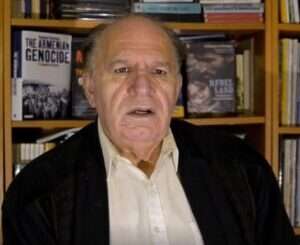
ARMEN SARKISSIAN, Financial Times
I grew up in the Soviet Union, a system many now recall primarily for its repression and stagnation. Yet it offered one thing in abundance: certainty. From an early age, I knew with remarkable precision how my life would unfold. If I studied well, I would advance. I would secure an academic position, publish papers, perhaps receive a few honors. I would acquire a small dacha, a car, retire and eventually die. It was not a life of great freedom, but it was a life governed by rules that seldom changed.
When I first encountered the west as a young researcher at Cambridge university, what struck me most was the opposite condition. It was not merely free; it was uncertain. Careers were not guaranteed. Opinions could be challenged. Lives could veer in unexpected directions. That uncertainty was not a flaw but a source of the west’s vitality. It seemed to me like the cost of openness, experimentation and possibility.
More than three decades after the collapse of the Soviet Union, however, we have plunged into an uncertain age. Not uncertain in the familiar sense of risk or volatility, but in a deeper, structural way. We are living through a period in which predictability itself has dissolved — an era of extreme uncertainty.
Since the end of the cold war, the west has dismantled its own guardrails. Markets were liberalized faster than social contracts could adjust. Inequality widened and confidence in institutions, expertise and shared truth has atrophied.
This erosion has created fertile ground for polarising populism. Political figures who thrive on division, spectacle and disruption are its chief beneficiaries.
I trained as a physicist, and in physics we distinguish between classical and quantum systems. Classical physics describes a world shaped by stable laws, where outcomes can be predicted if enough variables are known. Quantum physics, by contrast, treats uncertainty as fundamental. Outcomes are probabilistic rather than deterministic. Observation itself alters reality.
Politics, I believe, has crossed a similar threshold. We have entered the age of what I call quantum politics.
This transformation extends to the international order itself. Recent events in Venezuela have illustrated how fragile long-standing assumptions have become. A similar rupture has been visible in the turmoil over Greenland.
In this new reality, alliances are fluid. Power is exercised less through institutions than through disruption. Information exists in multiple states at once — sometimes concrete and authoritative, sometimes diffuse and unstable.
Seen in this light, figures such as US President Donald Trump become easier to understand. His unpredictability is not an aberration: it is his method.
In his quest for disruption, Trump functions as an energized particle, colliding with a sensitive geopolitical nucleus. The immediate crisis in Greenland last month subsided not because external actors successfully contained it but because the same disruptive force that initiated the reaction also chose, temporarily, to halt it. In doing so, other chain reactions were set in motion: Europe was marginalized, the appearance of multilateral norms was discarded and international institutions such as the UN were sidelined. The system did not return to equilibrium.
For small states, this quantum age is especially perilous. In a classical world, rules matter. International law, multilateral institutions and diplomatic conventions provide smaller nations with protection and influence disproportionate to their size. In a quantum world, where norms lie in ashes and guarantees are meaningless, small states find themselves exposed — forced to navigate between larger powers with diminishing room for error.
Technology has played a decisive role in accelerating this shift. Anyone with a phone and a social media account can now enter political debate, challenge authority and mobilise others. This connectivity has helped to bring down entrenched orders that once appeared permanent.
It has also compressed time. We go to bed in one political reality and wake up in another. The sociologist Zygmunt Bauman described this condition as “liquid modernity”: a world in which structures melt faster than they can be rebuilt. The classical world of stable political assumptions, gradual change and predictable outcomes is not returning. Our task is to understand what has emerged and to think clearly, calmly and strategically about how we act within it.
The writer is the former president of Armenia, a theoretical physicist and author of ‘The Small States Club: How Small Smart States Can Save the World’