The War With Iran Is Reaching Places You Might Not Expect
By Grigor Hovhannisyan
Newsweek
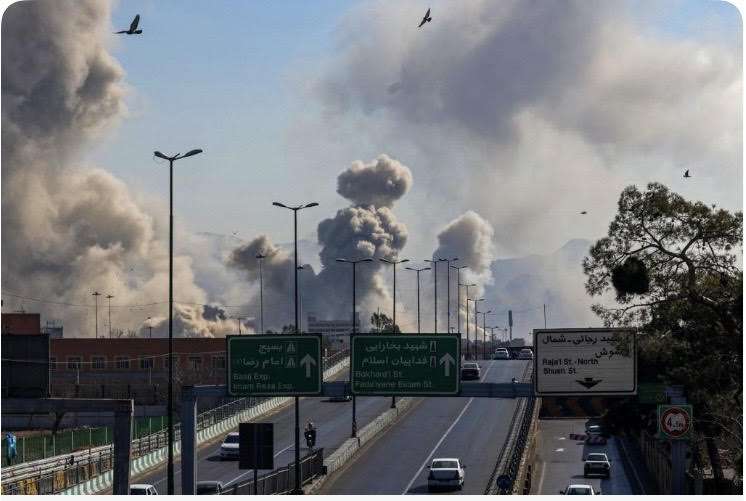
Most of the world’s attention in the confrontation with Iran has focused on the obvious places: Israel, Iran and the Arab states across the Persian Gulf within reach of Tehran’s missiles and drones.
But wars rarely respect the neat geography of news coverage. Their consequences ripple outward, often reaching places that initially seem far from the battlefield.
One way to see it is to open a live map of global air traffic.
The picture looks different from only a few years ago. Flights moving between Europe and Asia once crossed broad swaths of Russian airspace or the Middle East. Today many of those routes are closed, restricted or simply considered too risky. Russian skies have largely been off limits since the invasion of Ukraine. Parts of the Middle East now carry new security concerns as tensions around Iran escalate.
So airlines have begun funneling through a narrow band of sky over three countries that rarely occupy the center of American strategic thinking: Armenia, Georgia and Azerbaijan.
What was once a relatively quiet stretch of airspace has become one of the busiest corridors between Europe and Asia. Aviation planners increasingly refer to it as the “Caucasus corridor.” Air traffic data shows the shift clearly.
For the countries beneath it, the sudden congestion overhead is less a commercial opportunity than a reminder of geography. When great powers collide, smaller states nearby tend to absorb the pressure.