Turkish Eurofighter Acquisition Has More To Do With Greece Than Russia
By Paul Iddon, Forbes
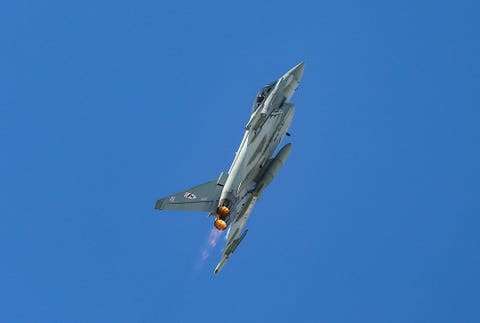
The British government unsurprisingly highlighted the many jobs Turkey’s recent purchase of 20 brand-new Eurofighter Typhoon fighter jets will secure in the United Kingdom for years to come. That’s no doubt true. However, London has also sought to portray the landmark sale as a valuable contribution to reinforcing NATO’s southern flank against a revanchist Russia to Turkey’s north. While these sleek jets, with their active electronically scanned array radars and long-range Meteor air-to-air missiles, would undoubtedly pose a significant challenge to Russia’s best combat aircraft, that’s unlikely to be the foremost mission Ankara has in mind for them. Rather, Turkey is buying one of Europe’s premier combat aircraft primarily to match the increasingly advanced air force of its neighbor and fellow NATO member, Greece.
British Prime Minister Keir Starmer visited Turkey in late October, where he secured a deal for 20 new-built Eurofighters worth up to $10.7 billion. Ankara has since disputed the price tag. Additionally, Turkey will purchase another 24 slightly used Eurofighters from Qatar and Oman.
Turkish Defense Minister Yasar Guler clarified on Dec. 19 that 12 Typhoons from Oman are expected by 2028. Muscat’s Eurofighters, he said, are being updated before delivery with AESA radars and compatibility with the Meteor missile. Omani Eurofighters are Tranche 3A models equipped with older CAPTOR-M Doppler radars, the same as used in the initial Tranche 1 and Tranche 2 versions.
The brand new British Typhoons, which some speculate might be the upcoming, cutting-edge Tranche 5 models, will enter service between 2030 and 2032. Ultimately, Turkey expects to field 44 Eurofighters, used Tranche 3As with limited flight hours and factory-fresh Tranche 5s or at least Tranche 4s, the latter being the latest model presently in service.
In an official statement, the British government dubbed Turkey’s purchase “the biggest fighter jet exports deal in a generation,” claiming it would bolster “NATO’s strength in a key region.”
Others have similarly portrayed the sale as improving Turkey’s capabilities against Russia.
“The Eurofighter represents a step-change in capabilities, providing Turkey with a more modern warplane capable of resisting the Russians,” Britain’s Telegraph newspaper
While Turkey may deploy a few Eurofighters to patrol the Black Sea, where Turkish F-16s have recently intercepted drones, most will likely serve another, very different objective.
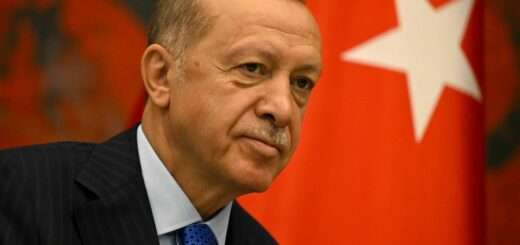
Ankara chose the Eurofighter as a 4.5-generation stopgap fighter to keep its air force up to date until it can ultimately field fifth-generation stealth fighter jets. Turkey hopes to return to the American F-35 Joint Strike Fighter program, from which the U.S. suspended it in 2019 after Ankara acquired advanced S-400 missile systems from Russia. Bloomberg reported on Dec. 17 that Turkish President Recep Tayyip Erdogan has asked his Russian counterpart, Vladimir Putin, to take back the missiles, potentially paving the way for Ankara to acquire Lockheed Martin F-35s. Russia officially denies this. Ankara seeks at least 40 F-35s. It’s also building a homegrown stealth fighter, the TF Kaan.
Aside from choosing the Eurofighter as a formidable interim fighter, Turkey also sought the European aircraft to match the Hellenic Air Force’s recent acquisitions.
Since the start of this decade, Athens has acquired 24 4.5-generation Dassault Rafale F3R fighters armed with Meteor missiles. Like Turkey, Greece bought some of these 4.5-generation jets second-hand to expedite delivery. Additionally, Greece has upgraded the majority of its F-16s to the latest Block 72 standard, making them more advanced than Turkey’s larger Viper fleet, and ordered 20 F-35As, which will likely begin arriving in 2028.
Without acquiring 4.5-generation Eurofighters and later fifth-generation F-35s, Turkey risks Greece acquiring a significant technological edge in air power that could alter the balance in the Aegean Sea.
In a worrying development, Greek media reported in December that the Turkish Air Force “conducted a barrage of incursions into Greece’s national airspace and the Athens Flight Information Region.” Armed Turkish F-16s previously entered the Athens FIR in September, followed by an armed F-16 entering national Greek airspace in October. These violations marked a period of relative calm since early 2023, when relations thawed after Athens assisted Turkey following a devastating earthquake.
Turkey may well become more emboldened to commit future violations and engage in mock dogfights over the Aegean when it has Eurofighters that can match Greek Rafales.
The Turkish Defense Ministry has rejected reports that the Eurofighter sale included restrictions on using these jets against Greece, affirming that they will conduct missions over the Aegean. Greek and Turkish fighters have engaged in intermittent mock dogfights over that sea for decades, some of which ended fatally.
When they all enter service, Turkey’s 44 Eurofighters will outnumber Greece’s Rafale fleet and possibly, if the 20 new British jets are indeed Tranche 5s, surpass it in quality, too.
Greece isn’t likely to sit idle. Already, Athens is reportedly considering upgrading its Rafale fleet with 10 newer, more advanced F4 models currently in service, or even the upcoming F5 Super Rafale variant. As with the Eurofighter Tranche 5, the Rafale F5s are expected to enter service around 2030.
Acquisition of additional, more advanced Rafales would ensure the Hellenic Air Force can still match its Turkish rival’s 4.5-generation combat aircraft both qualitatively and quantitatively.
As already mentioned, Turkey wants at least 40 F-35As if granted readmission into the JSF program and permission to buy these fifth-generation jets. Greece already ordered 20 in a deal that gives it the option to buy 20 more. Athens may well exercise this option if Ankara convinces the U.S. to allow it to buy the F-35.
Consequently, this could mark the beginning of a new arms race over the Aegean flashpoint, with significant ramifications for the security and stability of the Eastern Mediterranean in the not-too-distant future.