
Türkiye’s 30-year Trans-Caspian gas link dream enters ‘concrete’ phase
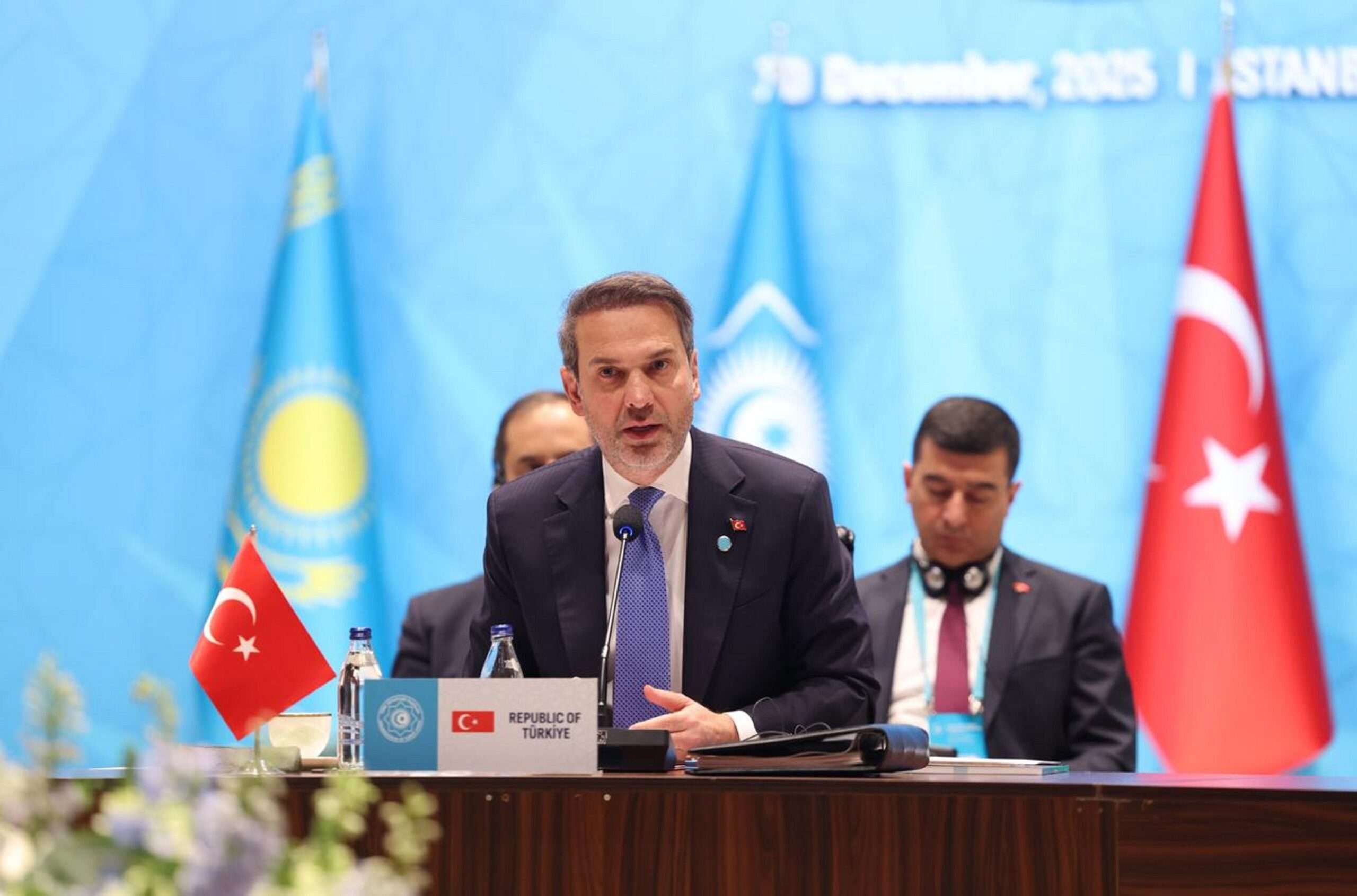
The long-standing goal of delivering natural gas to Türkiye via the Trans-Caspian Pipeline (TCP) has reached a concrete stage, Energy and Natural Resources Minister Alparslan Bayraktar said on Wednesday.
The link is planned to transport natural gas from Turkmenistan to Türkiye and, ultimately, to European markets, and includes building a subsea pipeline across the bottom of the Caspian Sea
“We have reached the phase of taking concrete steps toward our 30-year dream of delivering natural gas to Türkiye through the Trans-Caspian Pipeline,” Bayraktar told a meeting of energy ministers of the Organization of Turkic States (OTS) in Istanbul.
The infrastructure is already in place on the western side of the Caspian, according to the minister, who said the Trans-Anatolian Natural Gas Pipeline (TANAP), which carries gas from Azerbaijan to Türkiye and further on to Europe, is a highly strategic project in this regard.
The new pipeline would see gas flow from Turkmenistan to Azerbaijan, where it would link into the existing Southern Gas Corridor infrastructure, which includes the South Caucasus Pipeline, the TANAP in Türkiye and the Trans-Adriatic Pipeline (TAP) to Europe.
Earlier this year, Türkiye started importing gas from Turkmenistan for the first time via a swap arrangement through Iran. Türkiye relies on a mix of piped gas from Russia, Azerbaijan and Iran, along with liquefied natural gas imports from various suppliers.
The TCP link is also seen as a potential major new supply route to the European Union that would circumvent both Russia and Iran.
“The progress we achieve toward this goal will both contribute to the development of the Turkic states and have a game-changing effect in the context of the European and Mediterranean energy markets,” Bayraktar said.
Bayraktar said transporting hydrocarbon resources from the eastern Caspian to the west should also be a priority.
He stressed that Türkiye is also the key route for Central Asian oil resources, citing the Baku-Tbilisi-Ceyhan (BTC) pipeline, which delivers about 600,000-700,000 barrels of oil per day to global markets via Ceyhan.
“It is an extremely critical project for ensuring balanced global oil supply,” Bayraktar said.
‘Still long way to go’
Referring to recent crises in the global energy sector, the minister stressed the need to take “bold, decisive, rapid and most importantly, collective steps” in order to move forward and stay resilient in such times.
Bayraktar went on to emphasize potential for cooperation in nuclear energy, renewables, gas, electrification, critical minerals and rare earth elements.
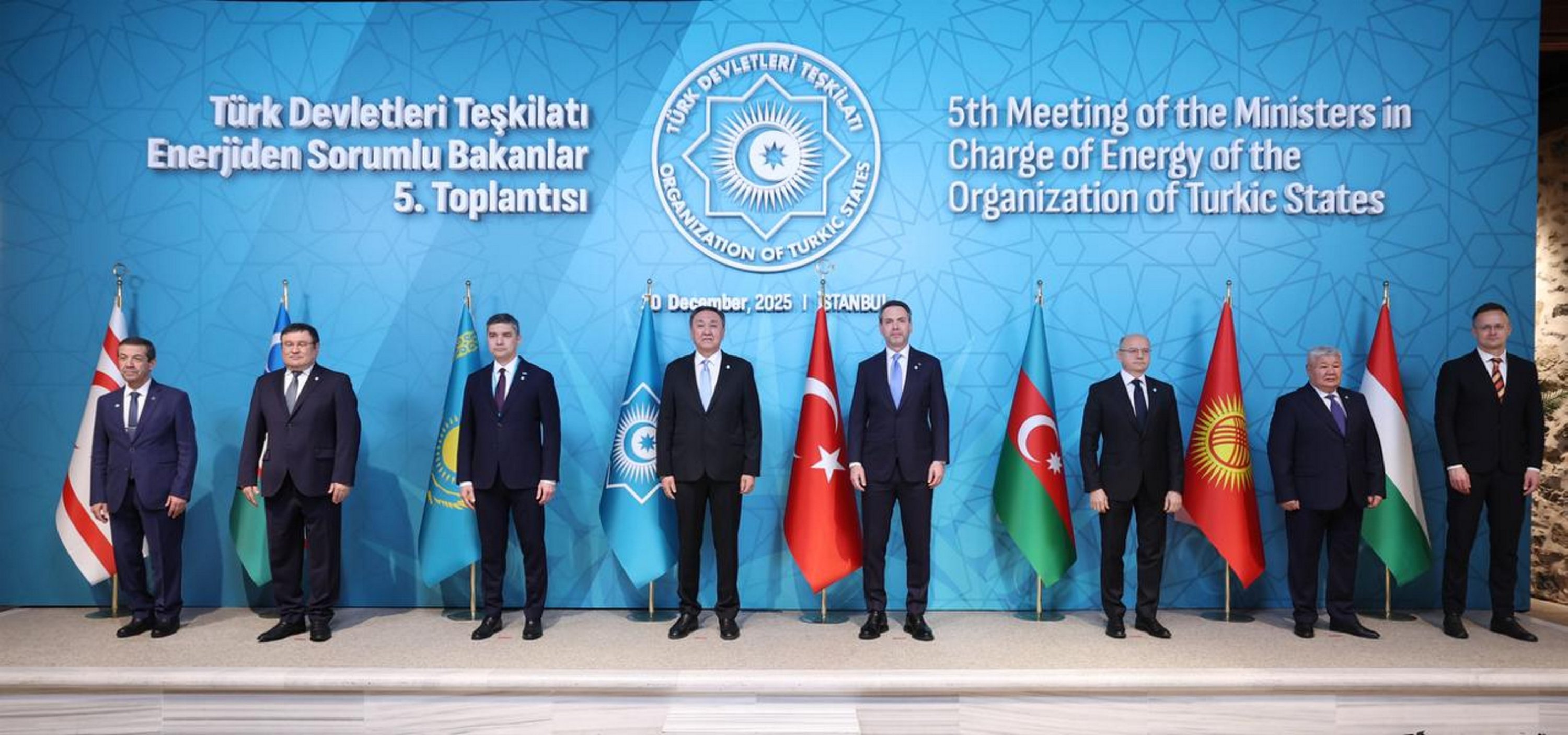 Top energy officials of the Organization of Turkic States (OTS) pose for a photo ahead of the 5th Energy Ministers Council of the OTS, Istanbul, Türkiye, Dec. 10, 2025. (AA Photo)
OTS member states, he noted, already carry out successful projects through both public and private companies. “However, I must also state that this is far below our potential and that we still have a long way to go.”
Bayraktar proposed turning part of the OTS meetings into a business forum to bring together the government and the private sector, saying such platforms would be important for joint action and increased investment.
Different potentials
The Turkic world shares a vast geography stretching from Central Asia and the Caucasus to Anatolia, Europe, the Black Sea, the Balkans and the Mediterranean, bound by a common history and a shared vision for the future, he noted.
This vision, he added, is increasingly evident in the energy sector.
Bayraktar emphasized that OTS members have complementary strengths in terms of energy resources and potential.
“The OTS represents a population of around 180 million, a geography of 4.5 million square kilometers, and an economic size exceeding $2 trillion. One-tenth of the world’s natural gas reserves lies in this region,” said the minister.
“From China on one end to the Mediterranean and Europe on the other, bordering Russia and close to the energy-rich Middle East – each of our members has a different potential.”
Caspian should unite Turkic world
Bayraktar suggested that cooperation in energy would bolster member economies, improve welfare, and strengthen regional stability.
“In this sense, we must ensure that the Caspian Sea unites, rather than separates, the Turkic world,” he said, stressing the highlighting the significance of the “Green Energy Corridor” project, which foresees transporting renewable energy-sourced electricity produced in Central Asia to the west of the Caspian Sea.
Türkiye is already collaborating with Azerbaijan, Georgia and Bulgaria in the energy sector, Bayraktar noted.
“Azerbaijan, Kazakhstan and Uzbekistan have also signed an agreement among themselves. We have learned of Kyrgyzstan’s interest in joining, which we welcome. We believe bringing these fragmented structures together will create greater synergy,” he noted.
“With Türkiye and Kyrgyzstan joining, this cooperation will become even more meaningful and powerful. Through this project, we aim to bring the region’s electricity potential first to the Turkish market, and then to Europe.”