US bill would shift focus from saving Armenian orphans to funding their persecutors

Near East Relief, created by an act of Congress, fed, sheltered, and educated Armenian orphans who otherwise would have perished. This was not realpolitik (politics-driven practical, or pragmatic concerns) but moral action driven by faith, conscience, and a belief that America has a responsibility to protect Christians under threat.
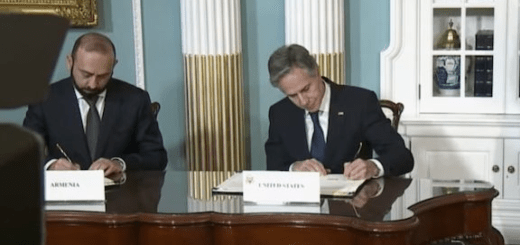
The introduction of H.R. 6534 in the U.S. House of Representatives, a bill proposing the repeal of long-standing restrictions on U.S. assistance to Azerbaijan, raises a question that goes beyond geopolitics and energy corridors. It poses a moral test—whether the United States will remain faithful to its historic mission of defending persecuted Christians and vulnerable religious communities, or it will trade that legacy for short-term strategic convenience.
Congress imposed restrictions on direct U.S. government assistance to Azerbaijan in response to its blockade and use of force against Armenia and Nagorno-Karabakh—actions that targeted an indigenous Armenian Christian population. Section 907 was pro-justice and embodied a simple principle deeply rooted in Christian ethics: aggression and collective punishment must not be rewarded.
Today, that principle is under direct assault. Azerbaijan’s actions in 2020 and, most decisively, in September 2023, resulted in the forced displacement of more than 100,000 Armenian Christians from Nagorno-Karabakh.
Ancient churches were desecrated, cemeteries destroyed, and a millennia-old Christian presence erased almost overnight. International observers, human rights organizations, and genocide scholars have described these events as ethnic cleansing.
If the United States lifts restrictions immediately after this outcome, it sends a devastating message that the removal of Christians from their ancestral homeland carries no consequences.
The United States has repeatedly affirmed, under both Republican and Democratic administrations, that defending religious freedom is a core pillar of American foreign policy. The International Religious Freedom Act, the work of the U.S. Commission on International Religious Freedom, and countless congressional resolutions affirm this commitment.
Supporters of repealing restrictions argue in the language of strategy, energy security, geopolitics, logistics corridors. But Christian ethics teach that strategy without morality is empty. Scripture warns against gaining the world while losing one’s soul. When U.S. policy becomes indifferent to the suffering of Christians, America’s moral authority erodes everywhere else.
How can the United States credibly speak about protecting Christians in Nigeria, Syria, or Iraq if it is willing to overlook the ethnic cleansing of Armenian Christians for the sake of expediency?
Repealing restrictions would be a moral retreat. Congress should reject H.R. 6534 and reaffirm a simple truth: America does not reward the persecution of Christians, the destruction of churches, or the erasure of ancient Christian peoples. To do otherwise would be to abandon not only the Armenians, but also a core part of America’s own identity.
Ciara Walsh is a Christian activist and Project Coordinator at Open Doors International, where she works on issues of religious freedom and advocacy for persecuted Christians worldwide.