
An Incomplete Voice in Istanbul: Krikor Zohrab
By Melinda Andonyan, Keghart
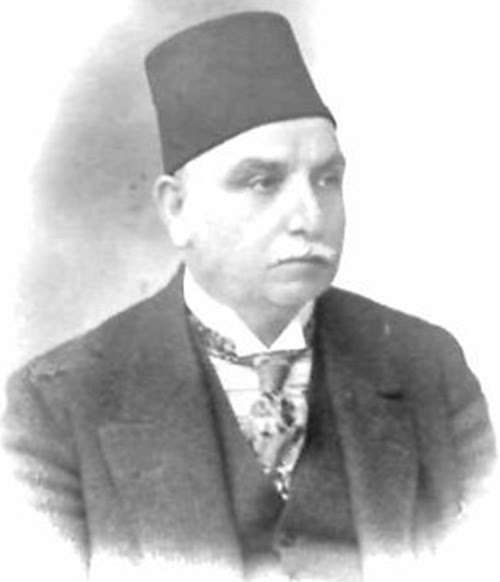
Some cities preserve the voices of those silenced forever, and Istanbul is one of them. In this city, even stones hold memories, preserving forgotten names and incomplete sentences. Kirkor Zohrab epitomizes a voice that Istanbul cannot forget. Born in the town, he was an Armenian who served as a member of the Ottoman parliament, a writer, and, most importantly, an intellectual who explored the human soul through his writing. He believed that justice could be achieved even from the parliamentary podium.
To understand Zohrab, one must listen to Istanbul because Zohrab’s story flows with the multilingual, multilayered, and fragile spirit of this city. His life is more than the story of an individual; it is a deep wound that has been opened in the multicultural memory of this city.
Born in Istanbul in 1861, Krikor Zohrab grew up during a period when the Ottoman Empire had not yet collapsed, though its structural fractures were increasingly visible. His education at Galatasaray High School exposed him to legal thought, critical reasoning, and comparative perspectives, particularly through his engagement with French literature. These influences broadened his worldview and expanded his intellectual horizon while reinforcing his connection to Istanbul as a multilingual and multilayered cultural space.
For Zohrab, Istanbul was not just an ordinary city, but a living entity. In his writings, one can feel both the wind of the Bosphorus and the silence within the household. This is because Zohrab was more interested in small details than grand narratives.
Kirkor Zohrab’s stories don’t feature shouting heroes. His characters often don’t speak; they remain silent. There are marriages, but love is absent. There are crowded streets, yet a profound sense of loneliness permeates the lines.
In one of his stories, Zohrab conveys the feeling that a person is most alone when they are misunderstood. Through a few brief silences, he shows that even those living under the same roof can become estranged from one another. In another narrative, he suggests that the emptiness within a man standing in the middle of a crowd is wider than even the most secluded rooms.
In his texts, happiness doesn’t arrive with noise. Love often comes late; regret, however, comes early. Zohrab reveals the moment of heartbreak not with a loud cry, but with a whisper. Thus, the reader finds a trace of their own life between the sentences.
Zohrab’s power lies not in creating dramatic events, but in making visible the subtle cracks in the human soul. That is why his stories remain timeless even today, because human fragility is resistant to time.
Zohrab did not limit himself to writing alone. After the Second Constitutional Era, he entered the Ottoman Parliament as a representative of Istanbul. This was a heavy responsibility for him. As an Armenian, he began to speak on behalf of the city to which he belonged.
His speeches in parliament focused on the rule of law, equal citizenship, and constitutional order. He did not use divisive language; on the contrary, he adopted a tone rooted in the possibility of coexistence. Perhaps this is precisely why he disturbed some people, because Zohrab was an intellectual who refused to remain silent.
In the spring of 1915, on April 24, Zohrab was arrested along with other Armenian intellectuals. The immunity of a parliamentarian and a lawyer remained only on paper. He was exiled to Çankırı; then, together with Vartkes Serengülian, he was sent to Diyarbakır under the pretext of a trial.
This journey was not a quest for justice. Near Urfa, in an incident officially recorded as a “bandit attack,” they were killed, their heads crushed with stones. Testimonies and historical studies indicate that this death was a planned execution. Along with Zohrab’s body, faith in the power of the word was also wounded.
This was more than a murder. It was the silencing of writing, of law, and of the parliamentary platform.
Today, Kirkor Zohrab is more than just a biography. He is one of Istanbul’s unfinished sentences. His name lingers in the wind blowing from the Bosphorus, in the courtyard of a closed school, and on a silent assembly platform. In his stories, we encounter the inner fragility of humanity; in his life, the price paid by an intellectual.
Some people don’t fall silent even after they die; the city speaks in their place. Zohrab’s voice still resonates in the stones of Istanbul today. It’s like an unfinished sense of justice and a belated appeal to conscience. The question remains whether this city—or we—are willing to hear this voice.
*****

Melinda Andonyan was born in Istanbul-Türkiye in 1982. She is a Turkish-Armenian whose ancestors have lived in these lands for centuries. She graduated with honors from the Department of Teaching. She studied linguistics in Germany, on a scholarship from the German government. She has been actively involved in educational activities in various countries and worked as a teacher at private schools and universities in Türkiye. In addition to her teaching career, she has been an active translator and interpreter in four languages (English, German, Armenian, and Greek) since 2014. She first translated a Turkish book into English, called “Chaldee Letters and The Chaldeans,” (written by Mgr. Francois Yakan) in 2014. This translation has been acclaimed worldwide and has found its place in libraries in many countries. Currently, she is translating books for many publishing companies and also writing articles and texts for various magazines and online platforms.