
Armenian Quarter residents descend from genocide survivors, bishop says ahead of exclusive tours
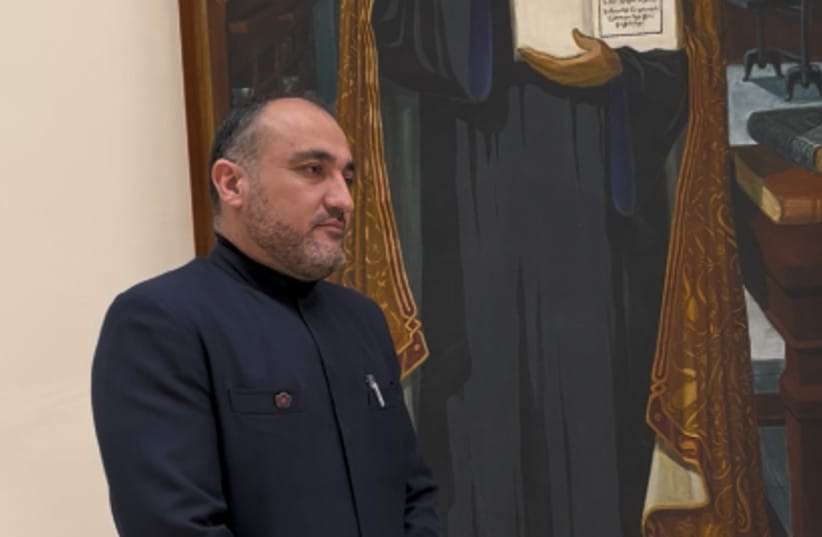
Dating back nearly two millennia, the Armenian Church’s presence in Jerusalem is widely considered the longest unbroken Christian presence in the Old City.
BySAM HALPERNThe Jerusalem Post
The Armenian community living inside the largely closed monastic compound of the Armenian Quarter in Jerusalem’s Old City is largely comprised of the descendants of survivors of the Armenian Genocide, a senior cleric of the Armenian Patriarchate of Jerusalem told The Jerusalem Post.
“Only clergymen and pilgrims used to live inside the compound,” said Bishop Koryun Baghdasaryan. “But after the Armenian Genocide, 10,000 refugees arrived in Jerusalem. And what you see now, the Armenians living inside the convent, they are, in fact, the descendants of those genocide survivors.”
The Armenian Genocide was perpetrated by the Ottoman Turks in the early 20th century. It ultimately resulted in the murder of over a million Armenians.
Monuments to the genocide dot various areas of the quarter.
Baghdasaryan, who serves as Dean of the manor of the Armenian Patriarchate of Jerusalem, spoke to the Post ahead of a series of Jerusalem tours organized by educational non-profit Yad Ben Zvi.

The community there is deeply connected to its Christian faith
The tours, set to take place this week, will include a visit to the Armenian Quarter itself, an area that is mainly private and off-limits to the general public.
The community there, which lives under the auspices of the church, is deeply connected to its Christian faith.
“Armenia was the first country that adopted Christianity as a state religion in 301,” Baghdasaryan said. “So right after 301, Armenian pilgrims started to come to Jerusalem, to the Holy Land, in search of the holy places. And some of them settled here in Jerusalem. And in this way, the Armenian presence in the Holy Land started.”
According to Baghdasaryan, the Armenian Patriarchate was established a century and a half later.
He said that since then, facilitating pilgrimage to the Holy Land has been central to the Armenian church’s mission.
He explained that many pilgrims would initially arrive at the Jaffa Port. An Armenian Church abbot would collect them from the port and host them at a nearby monastery.
Pilgrims would then make their way on foot, stopping at another monastery in Ramle along the way. After resting there, they would continue their journey to Jerusalem the next day, arriving late at night.
Later, safeguarding the community that emerged inside the Old City after the Armenian Genocide became a critical piece of the church’s purpose, Baghdasaryan said.
“We take them as a part of our church, and their existence is only encouraging us in carrying out our mission, which is to protect our rights in the holy places, to venerate all those holy places, and, of course, to organize pilgrimage to the Holy Land,” the bishop added.
Dating back nearly two millennia, the Armenian Church’s presence in Jerusalem is widely considered the longest unbroken Christian presence in the Old City.
The wives of different Crusader kings, including King Baldwin I and King Baldwin II, Arda of Armenia and Morphia of Melitene, respectively, were Armenian.
Various mosaics that showcase Armenian history in the Land of Israel are featured throughout the Armenian Quarter.
Those mosaics are set to be viewed by visitors touring the quarter this week.
Yad Ben Zvi’s Jerusalem Marathon of Tours, which is being held for the 29th year, comes ahead of “Jerusalem Week.” Between May 6-9, around 120 guided tours will be held around the city at a flat rate of NIS 50 per tour.
Advance registration and ticket purchase are available on the Yad Ben-Zvi website.