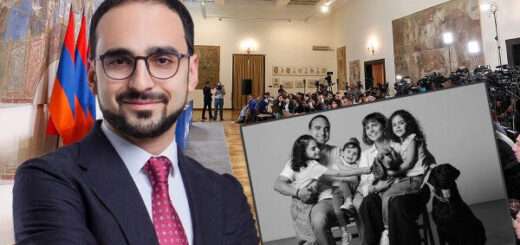
Who is who in Armenia’s 2026 elections?
By Alexander Pracht
Civilnet
Armenia’s Central Election Commission has closed the registration window for political forces seeking to participate in the parliamentary elections scheduled for June 7, formally approving all 19 parties and alliances that submitted bids.
There were no major surprises in the final list of contenders, with every applicant cleared to run. The campaign is now set to feature a broad and diverse field, ranging from established parliamentary forces to newer political movements aiming to gain a foothold. In this article, we present the political forces competing in the vote.
A notable absence is the Republican Party, which dominated the country’s political landscape from 1998 to 2018. Its leader, former president Serzh Sargsyan, announced last month the party would sit out the race.
Civil Contract: Nikol Pashinyan
The ruling Civil Contract party is led by Prime Minister Nikol Pashinyan, who has dominated Armenian politics since the 2018 revolution that brought him to power after weeks of mass protests against the former Republican-led government.
A former journalist and newspaper editor, Pashinyan emerged as an opposition figure in the 2000s through his sharp criticism of then-president Robert Kocharyan and later Serzh Sargsyan. He led the small Impeachment alliance in the 2007 parliamentary election, though the bloc failed to enter parliament. He later became one of the leading figures of former president Levon Ter-Petrosyan’s opposition movement during the disputed 2008 presidential election and the subsequent protests.
Following the deadly March 1, 2008 crackdown, Pashinyan went into hiding before later surrendering to authorities. He was sentenced to prison over his role in the protests and released in 2011 under a general amnesty. He entered parliament for the first time in 2012 as part of the Armenian National Congress alliance led by former president Levon Ter-Petrosyan.
Pashinyan later founded the Civil Contract party, which eventually became the core of the Way Out alliance that entered parliament in the 2017 election. A year later, he led the protests that forced Serzh Sargsyan from power and became prime minister.
Civil Contract’s 2026 election platform marks a significant shift from the party’s previous rhetoric and priorities. While its 2021 program centered on pan-Armenian unity and support for Nagorno-Karabakh’s self-determination, the new platform is built around Pashinyan’s “Real Armenia” ideology, which frames the internationally recognized Republic of Armenia as the sole focus of state policy.
The program no longer references terms such as “Artsakh,” “self-determination,” or the OSCE Minsk Group. Instead, it emphasizes the “institutionalization of peace” with Azerbaijan based on mutual recognition of territorial integrity under the 1991 Alma-Ata Declaration. The issue of displaced Karabakh Armenians is largely framed through social support measures, including housing programs for displaced families.
On foreign policy, the platform reflects the government’s gradual distancing from Russia. Unlike Civil Contract’s 2021 program, which described Russia as Armenia’s strategic ally and the Collective Security Treaty Organization as a cornerstone of national security, the 2026 platform states that Armenia’s participation in the CSTO remains frozen and that no steps toward restoring active involvement are planned.

At the same time, the party reiterates its goal of deepening ties with the European Union and pursuing reforms that could eventually support an EU membership bid. The platform also places greater emphasis on developing Armenia’s domestic defense industry and a broader “comprehensive defense” model rather than relying primarily on Russia for military modernization.
Another major component of the program is constitutional reform. Civil Contract argues that controversies surrounding previous constitutional referenda have undermined the legitimacy of the current constitution and says Armenia should adopt a new one. The platform also includes proposals related to reforming the Armenian Apostolic Church, including calls for replacing Catholicos Karekin II.
Strong Armenia: Samvel Karapetyan
The Strong Armenia party, also known as Mer Dzevov (Our Own Way), is led by Samvel Karapetyan, a billionaire born in Soviet Armenia who built a sprawling business empire spanning both Russia and Armenia known as the Tashir Group.
This conglomerate includes multiple shopping centers, numerous real estate properties, a Yerevan-based football club, and, perhaps most importantly, Armenia’s electricity distribution network. The company was acquired by Tashir back in 2015 during the Serzh Sargsyan administration, and has been in the middle of a major confrontation between Karapetyan and the ruling government since last June – with Prime Minister Nikol Pashinyan seeking to nationalize the utility, citing its strategic importance for the country’s security.
Over the past decades, Tashir has largely profited as a contractor for the St. Petersburg-based state-owned energy giant Gazprom, providing construction services.
Investigative reports have also pointed to Karapetyan’s proximity to Russia’s leadership. Among the cited examples is a luxury villa on the French Riviera ownedby him and, until several years ago used by Alina Kabaeva, an Olympic champion and former lawmaker, revealed by independent investigative reports as a long-time romantic partner of Putin’s and mother to at least three of his children. The property has been seized by French authorities since 2024.
Karapetyan’s emergence as a political actor dates to last June, when he was arrested in Yerevan on charges of calling for a violent change of power, later supplemented with accusations of money laundering and tax evasion. The charges followed Karapetyan’s promise to “intervene” in the government’s conflict with the leadership of the Armenian Apostolic Church – generally viewed by the government as a pro-Russian political actor.
While he was initially placed in pre-trial detention and is now under house arrest, his family launched the Mer Dzevov movement seeking to challenge Pashinyan’s government.
The group has announced Karapetyan as its nominee for prime minister, despite the fact that he holds Russian and Cypriot citizenship in addition to Armenian. This bars him from holding parliamentary or government office under Armenia’s constitution. Strong Armenia’s representatives have said they would seek to amend the relevant constitutional provisions if they come to power. Meanwhile, the party’s electoral list is led by Samvel’s nephew, Narek Karapetyan.
The party’s program largely builds on criticism of flagship initiatives of the current government, including plans to construct a large academic campus outside Yerevan and the rollout of universal health insurance launched earlier this year. It also taps into a popular narrative of support for the Armenian Church, proposing to expand its social and educational role.

Economically, Strong Armenia promises to boost industrial output through the creation of new factories and what it describes as up to 300,000 jobs, one of its central campaign messages. On foreign policy, the party says it supports peace with Azerbaijan but with third-party guarantors, while also advocating for the opening of borders with Turkey and broader regional cooperation.
The rest of its platform is largely feel-good rhetoric: it calls for developing strategic cooperation with Russia, deepening ties with the European Union and the United States, and maintaining international attention on the Karabakh issue. It also seeks expanding engagement with the Russia-led Collective Security Treaty Organization – a bloc that the ruling government has suspended ties with.
While largely appealing to former Karabakh residents, Karapetyan also acknowledged last week that “in the coming years, and possibly decades, it will not be possible to bring Artsakh back.”
Prosperous Armenia: Gagik Tsarukyan
Prosperous Armenia is led by Gagik Tsarukyan, one of the country’s wealthiest businessmen and one of the longest-standing figures in Armenian politics. Active in business since the 1990s, Tsarukyan first entered parliament in 2003 as an independent lawmaker before founding the Prosperous Armenia party a year later.

Over the past two decades, Tsarukyan has shifted repeatedly between cooperation with the authorities and opposition politics. Prosperous Armenia became the second-largest parliamentary force after the 2007 and 2012 elections, initially working alongside the ruling Republican Party before later moving into opposition. In 2015, after escalating tensions with then-president Serzh Sargsyan and calls for a change of government, Tsarukyan announced his withdrawal from active politics, only to return ahead of the 2017 parliamentary elections.
Following the 2018 revolution, Tsarukyan and his party initially cooperated with Nikol Pashinyan’s government. Relations later deteriorated, and in 2020 Armenian authorities stripped Tsarukyan of parliamentary immunity and charged him with vote-buying. Tsarukyan described the case as politically motivated. In March 2026, he was acquitted.
Tsarukyan’s business empire spans sectors including cement production, alcoholic beverages, casinos, hotels and fuel stations. He is also known for sponsoring sports projects and church construction.
Tsarukyan is also known for his close personal ties with Belarusian President Alexander Lukashenko, with the two frequently publicly referring to each other as friends. His son, Nver Tsarukyan, is currently believed to be in Belarus after Armenian authorities issued charges against him in connection with an armed altercation in 2024.
Prosperous Armenia’s election platform combines populist economic proposals with calls for a balanced foreign policy. The party advocates maintaining strategic relations with Russia and Iran while simultaneously deepening cooperation with the European Union and the United States. It supports gradual normalization with Turkey without preconditions and backs peace talks with Azerbaijan, while opposing unilateral concessions.
Economically, the party promises large-scale state intervention, including tax-free industrial zones, subsidized loans, lower utility tariffs, debt relief for citizens with small loans, and major infrastructure projects. It also proposes transitioning toward a professional army, increasing pensions and making public education free from 2028 onward.
Although Tsarukyan is leading the electoral list of the “Proposal to Armenia” alliance, he has said he does not seek the post of prime minister. He has also ruled out post-election cooperation with both Pashinyan and former president Robert Kocharyan, while signaling openness to working with Samvel Karapetyan’s Strong Armenia bloc.
Wings of Unity: Arman Tatoyan
The Wings of Unity, formed in 2025, is led by Arman Tatoyan, a lawyer by training with an educational background in the United States.
Tatoyan worked for years in the public sector as a legal professional before being appointed deputy justice minister in 2013 under the administration of Serzh Sargsyan, a post he held until 2016. He was then named Armenia’s Human Rights Defender (ombudsman), remaining in the role after the 2018 revolution and completing his six-year term in 2022. By the end of his tenure, he had become increasingly critical of the government of Nikol Pashinyan.
In the current campaign, Tatoyan has cultivated a conventional image of a lawyer-turned-politician, consistently formal in appearance and measured in tone, while presenting himself as a “new opposition.” He has deliberately distanced himself from former presidents Robert Kocharyan and Serzh Sargsyan, even calling on them not to participate in the election, arguing that their involvement would polarize the electorate and ultimately benefit Pashinyan.

The party’s election program reflects this approach. Running to 50 pages, it attempts to address a wide range of issues in detail, extending to extremely niche areas such as the performance targets for the national football team and the development of the video game industry.
A central focus of the platform is military reform. Tatoyan has pledged to publish the parliamentary commission’s report on the 2020 war, which the current authorities have not made public. The program also emphasizes defense cooperation with countries such as France and the United States (both are already engaged in military partnerships with Armenia) and sets an ambitious goal of producing more than 50% of military equipment domestically within the next decade.
On foreign policy, the platform combines broad references to national dignity and active diplomacy with support for engagement across multiple directions, including the United States, Europe, and Russia. It also endorses the “Trump Route” project and a greater role for Washington in regional affairs.
Reflecting Tatoyan’s legal background, the party places particular emphasis on pursuing international legal avenues on the Karabakh issue and proposes restoring genocide recognition as a priority in foreign policy.
At the same time, Tatoyan has occasionally put forward less conventional ideas. In December, he referenced Donald Trump while outlining what he described as a potential tactic to pressure Azerbaijan into withdrawing from Armenia’s sovereign territory. He suggested that, in his first week in office, areas along the border, including Lake Sev, could be renamed the “Donald Trump National Reserve,” while mountains near Jermuk would become the “Melania Trump National Reserve.” According to Tatoyan, such a move would force Azerbaijani President Ilham Aliyev to confront the political implications of continued occupation. It remains unclear whether the proposal was intended as a serious policy initiative.
Also read: What Armenia’s prime minister candidates say about TRIPP
Armenia Alliance։ Robert Kocharyan
The Armenia Alliance is led by Robert Kocharyan, who served as Armenia’s president from 1998 to 2008. His presidency was marked by significant economic growth that followed the devastating 1990s but also by accusations of systemic corruption and the consolidation of oligarchic power. His tenure ended amid the 2008 post-election crisis and the March 1 protests crackdown that resulted in 10 people being killed.
Having returned to active politics following the 2020 war, Kocharyan led the Armenia Alliance, which includes one of Armenia’s oldest political forces, the Armenian Revolutionary Federation, to a second-place finish in the 2021 snap elections. This year, Kocharyan has framed his candidacy around his experience as a “crisis manager,” explicitly contrasting his leadership with what he describes as the “incompetence and evil” of the Pashinyan government.

The Armenia Alliance’s 2026 platform, running under the slogan “Together We Can,” focuses heavily on national security and socioeconomic restoration. It includes aggressive social promises, such as increasing the basic pension by at least 50% and indexing the minimum wage to inflation.
In a sharp critique of the government’s “Real Armenia” ideology, Kocharyan’s platform emphasizes holding the current leadership accountable for the loss of Nagorno-Karabakh. The alliance calls for a more robust defense policy, including the development of a high-tech domestic military industry and strengthening traditional strategic partnerships.
Out of all the candidates, Kocharyan is perhaps the only one openly pro-Russian. In the past, he has said Armenia should join the Russia–Belarus Union State. He has long faced criticism for deepening Armenia’s economic dependence on Russia during his presidency, including through debt-for-assets deals that transferred control of key infrastructure to the Russian state. Kocharyan argues that Armenia should restore its strategic relationship with Moscow, which has deteriorated in recent years.
New Power: Hayk Marutyan
The New Power Party, formed in 2024 and led by former Yerevan mayor Hayk Marutyan, enters the race positioning itself as a pro-European, centrist force with a clear opposition stance toward the current government.
Marutyan’s political trajectory makes this positioning unsurprising. After rising to prominence in the 2000s as a comedian and sketch show star, he entered political activism in the 2010s, becoming a prominent member of Civil Contract and an active figure during the 2018 revolution that brought Nikol Pashinyan to power.
Following the revolution, Marutyan secured one of the country’s most influential posts. Following Civil Contract’s victory in the Yerevan City Council elections, he was elected mayor, having defeated Alen Simonyan, now the country’s parliamentary speaker and one of Pashinyan’s closest allies, in the party’s internal primaries.

However, Marutyan did not complete his term. In December 2021, the ruling faction pushed through a no-confidence motion against him, citing what it described as a “failure in the mission of eliminating systemic corruption in the Yerevan municipality.” Marutyan, however, argued that the move was caused by political disagreements with the government following the 2020 war in Nagorno-Karabakh.
In its platform unveiled in March, New Power places a strong emphasis on Armenia’s European trajectory.
“Armenia’s membership in the European Union has no alternative; Armenia must begin negotiations on EU accession as soon as possible,” senior party member Grigor Yeritsyan said at the time.
Describing itself as a “reformist party,” the group advances a largely left-leaning socioeconomic agenda, including expanded support for large families, free education, and large-scale construction and renovation projects. At the same time, its platform leaves open key questions about funding, as these spending commitments are paired with promises of tax cuts and crackdown on gambling.
Marutyan has also leaned on his background in comedy during the campaign, using social media to ridicule political opponents, particularly Pashinyan, through satirical content.
The Republic Party: Aram Sargsyan
The Republic Party (not to be confused with the Republican Party) is headed by Aram Sargsyan, who briefly served as prime minister in the late 1990s, when Armenia still operated under a presidential system.
Sargsyan is the brother of Vazgen Sargsyan, a key figure of the first Nagorno-Karabakh war and defense minister, who was killed during the 1999 parliament shooting. In recent years, Sargsyan and his party have emerged as some of the most vocal advocates of a European trajectory for Armenia.

In its program, the party explicitly calls for distancing the country from Russia. This includes a full withdrawal from the Russia-led Collective Security Treaty Organization, pursuing defense agreements with France and the United States, and reducing Russian involvement in Armenia’s economy, including the possibility of seizing Russian assets.
The party also proposes a shift in military policy, advocating for a gradual reduction of mandatory military service from the current 18 months to just three months, with the long-term goal of building a fully professional army. Institutionally, it calls for a return to a presidential system of governance, replacing the current parliamentary model.
On foreign policy, the Republic Party aims to secure European Union membership by 2032, while also withdrawing from Russian-led organizations such as the Commonwealth of Independent States and the Eurasian Economic Union. At the same time, it supports engaging diplomatically with Azerbaijan and Turkey and establishing relations with both, alongside pursuing partnerships with countries such as Israel, India, and states in the Arab world.
Should the party clear the electoral threshold, it could potentially align with Pashinyan’s Civil Contract in the event coalition-building is required. A similar arrangement followed the 2023 Yerevan City Council elections, when such cooperation enabled Tigran Avinyan to assume the post of mayor. Moreover, Artak Zeynalyan, a senior member of the Republic Party and former justice minister, was later elected as a judge of the Constitutional Court by the Civil Contract majority in parliament.
Investigations by CivilNet and RFE/RL have discovered that businesses linked to Aram Sargsyan’s family received preferential treatment from the government. Publications released in April 2024 and later in 2025 pointed to state decisions and business arrangements described as beneficial to individuals connected to the Sargsyan family.
Bright Armenia Party: Edmon Marukyan
Established in 2015 by Edmon Marukyan, the Bright Armenia party originally positioned itself as a pro-European liberal force advocating for EU integration, the rule of law, judicial independence, and economic liberalism. Marukyan, a former MP and leader of the parliamentary opposition between 2018 and 2021, was part of the Way Out Alliance in 2017–18 alongside Nikol Pashinyan and Aram Sargsyan. However, Marukyan and Sargsyan did not join Pashinyan’s street protest movement against then-President Serzh Sargsyan’s continued rule, which ultimately led to Armenia’s 2018 revolution.

Marukyan has since had a complex relationship with Pashinyan, evolving from ally to critic. In 2022-24, he served as Ambassador-at-Large before returning to sharp opposition politics. In recent years, Bright Armenia has increasingly emphasized the need to restore closer ties with Russia and resume Armenia’s participation in the Collective Security Treaty Organization, which was effectively suspended by Pashinyan’s government after the bloc failed to provide military or political assistance during and after the September 2022 Azerbaijani attacks on Armenia.
Other candidates
Other notable mentions include:
- The Armenian National Congress, long associated with Armenia’s first president Levon Ter-Petrosyan, who is not running for prime minister due to old age. The party is instead led into the election by Levon Zurabyan. It had initially explored a possible alliance with the Strong Armenia party but will ultimately run independently.
- The Democracy, Law and Discipline Party, headed by an eccentric YouTuber known as Vardan “Dog” Ghukasyan (not to be confused with the former Gyumri mayor of the same name). Despite being the party’s public face and enjoying a degree of popularity online, Ghukasyan himself was denied registration after failing to meet the requirement of permanent residence in Armenia over the past four years. The party is nevertheless seeking to secure parliamentary seats.Ghukasyan had moved to Las Vegas in the United States in 2022 and in early 2025 was taken into detention by U.S. Immigration and Customs Enforcement. An American court later ordered Ghukasyan to leave the country, but that he would not be extradited to Armenia.
- The Against All Democratic Party positions itself as a radical alternative for younger voters disillusioned with the political establishment. Its electoral list is led by Tigran Kyureghyan, a young IT manager. Nina Karapetyants, a human rights activist and number three on the party list, is the only female prime ministerial candidate among all 19 participating parties and alliances. The party has pledged that, if elected, it would form a 100-day transitional government, implement structural changes to electoral legislation, and then dissolve itself to trigger new elections. Its campaign has also featured unconventional tactics, including a street action inviting passersby to throw mud at a poster displaying the logos of all participating political forces, as well as party representatives arriving at the Central Election Commission of Armenia dressed as comic book characters such as Spider-Man, Iron Man, and the Hulk.
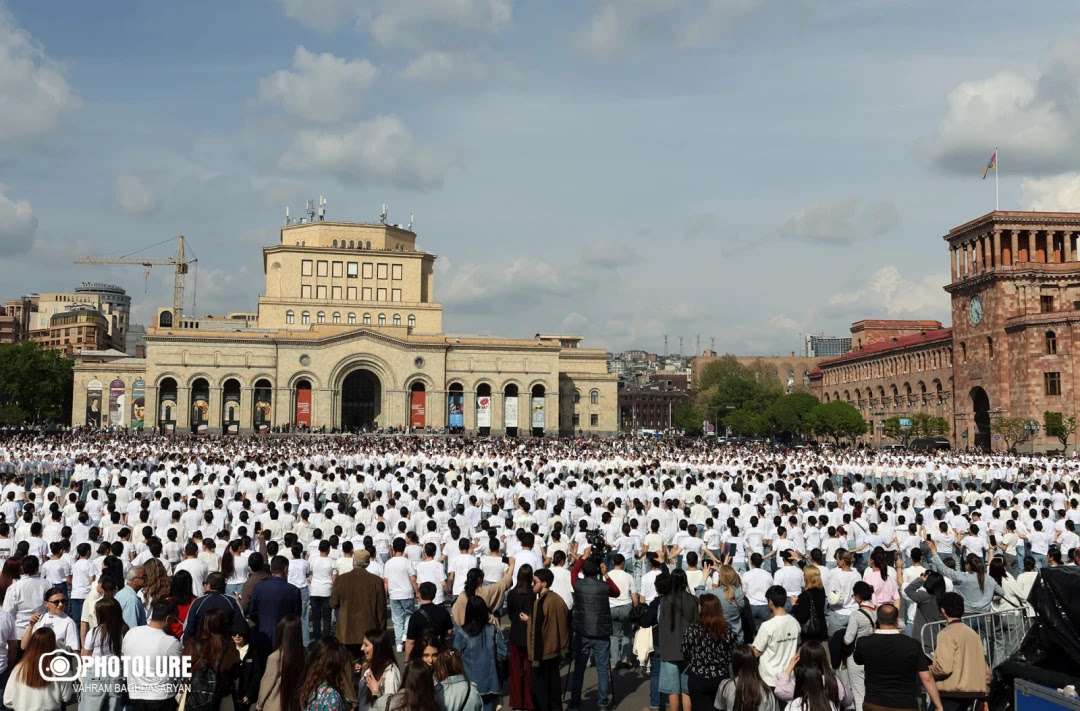
Election campaigning is already underway, with leading candidates touring the country and meeting voters. The campaign period will run until June 5, followed by a day of silence ahead of voting on June 7. Voting will take place only within Armenia, with no provision for ballots cast at embassies abroad. The newly elected parliament will then vote to appoint the prime minister.