
Examining History Through Clothing at Glendale Gallery
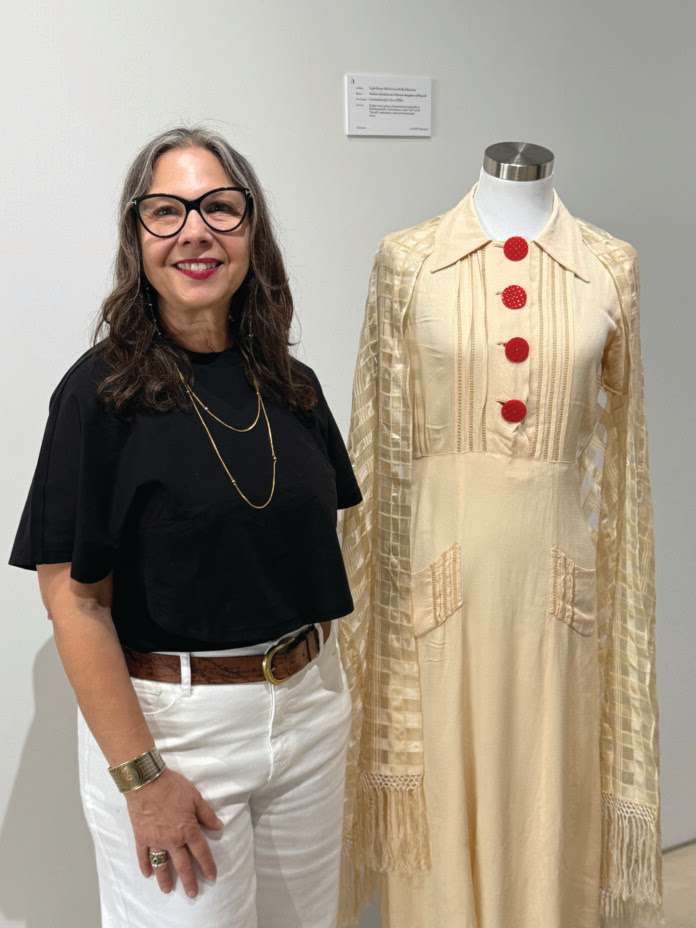
GLENDALE — Poet Tina Demirdjian showcased 19th-century Armenian dresses at the Litavie Art Gallery in Glendale during May. The opening event on Saturday, May 2, included a presentation by Dr. Sofi Khachmanyan on how to dress an Edwardian woman in Constantinople and a demonstration of the remaking of Victoria Telfeyan’s gown using a live model.
The Armenian Dress & Textile Project (ADTP), in collaboration with Litavie Art Gallery and with partial funding from the City of Glendale Arts & Culture Commission, presents “Timeline of Our Ancestors: Costumes, Textiles & Stories,” a compelling exhibition and series of free public programs running from May 2, through Saturday, May 30.
These treasured garments, textiles, photographs and stories serve as the foundation and inspiration for the Armenian Dress & Textile Project (ADTP). An opportunity for Armenian and non-Armenian community members to explore one family’s journey from 1893 Turkey to present-day Los Angeles. The exhibit uncovers artifacts that survived genocide, migration, and time — and allows the public to reflect on their own family’s story of migration and survival.
The exhibition is dedicated to “keepers” Victoria Demirci (née Dilsizian) and Nazelie Elmassian, honoring their role in preserving cultural memory through generations.
Tina Demirdjian said, “”I found my ancestors, and I didn’t want to give them away” were the words that fell out of my mouth as I sat on my grandmother’s bed in Queens, NY, in 1998. My mother, Vicky, and I found bundles called “bocja’s” in the home my grandmother had lived in since 1937, when she came to NY from Istanbul after marrying my grandfather, Sarkis.” She added, “Grandma Shahine was the ‘keeper’ of the stories she told me over and over when I was a little girl. But I found out she was also a ‘keeper’ of all her mother’s, grandmother’s, and aunties’ clothes and embroideries. ‘Shahine, toon ge hasgenas’ was what they’d tell her.”
 Some of the costumes on exhibit (Karine Armen photo)Demirdjian explained how the eastern clothing and embroidery from Gesaria/Kayseri, Turkey, and the Edwardian clothing and embroidery from Constantinople survived genocide, migration, and time. Some belonged to her grandmother’s aunties, who took responsibility for caring for these items because their immediate families weren’t interested. Another reason is that her great-grandmother brought much of it over in a large steamer trunk on the first boat leaving Europe and Turkey (Istanbul) after WWII. Her sister, Demirdjian’s other great-grandmother, Victoria, died at age 27, so the family had preserved all her clothes. Since her great-grandmother Mannik was one of the last remaining in her family to leave Istanbul, it was all she had left of her former life. She was privileged to have been able to keep it and bring it over. During 1915, they had already moved to Constantinople from Gesaria/Kayseri, having survived the Hamidian massacres, and having heard of a coming massacre, fled to Plovdiv, Bulgaria, for three years. They took very little clothing and belongings, thus preserving the material culture they left behind until their return.