
Armenia unveiled a homemade jet-powered drone interceptor
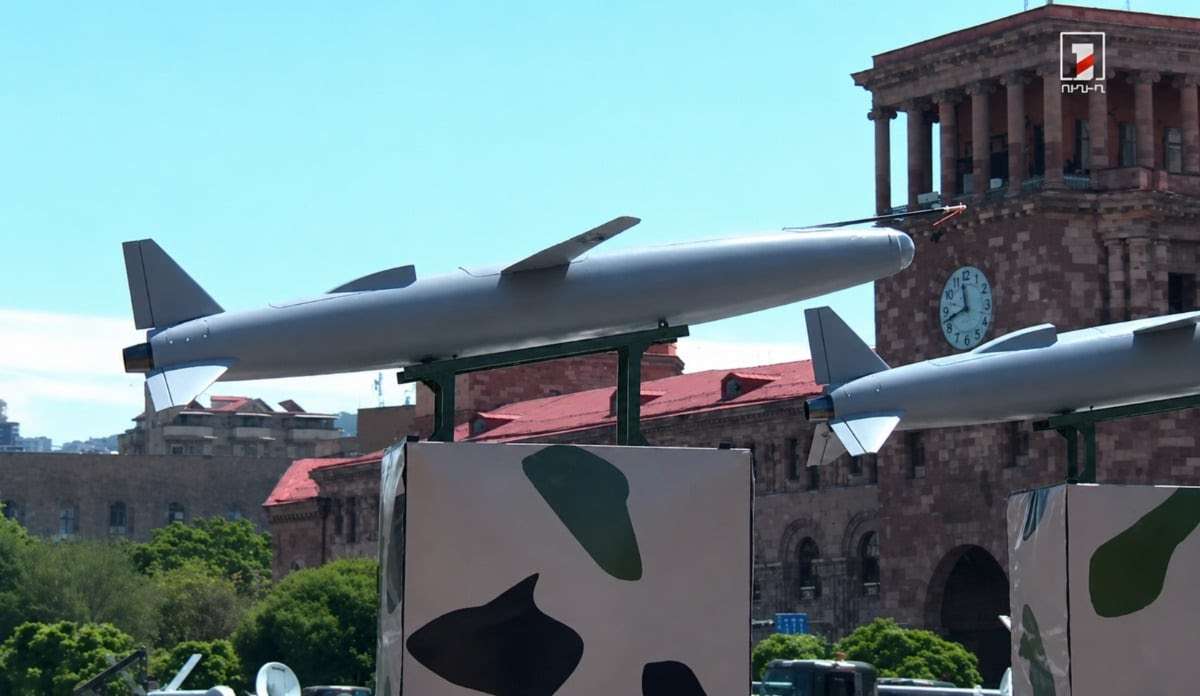
- Armenia publicly debuted the DDS-10K jet interceptor drone at its Republic Day parade in Yerevan on May 28, 2026, developed by domestic company Davaro Defence Systems.
- The DDS-10K carries a warhead up to 12 kg (26.5 lb), reaches speeds of 200 km/h (124 mph), and engages aerial targets at ranges up to 70 km (43.5 miles) and altitudes up to 8 km (26,200 ft).
Armenia displayed a domestically developed jet-powered interceptor drone at its Republic Day military parade on May 28, publicly debuting the DDS-10K for the first time and positioning the country’s defense industry as a credible producer of air defense munitions capable of hunting the same drone types that devastated Armenian forces in the 2020 Nagorno-Karabakh war.
The DDS-10K was developed by Davaro Defence Systems, an Armenian company that has become the most visible product of Yerevan’s post-2020 push to build a domestic unmanned systems industry from near zero. Davaro first attracted international attention in October 2025 when it unveiled the Dragonfly-3, a loitering munition described by analysts as visually resembling the Israeli Harop, and whose parade appearance prompted a dispute between Azerbaijan and Israel over alleged technology origins. The DDS-10K is a different and more specialized system, configured specifically for the air defense intercept mission rather than ground attack, though Davaro’s published specifications describe it as capable of both roles.
The DDS-10K carries a high-explosive fragmentation warhead of up to 12 kilograms (26.5 pounds), specifically selected to produce lethal fragmentation patterns against aerial targets rather than concentrated blast against hardened ground structures. It reaches speeds up to 200 km/h (124 mph), engages targets at ranges up to 70 kilometers (43.5 miles), and can intercept threats at altitudes up to 8 kilometers (26,200 feet). That altitude ceiling puts it in the engagement envelope for medium-altitude combat drones like the Bayraktar TB2, which typically operates between 5,000 and 7,000 meters (16,400 to 23,000 feet), and for subsonic cruise missiles like the Shahed-136, which flies at lower altitudes but within the interceptor’s range band.
A ground-based 3D radar supports the system with detection and tracking out to 100 kilometers (62 miles), feeding targeting data to the DDS-10K’s autonomous and remotely controlled guidance systems. The aircraft also carries electro-optical sensors for terminal guidance and an anti-jam GNSS receiver designed to maintain navigation accuracy in electronic warfare environments.
The interceptor drone concept addresses a specific problem in counter-drone defense that conventional air defense systems solve expensively and surface-to-air missiles do not always solve at all. Traditional short-range air defense missiles like the Igla or Stinger cost tens of thousands of dollars per shot and carry single warheads, making them poor economic choices against cheap attrition drones that may cost far less than the interceptor. Longer-range missile systems like the Patriot or NASAMS are highly effective but cost hundreds of thousands of dollars per engagement. An interceptor drone that costs significantly less than a Shahed, hunts targets autonomously using its own sensors, and can be launched in quantity creates a different cost dynamic, particularly for a country like Armenia that lacks the defense budget to field large inventories of expensive missile interceptors.
Davaro’s broader product line illustrates how Armenia is approaching the technology challenge. The company describes itself as an Armenian drone manufacturer and AI-powered software company, and its systems span loitering munitions, interceptor drones, and associated ground systems. The company exhibited at the IDEX 2025 defense exhibition in Abu Dhabi, signaling export ambitions alongside domestic supply. Whether the DDS-10K can perform its advertised intercept mission against modern electronic warfare-equipped targets in contested airspace is a question only operational testing will resolve, and Davaro has not published independently verified performance data for the system. The specifications represent the company’s claims rather than demonstrated results.